


Antimatter is the same as regular matter, except that it has the opposite electrical charge. For example, an electron, which has a negative charge, has an antimatter partner known as a positron. A positron is a particle with the same mass as an electron, but with a positive charge.
Particles without an electrical charge, such as neutrons, are often their own antimatter partners. But researchers have yet to determine whether mysterious tiny particles known as neutrinos, which are also neutral, are their own antiparticles, Live Science reports.
Although it may sound like science fiction, antimatter is real. Antimatter was created along with matter after the Big Bang. But antimatter is rare in today’s universe, and scientists aren’t sure why.

A NASA spacecraft has detected a burst of antimatter caused by a thunderstorm in Earth’s atmosphere. NASA
People have created antimatter particles using super-fast collisions at huge particle accelerators such as the Large Hadron Collider, which is outside Geneva and run by CERN (the European Organization for Nuclear Research). Several experiments at CERN create antihydrogen, the antimatter twin of the element hydrogen. The most sophisticated antimatter element created to date is antihelium, the helium analogue.
There are also naturally occurring antiparticles that are produced sporadically throughout the universe. But when matter and antimatter meet, they annihilate each other and produce energy, meaning that in a matter-dominated cosmos like ours, antimatter doesn’t stick around for long.
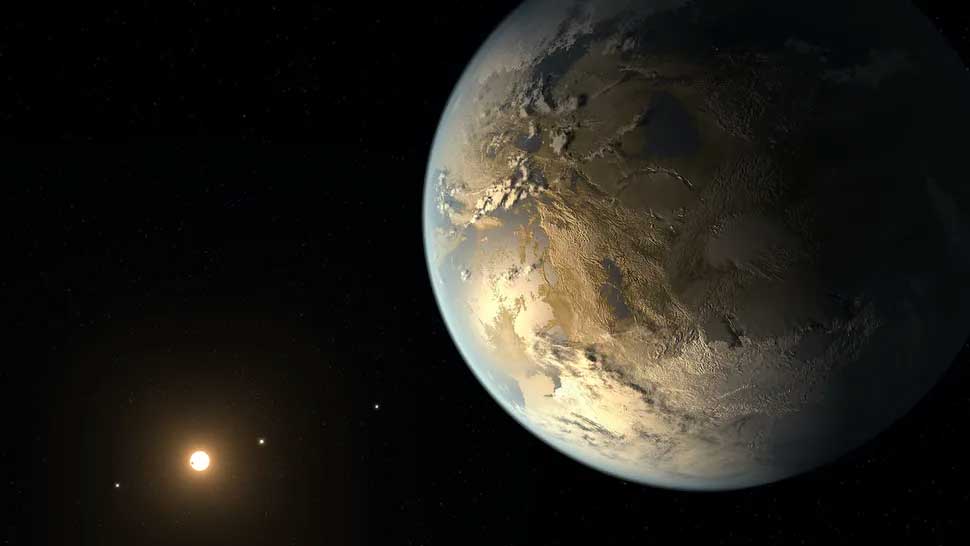
Antimatter is also at the center of the mystery of why the universe exists at all. In the first moments after the Big Bang, there was only energy. As the universe cooled and expanded, particles of both matter and antimatter were created. Scientists have measured the properties of particles and antiparticles with extremely high precision and have found that both behave the same. So if antimatter and matter were created in equal amounts and behave the same, all the matter and antimatter created at the beginning of time should have annihilated on contact, leaving nothing behind.
Matter began to prevail over antimatter
One theory suggests that more matter than antimatter was created at the beginning of the universe, so that even after mutual annihilation, there would be enough matter left to form stars, galaxies, and eventually everything on Earth. The discrepancy would be tiny. Less than 1 in 1 billion ordinary particles would survive the chaos and go on to form all the matter around us today.
If neutrinos — tiny, ghostly particles that barely interact with other matter — are actually their own antiparticle, that could be the key to solving this problem. In this theory, at the beginning of time, a small fraction of neutrinos could have switched from antimatter to matter, potentially creating a small imbalance of matter at the beginning of the universe. Experiments have tried to determine whether neutrinos are their own antiparticle, but so far they have been inconclusive.
British physicist Paul Dirac predicted antimatter in 1928 while attempting to combine quantum mechanics, which describes subatomic particles, with Einstein’s theory of relativity. Dirac was looking for solutions to an equation that describes the motion of an electron moving close to the speed of light. “Just as the equation x^2 = 4 can have two possible solutions (x = 2 or x = minus −2), so the Dirac equation can have two solutions: one for an electron with positive energy and one for an electron with negative energy,” according to CERN.
At first, Dirac was hesitant to share his findings. But he eventually accepted them and said that every particle in the universe must have a mirror particle that behaved the same way but had the opposite charge.
Positrons were discovered a few years later by Carl Anderson, a physicist at the California Institute of Technology in America, who was studying high-energy cosmic rays, which come from outer space and hit the Earth’s atmosphere, creating a shower of other particles. In his detector, Anderson observed a trace of something with the same mass as an electron but with a positive charge. The editor of the journal Physical Review suggested calling the particle a positron, according to the American Institute of Physics.
For their work on this discovery, Dirac and Anderson received the Nobel Prize in Physics: Dirac in 1933 and Anderson in 1936.
The British theoretical physicist Paul Dirac was one of the most important figures in the early days of quantum physics. He shared the Nobel Prize in Physics with Erwin Schrödinger in 1933. But it was in 1927 that this quiet but brilliant mind began his quest for “beautiful mathematics” and formulated what became one of his greatest achievements: the Dirac equation.
In this excerpt from the chapter on antimatter in his book The One Thing You Need to Know, author Marcus Chown explains how Dirac’s unusual methods and mannerisms helped us understand the fundamental physics that shapes the world around us.
Nature has decided to double down on its basic building blocks. For every subatomic particle, remarkably, there is an “antiparticle” with opposite properties, such as electric charge. Until 1927, no one had the slightest inkling that such an “antimatter” world existed. But that year, the British physicist Paul Dirac wrote down an equation describing an electron moving at close to the speed of light and noticed that it contained something odd.
See also... New method for observing individual atoms confirms century-old quantum mechanical theory |
Dirac was one of the pioneers of quantum theory, a revolutionary description of the submicroscopic world of atoms and their constituents, writes Marcus Chown in his book The Only Thing You Need to Know. The theory reconciled two seemingly contradictory features of the world revealed by experiments in the first quarter of the twentieth century: the ability of atoms and their ilk to behave as localized particles and as spreading waves. In 1926, the Austrian physicist Erwin Schrödinger formulated this in the Schrödinger equation, which describes quantum probability waves propagating through space.

Paul Dirac. Getty Images
The problem with the Schrödinger equation is that it does not incorporate another revolution in twentieth-century physics. In his 1905 theory of special relativity, Einstein showed that strange things happen to space and time as a body with mass approaches the speed of light. Although the Schrödinger equation works fine for an electron in a small atom, where the electrical force from just a few protons in the nucleus causes it to orbit at a speed much slower than the speed of light, in heavier atoms, where the nucleus has many protons and the electron is spinning at speeds close to the escape velocity limit, the equation breaks down. What was needed was an equation that was compatible with special relativity—relativistic relativity—and that is exactly what Dirac set out to find.
Dirac was an odd man who today would probably be diagnosed as being on the autism spectrum. Tall, gangly and reminiscent of a stick insect, he had a habit of working hard all week and then taking long walks on Sundays in the countryside around Cambridge, where he would climb tall trees dressed in his suit and tie. He was, literally to the point of stupidity, the Mr Spock of physics. When, during one of his lectures, a student raised his hand and said, “Professor Dirac, I don’t understand the equation on the board,” he replied, “That’s a comment, not a question,” and continued with his lecture.
Dirac’s approach to physics was as strange as his personality. While other physicists looked for everyday analogs of the phenomena they wanted to describe and then tried to encapsulate them in a mathematical equation, Dirac had the audacity to just sit down with a pen and paper and guess at the shape of the equation. “It’s my peculiarity that I like to play with equations, just looking for beautiful mathematical relationships that perhaps don’t have any physical meaning at all,” Dirac said. “Sometimes they do.”
It was while searching for “beautiful mathematics” in his spartan rooms at St John’s College in late November 1927 that Dirac literally pulled out of thin air what would become known as the Dirac equation. Today, it is one of two equations inscribed on the floor tiles of Westminster Abbey in London. The other is Stephen Hawking’s equation for the temperature of a black hole. “Of all the equations in physics, perhaps the most magical is the Dirac equation,” says the American physicist Frank Wilczek (in It Must Be Beautiful: Great Equations Of Modern Science by Graham Farmell (Granta, 2003)). “It is the most freely invented, the least conditioned by experiment, and the most bizarre and astonishing in its consequences.”
Dirac found that it was impossible to describe the properties of a relativistic electron, such as its energy, with a simple number, so instead he had to use a two-by-two table of numbers known as a matrix. This “duality” explained a mysterious feature of the electron. Experiments showed that the particle behaved as if it were spinning in one of two ways: clockwise or counterclockwise. However, if the electron was indeed spinning, its behavior could only be understood if it were spinning faster than light, which Einstein had thought was impossible. Physicists were forced to conclude that the electron’s “spin” was something entirely new. It was an intrinsic quantum property, with no analogue in the everyday world. And there it was, Dirac saw, just jumping out of the formula he had written down, unbidden. “My equation gave exactly the properties you want for the electron,” Dirac said. “That was a real surprise to me, completely unexpected.” According to American physicist John Hasbrouck Van Vleck, Dirac’s explanation of electron spin can be compared to “a magician extracting rabbits from a silk hat.”
Spin was strange. But another aspect that emerged from Dirac’s equation was even stranger. When Dirac wrote down his equation, he noticed that its mechanism was strangely duplicated. It seemed to describe not only a negatively charged electron, but also a particle with the same mass as the electron but a positive charge. At the time, only three subatomic particles were known: the proton, in the nucleus of an atom; the electron, which orbits the nucleus; and the photon, the particle of light. There seemed no need for another. Even the great physicists of the day, such as Werner Heisenberg and Wolfgang Pauli, thought Dirac’s equation must be wrong. But Dirac was right and they were wrong, as an experiment 5,000 miles from Cambridge later showed.
In 1932, Carl Anderson, an American physicist at the California Institute of Technology in Pasadena, was trying to understand cosmic rays, extremely high-energy particles from outer space. He expected them to slam into atoms in the atmosphere, ejecting their electrons. If he could simply measure the energy of such ejected electrons, he reasoned, he would have control over the energy of cosmic rays. To this end, he used an extremely strong magnetic field to deflect the electrons, concluding that if they had high energy and were therefore moving fast, they would spend little time near his magnetic field and be deflected less sharply than if they had low energy and spent more time there.
Anderson made his electrons visible using a “Wilson chamber.” Inside the device, tiny trails of water droplets formed along the electron tracks, and he could photograph these trails. On August 2, 1932, Anderson developed a photographic plate and was astonished to see a particle with the mass of an electron that was bent away from the electron by a magnetic field. He knew nothing of Dirac’s prediction. Nevertheless, he had stumbled upon Dirac’s positively charged electron, a particle he promptly dubbed the “positron.”
Because combining matter and antimatter produces energy, engineers have suggested that antimatter-powered spacecraft could be an effective way to explore the universe.
NASA has been exploring the possibility of using antimatter vehicles to travel to Mars, but the idea has some drawbacks. First, it is very expensive.

Antimatter Engine. smotrim.ru
“A rough estimate of the cost of producing the 10 milligrams of positrons needed for a human mission to Mars is about $250 million using technology currently under development,” said Gerald Smith of Positronics Research LLC in Santa Fe, New Mexico, in a 2006 paper for NASA. The cost may seem high, but sending anything into orbit still costs about $10,000 a pound, so launching a large spacecraft with its human crew would also be expensive.
More recently, NASA researchers considered using the energy generated by matter-antimatter collisions to send a probe to the nearby star system of Alpha Centauri. The energy from the collisions would allow the craft to accelerate to 10 percent of the speed of light, then slow down enough to explore Alpha Centauri, perhaps for decades.
See also... Complete list of HTML/Javascript event handlers with examples List of required documents for a website in the Russian Federation |
No related posts found...

