


Cerro El Cono is a 1,310-foot (400-meter) pyramidal formation in the Amazon rainforest. It rises steeply from the relatively flat jungle landscape of eastern Peru, making it visible as far west as the Andes — 250 miles (400 kilometers) away — on a clear day.
The formation, whose name translates as “cone hill,” is located in a mountainous region on the border of Peru and Brazil known as the Sierra del Divisor. The mountains are visible in the background of most photographs of Cerro el Cono, but the formation is isolated from other peaks and has an unusual pyramidal shape that makes it stand out from the rest of the mountain range.
The origin of the strange peak remains a mystery due to its remote location. While some sources suggest that the cone may be an extinct volcano, others say it may simply be an unusual rock formation.

Cerro el Cono, a striking and mysterious mountain, rises in the heart of the Amazon rainforest. This geological wonder is part of the Sierra del Divisor, also known as the “Mountains of the Divide,” a region known for its unique biodiversity and home to several uncontacted indigenous tribes. The pyramid-shaped formation of Cerro el Cono is more than just a natural wonder; it has deep spiritual significance. Local indigenous people revere it as the Andean Apu, a guardian spirit of the mountains. Deeply rooted in the mythology of Peru, Ecuador, and Bolivia, these Apu are believed to protect local people, a tradition that dates back to the Inca Empire. Located near the city of Pucallpa in eastern Peru, Cerro el Cono stands next to the Ucayali River, an important tributary of the Amazon River. The Archaeologist’s post
Indigenous peoples have another explanation for the strange mountain: According to the Peruvian newspaper La República, Cerro el Cono is a spiritual being for local tribes and groups, some of whom revere the peak as the “Andean Apu” — a sacred mountain god or spirit. In the mythologies of Peru, Bolivia, and Ecuador, Apus emerged from the Earth to guide and protect the people living nearby.

A fourth explanation, which has no evidence, is that Cerro El Cono is located on the ruins of a pyramid built by ancient Indian tribes, reports La República.
Concerns that the ecosystem could be degraded by infrastructure, illegal logging and gold mining led to the creation of the Sierra del Divisor National Park in 2015. However, recent studies show that the protected park, which is 1.5 times the size of Yellowstone National Park, has not eliminated threats from illegal logging and poaching.
See also... Complete list of HTML/Javascript event handlers with examples List of required documents for a website in the Russian Federation |
Related Posts
The Gunung Padang archaeological site in western Java was built by a civilization 25,000 years ago
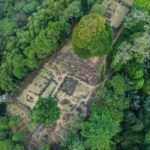
Researchers from Indonesia claim that the archaeological site of Gunung…
New facts in the history of Ancient Egypt have been discovered

It would seem that Egypt has been dug up and…

