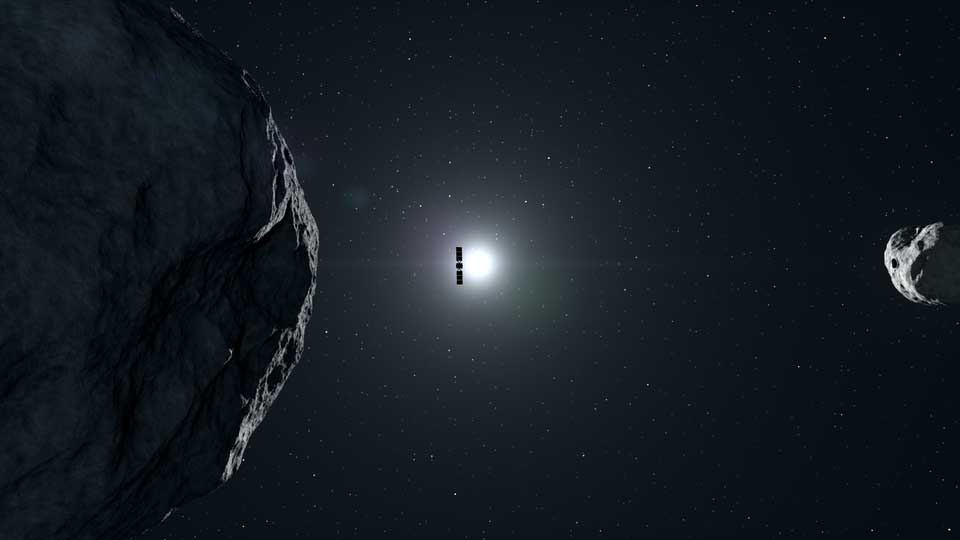
On Sunday, September 29, Earth captured a new “mini-moon” called 2024 PT5. The bus-sized asteroid is expected to orbit our planet for 57 days, but it’s too small to be seen by amateur skywatchers. This isn’t the first time such a phenomenon has occurred. In 2020, astronomers identified another mini-moon, 2020 CD3, which orbited Earth for more than a year.
The space rock is actually a near-Earth asteroid called 2024 PT5, which is estimated to be 33 feet (10 meters) wide, or the length of a school bus. Caught in Earth’s gravity during an unusually close approach, this “mini-moon” is predicted to orbit our planet for just 57 days; on November 25, the asteroid will break free of Earth’s influence and resume its normal orbit around the sun without an escort, the journal Research Notes of the AAS reported.
At least 300,000 times smaller than our permanent Moon, the new mini-moon is too small to be seen with the naked eye, and commercial backyard telescopes and stargazing binoculars won’t cut it either. That means the only way to see Earth’s new moon is to wait for researchers at a professional observatory to release images of it.
According to a new study, 2024 PT5 likely originated from the Arjuna asteroid belt, a secondary asteroid belt that is closely tied to Earth’s orbit. Given its proximity to our planet, the cozy asteroid is expected to make another close flyby of Earth in January 2025, and then another in 2055.
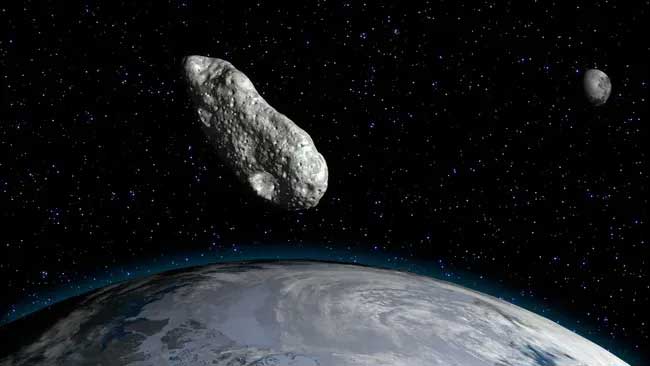
Simply put, a minimoon is a space object temporarily captured by a planet’s orbit, unlike regular moons, which are there permanently. Researchers say 2024 PT5 will orbit Earth in a “horseshoe” trajectory for about two months, from September 29 to November 25.
However, there is disagreement among scientists over whether 2024 PT5 should be classified as a minimoon, since it will not complete a full orbit around Earth before the Sun’s gravity pulls it back onto its normal trajectory.
This isn’t the first time something like this has happened. In 2020, astronomers identified another mini-moon, 2020 CD3, that orbited Earth for over a year.
The asteroid was first spotted by a telescope that is part of the NASA-funded Asteroid Impact Warning System. Despite the program’s ominous name, scientists say there is no cause for alarm and are reassuring that 2024 PT5 will not hit Earth.
Our planet occasionally captures additional moons. For example, a similar event occurred in 1981 and 2022, when the object 2022 NX 1 became an ephemeral satellite of our planet before moving further away, astronomers noted. The researchers published their findings in September in the journal Research Notes of the AAS.
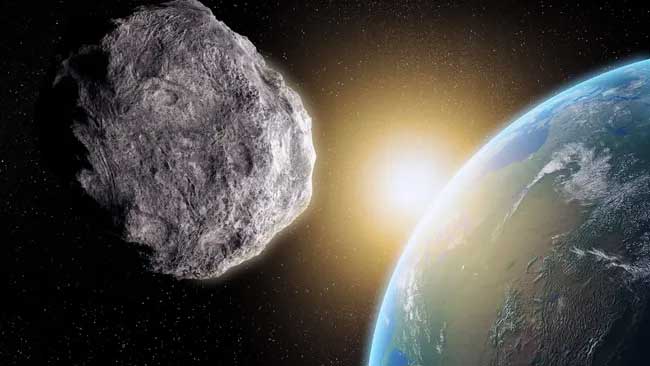
“Earth may regularly capture asteroids from the near-Earth object (NEO) population and pull them into orbit, turning them into mini-moons,” the researchers wrote in the paper. “The newly discovered Apollo NEO-class object 2024 PT5 follows a trajectory that resembles that of 2022 NX1 and may soon become a mini-moon.”
NASA considers any space object that comes within 120 million miles (190 million kilometers) of Earth to be a “near-Earth object” and classifies any large object within 4.7 million miles (7.5 million kilometers) of our planet as “potentially hazardous.” NASA tracks the locations and orbits of about 28,000 asteroids using ATLAS, an array of four telescopes that scans the entire night sky every 24 hours.
NASA has estimated the trajectories of all these near-Earth objects beyond the end of the century. Earth faces only a tiny risk of a doomsday asteroid impact for at least the next 100 years.
According to a new study, 2024 PT5 likely originated from the Arjuna asteroid belt, a diverse collection of space rocks that orbit the sun close to our planet. Because its orbit is so similar to ours, calculations suggest the asteroid will reenter Earth’s orbit in January 2025, and again in 2055.
The mini-moons aren’t just a curiosity for asteroid watchers. Research suggests the rocks contain valuable minerals and water that could be used for rocket fuel, making them ideal stepping stones for companies preparing to mine asteroids.