As humanity expands its activities in space, medical research into how our bodies cope with microgravity conditions has become the subject of numerous studies, including the effects of spaceflight on muscle mass and radiation exposure. Astronauts on future missions to the Moon or Mars will face increased risks to their vision and eye structure due to longer exposure to microgravity. The CIPHER study, consisting of 14 human studies, is examining the physical and psychological health of astronauts in space and applying these findings to supporting the health of crews on long-duration missions away from Earth.
A method for detecting sounds generated by the inner ear could be used as a non-invasive tool to monitor changes in fluid pressure in the head during spaceflight.
Increased fluid pressure in the head, which occurs in microgravity, can cause visual impairment and affect the middle and inner ears. Understanding changes in fluid pressure can help scientists develop ways to protect astronauts from these effects.
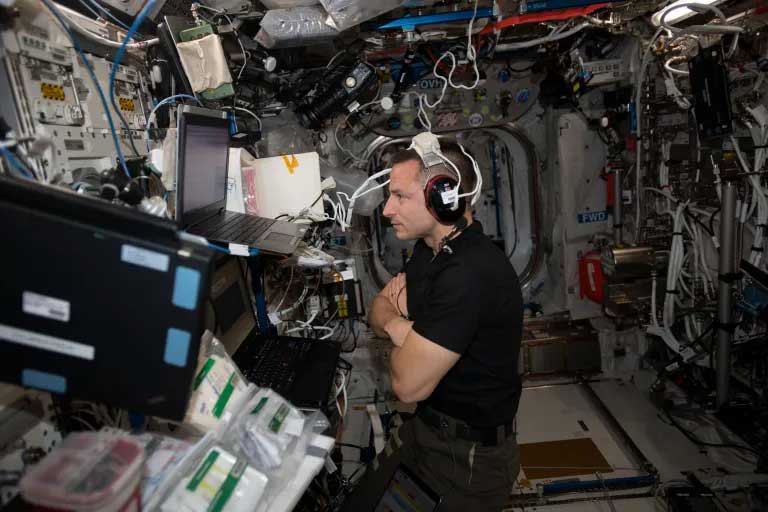
NASA astronaut Drew Morgan participates in a hearing test as part of the Acoustic Diagnostics study. ESA (European Space Agency)/Luca Parmitano
As part of the Acoustic Diagnostics study, conducted by the European Space Agency and the American Institute of Space Studies, astronauts’ hearing was monitored during long-duration missions using otoacoustic emissions (sounds generated by the inner ear in response to certain tones). The researchers compared measurements before and during the mission to indirectly determine changes in fluid pressure in the head. Varying body positions and the placement of the ear probes affected the test results, and the authors note that these issues need to be addressed.
Risk of spaceflight-associated neuroocular syndrome (SANS risk)
Exposure to altered gravity can cause structural changes to the eyes and brain during spaceflight; these changes may lead to visual impairment, cognitive impairment, or other adverse health effects.
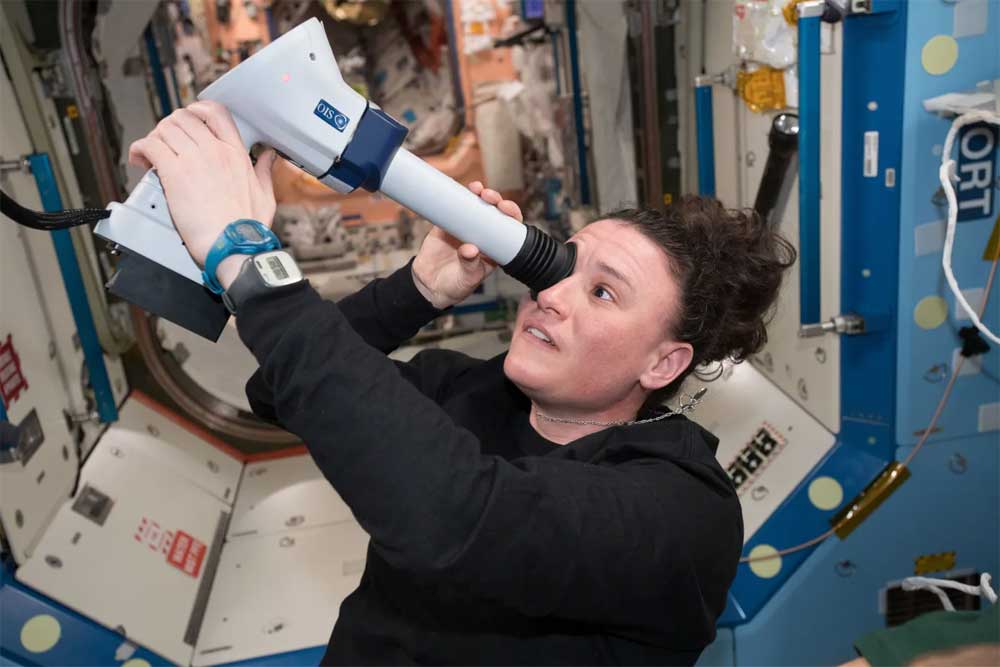
Astronaut Serena M. Auñón-Chancellor explores her eyes in space. NASA
SANS syndrome (SANS) is a syndrome unique to humans in space, with no equivalent on Earth. Structural brain changes appear subtle, but they appear to indicate that more than half of crew members experience one or more SANS symptoms. Determining intracranial pressure during spaceflight could improve our understanding of SANS mechanisms and enhance our ability to develop countermeasures for risk assessment on future missions.
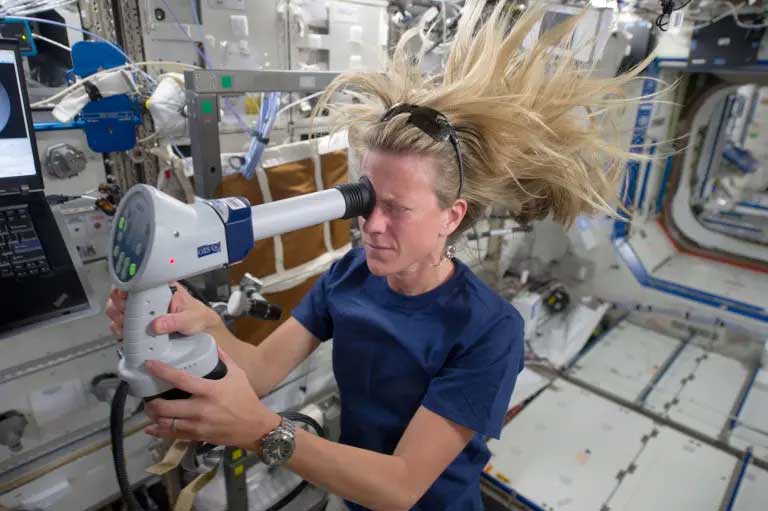
NASA astronaut Karen Nyberg, a flight engineer for Expedition 36, undergoes an eye exam in the International Space Station’s Destiny laboratory in orbit around Earth. NASA
Scientists are drawing attention to an extremely common health problem that causes discomfort to astronauts: sinus disease.
Researchers from the Department of Otolaryngology-Head and Neck Surgery at Houston Methodist Hospital reported the results of their recent study, which aimed to determine whether astronauts experience paranasal sinus problems during space travel, including common symptoms such as nasal congestion, pressure, or facial pain. Sixty of the 71 (85%) astronauts participating in the study reported experiencing these symptoms. The results were published on August 5, 2025, in the journal Laryngoscope Investigative Otolaryngology.
The sinuses are a labyrinth of cavities located around the face and skull. They support our health by purifying the air we breathe and helping maintain fluid balance in the head. People typically experience unpleasant sinus symptoms when they become congested with mucus and unable to drain properly, or when they become inflamed.
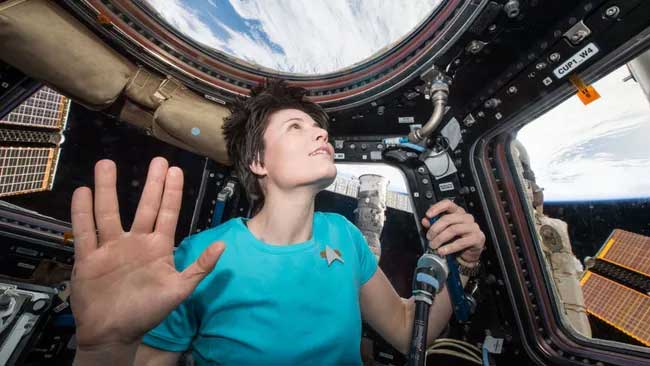
European Space Agency astronaut Samantha Cristoforetti gives a Vulcan salute aboard the International Space Station. NASA/ESA
Researchers link astronauts’ nasal congestion problems to the fact that microgravity causes fluid in the sinus cavities to shift.
While these symptoms are typically harmless on Earth, lead study author Masayoshi Takashima warns in a press release that these seemingly minor symptoms could potentially impact things like problem-solving ability or overall health.
“It’s about maintaining peak performance,” Takashima said. “If you don’t sleep well because you can’t breathe, your cognitive function, reaction time, and mission effectiveness can suffer, and those factors are crucial in space.”
Researchers also found that astronauts leaving the cabin for spacewalks are particularly susceptible to pressure changes that lead to problems potentially more dangerous than nasal congestion, such as eustachian tube dysfunction—problems with the small tubes that connect the ears to the throat.
As humanity expands its activities in space, medical research into how our bodies cope with microgravity conditions has become the subject of numerous studies, including the effects of spaceflight on muscle mass and the effects of radiation. And, as the recent memorandum on nasal congestion in astronauts emphasizes, a key component of human medicine is not only concern for serious medical issues like heart problems, but also for less serious, more manageable symptoms that impact our long-term well-being.
Sensory research on the ISS
The Expedition 72 crew began the week studying what happens to a crew member’s eyes after months or years in space. The International Space Station crew also continued to conduct a number of other studies in microgravity conditions.
Astronauts on future missions to the Moon or Mars will face increased risks to their vision and eye structure due to longer exposure to microgravity. The CIPHER study, consisting of 14 human studies, is examining the physical and psychological health of astronauts in space and applying the findings to supporting the health of crews on long-duration missions away from Earth.
One part of the CIPHER study aims to determine how much a crew member’s brain and eye structure changes as their time in space increases. NASA Flight Engineer Anne McClain led this study by monitoring the eyes of NASA Flight Engineer Jonny Kim. She first measured his retina’s response to light activity using electrodes and eye drops. She then examined his retina, optic nerve, and cornea in more detail using medical imaging equipment. Scientists will use the data obtained from the study to understand how the human body adapts to spaceflight and develop countermeasures.
Roscosmos cosmonauts Sergei Ryzhikov and Alexei Zubritsky continued to study how their circulatory systems adapt to microgravity conditions. They again attached sensors to their foreheads, fingers, and toes, measuring blood flow from their heads to their extremities and back in space. Flight engineer Kirill Peskov assisted Ovchinin and Vagner in testing the negative pressure lower body spacesuit, and then cleaned and disinfected the Nauka science module.
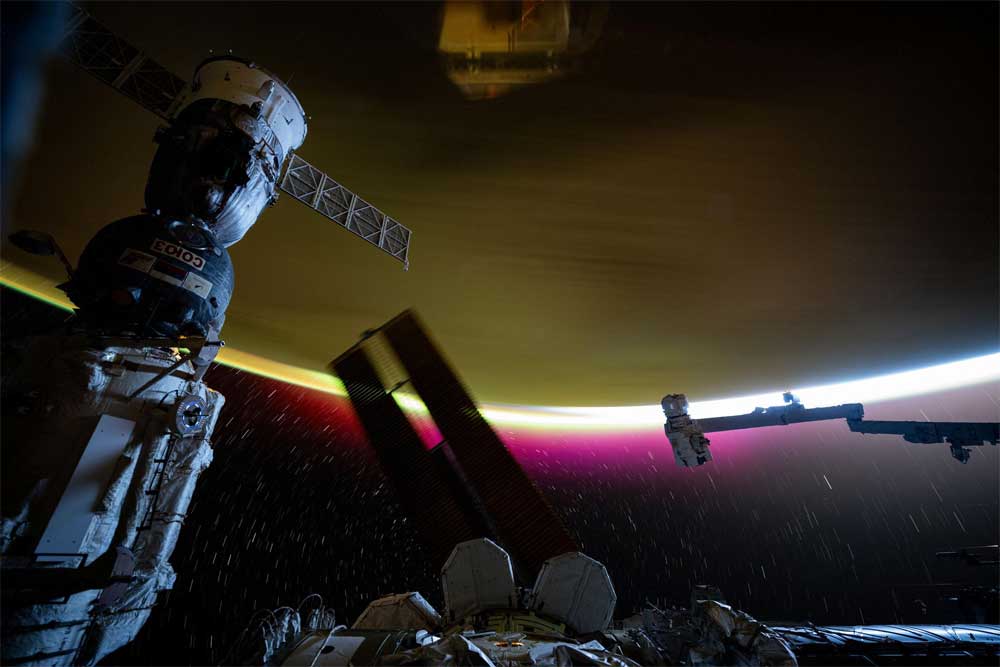
This image taken from the International Space Station captures star trails and atmospheric glow moments before the orbital outpost lifted off toward sunrise. In the foreground (left to right) are the Soyuz MS-26 spacecraft docked to the Rassvet module, the station’s main solar arrays, and the Canadarm2 robotic arm. NASA
The Expedition 73 crew studied the effects of life in space on eye structure and cellular immunity. The International Space Station residents also monitored the condition of sports equipment, life support systems, and orbital plumbing.
Ongoing space biology research aboard the orbital laboratory provides doctors with ongoing insights into how astronauts adapt to months-long life and work in zero-gravity conditions. Scientists are extrapolating data from this ongoing research and using it to protect future crews during long-duration space missions to the Moon, Mars, and beyond.
Doctors are studying possible changes in the structure and function of the crew’s eyes caused by space exploration, as vision is critical for piloting spacecraft, conducting advanced space research, and performing other mission-critical tasks. NASA flight engineers Jonny Kim and Nicole Ayers began their shift with a test measuring the retinal electrical response to light stimuli. Kim attached electrodes to their foreheads and around their eyes, and Ayers then used specialized data collection equipment to understand how the eye adapts to prolonged weightlessness. This study is part of the CIPHER program, a group of 14 human research projects aimed at studying ways to support crew health in space.
Later, Kim collected and stored urine samples in a freezer for analysis, then replaced a pair of research incubators in the Columbus laboratory module. Ayers moved to the Tranquility module and replaced the orbital plumbing equipment that removes inorganic contaminants from the station’s water.
Station commander Takuya Onishi of JAXA (the Japan Aerospace Exploration Agency) continued to study the effects of spaceflight stress on cellular immunity, helping doctors protect crews from infections. Onishi began his day by processing blood samples, which had been incubated for 24 hours in the Kubik research incubator. He then placed the samples in a freezer for subsequent blood cell analysis for signs of cellular stress or tissue damage caused by spaceflight. Finally, Onishi inspected and cleaned an experimental carbon dioxide removal device, which also uses water to produce oxygen.
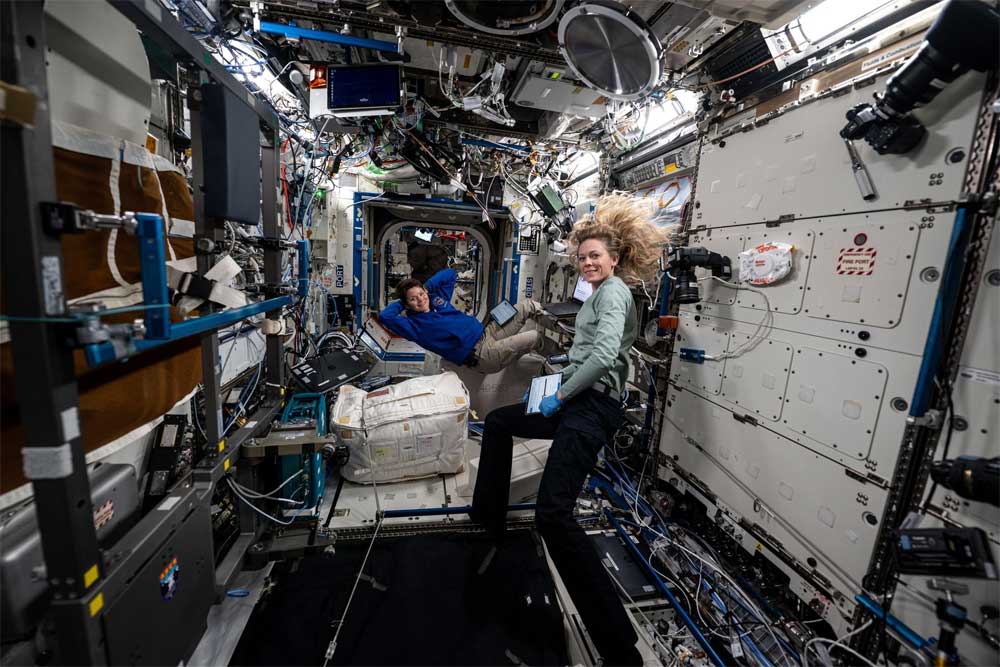
(Left to right) Expedition 73 Flight Engineers Anne McClain and Nicole Ayers, both NASA astronauts, relax and pose for a portrait aboard the International Space Station’s Destiny Laboratory Module. NASA
The lack of gravity is accelerating muscle and bone loss in one crew member, and doctors are racing to understand and prevent it as NASA and its international partners plan longer crewed missions to the Moon, Mars and beyond.

An astronaut’s aerobic and cardiovascular fitness is crucial for preparing for strenuous physical challenges, such as spacewalks or re-entry into Earth’s gravity after months or even years in space. For example, Cardman trained in the Tranquility module, running on a treadmill and then performing deadlifts, curls, bench presses, and other exercises on the Advanced Resistance Drag Trainer (ARED). She wore a Bio-Monitor vest and armband with sensors that measured her health data as part of the physical portion of the 14-person CIPHER study.
Flight engineer Kimiya Yui of JAXA (the Japan Aerospace Exploration Agency) performed eye examinations and operated the medical imaging equipment, which NASA flight engineer Mike Fincke viewed in real time, while ground personnel monitored the eyes. Doctors are studying the effects of microgravity on the structure of the eye, including the lens, retina, and optic nerve, to understand potential vision problems during space missions and after returning to Earth.
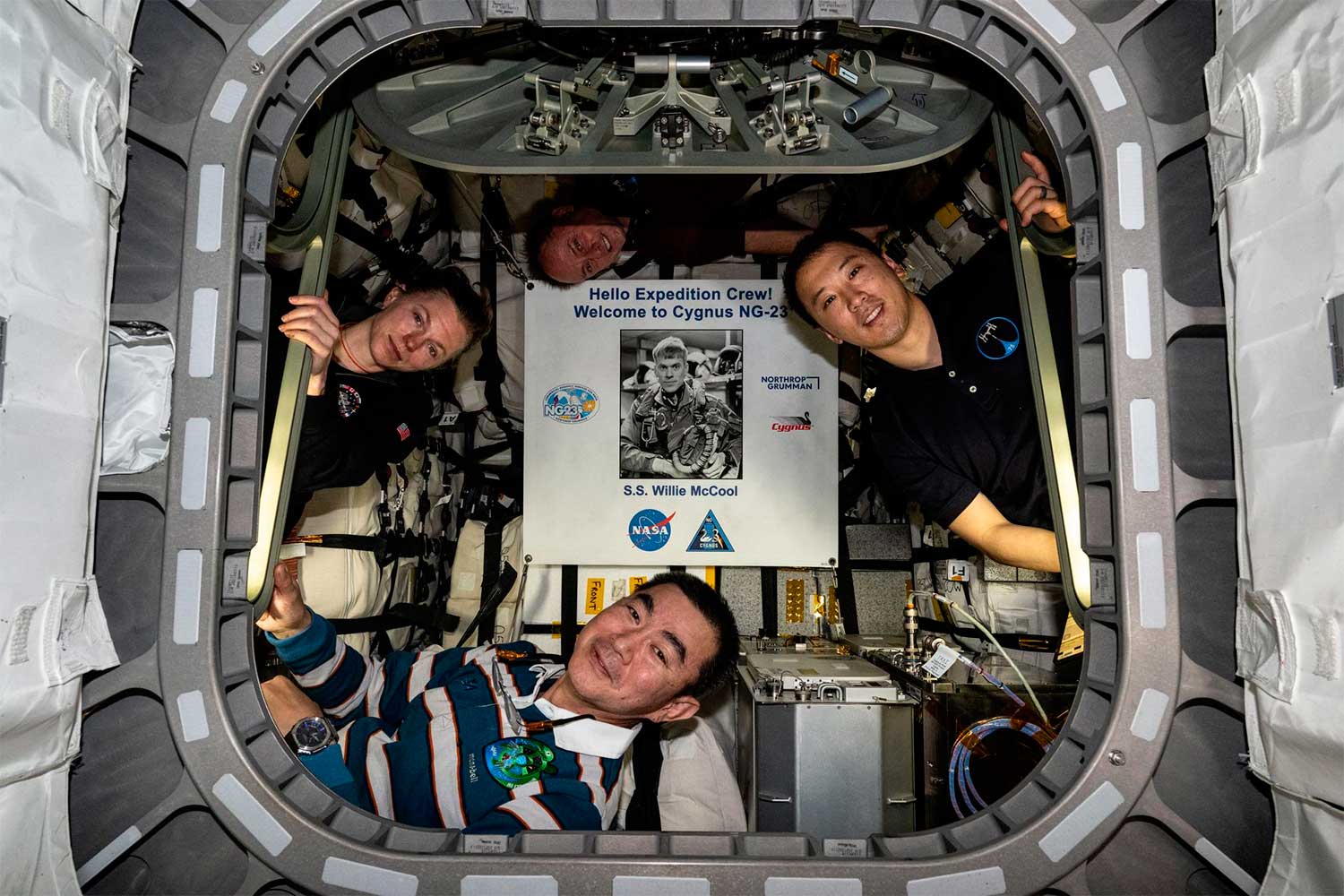
This photo taken inside the Northrop Grumman Cygnus XL cargo spacecraft shows (clockwise from left to right) astronauts Zena Cardman, Mike Fincke, Jonny Kim, and Kimiya Yui. In the center is a poster of William “Willie” McCool, honoring the NASA astronaut for whom the Cygnus spacecraft is named. NASA
In early 2026, Expedition 74 was busy researching sound and hearing, as well as observing Earth. Additionally, the International Space Station crew worked on cargo transfers, downloading radiation data, and maintaining laboratory operations .
NASA Flight Engineer Chris Williams began his day in the Columbus laboratory module, studying how sound and shock waves propagate through small solid particles, also called granular materials. Sensors measured the speed of sound and how waves attenuate and change shape as they pass through the loose cluster of tiny spheres. The results may reveal how lunar or Martian soils perform as building materials or during resource extraction. The data obtained may also lead to a better understanding of soil mechanics on Earth, which could help prevent landslides and sinkholes.
Williams also took turns with cosmonauts Sergei Kud-Sverchkov and Sergei Mikayev, the station commander and flight engineer, respectively, for routine hearing tests. Using a quiet space on the orbital station, such as the Quest airlock, the crew donned headsets connected to a laptop and responded to a series of beeps and tones to test the condition of their eardrums and inner ears in microgravity.
In the spring of 2026, Dragon delivered a number of completed experiments to Earth for analysis, including samples of materials exposed to the outer space environment, liquid crystal films developed in microgravity, and stem cells programmed to develop into brain and heart cells.
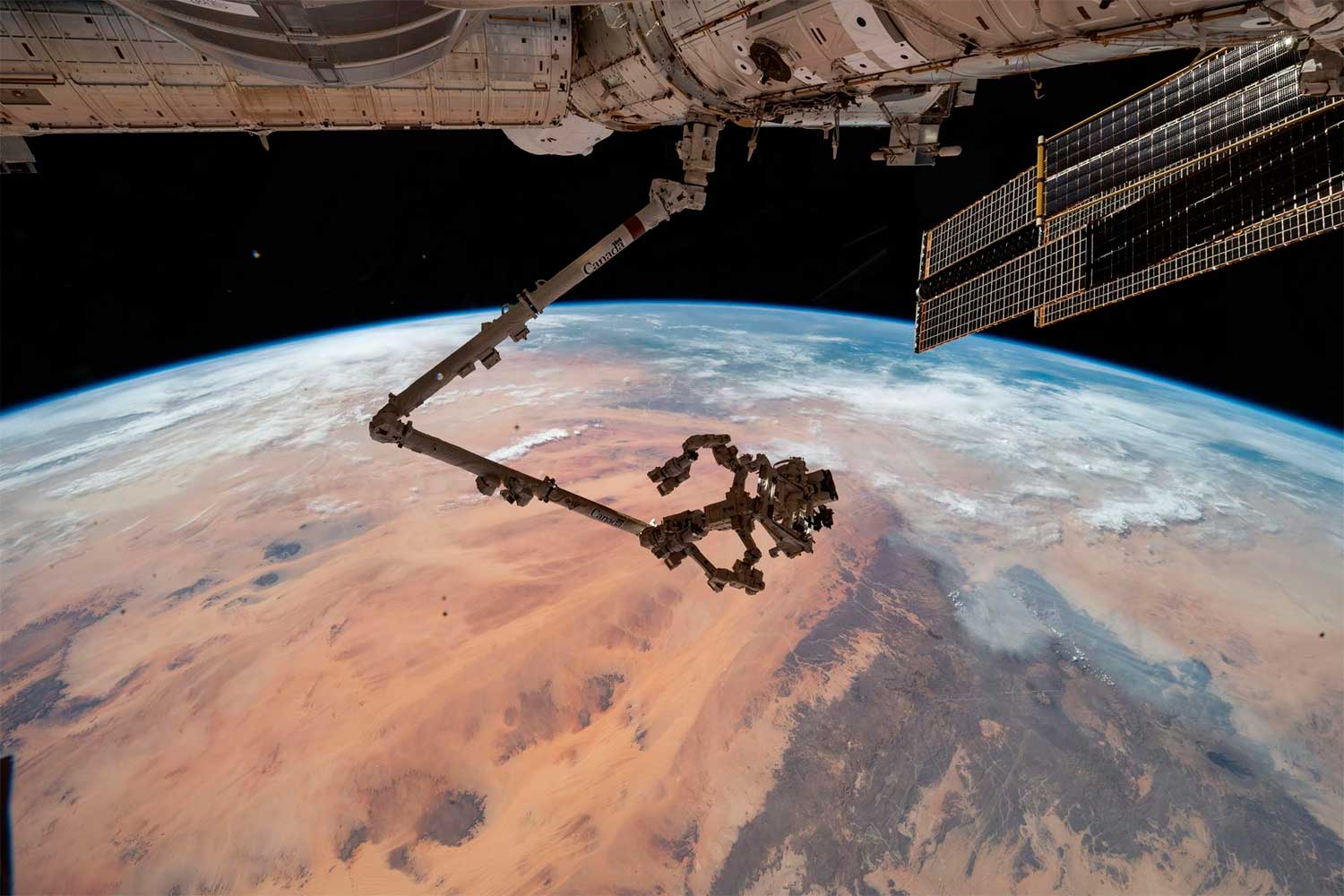
This photo shows the International Space Station’s 57.7-foot-long (about 17.2 meters) Canadarm2 robotic arm, with its finely tuned Dextre robotic hand attached, deployed from the Harmony module. At the time of the photo, the orbital station was 260 miles (about 420 kilometers) above the Sahara Desert. NASA
In April 2026, the Expedition 74 crew spent time on the International Space Station working in their spacesuits and undergoing vision tests. They also focused on robotics, cargo transfer, and scientific equipment maintenance.
Flight engineer Chris Williams conducted an eye examination inside Harmony, using Meir and Adenoth as test subjects. Williams operated the medical imaging equipment Meir and Adenoth viewed while doctors on Earth examined their retinas, lenses, and corneas in real time. Doctors regularly examine astronauts’ eyes to counteract the potential effects of life in space.
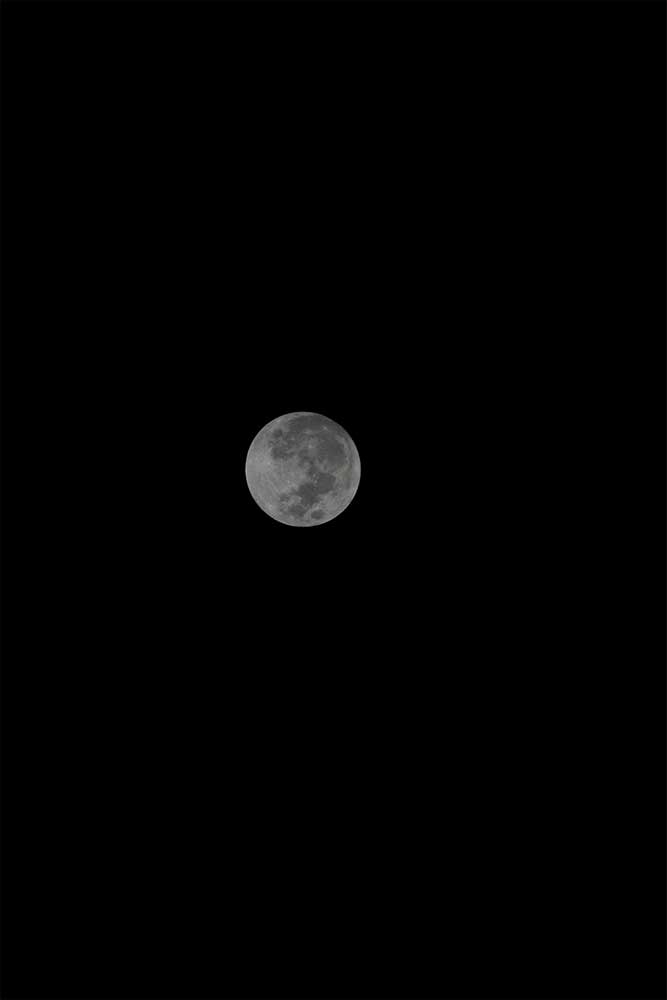
This image taken from the International Space Station hours before the launch of Artemis II, NASA’s first crewed mission to the Moon since December 1972, is scheduled to lift off from NASA’s Kennedy Space Center in Florida on April 1, 2026. NASA/Chris Williams
Additionally, the Expedition 74 crew studied how the brain perceives signals in space and demonstrated advanced technologies for removing moisture from a spacecraft.
NASA engineers Jack Hathaway and Chris Williams teamed up in the Columbus laboratory module to study how the brain processes balance and orientation information in microgravity. Hathaway led the study, operating equipment that transmitted visual signals to special goggles worn by Williams, tracking his eye position and movement using high-speed video recording. The researchers will use this data to understand any structural changes that may occur to an astronaut’s sense of movement and balance during long-duration spaceflight.
Afterward, they swapped roles as crew physicians: Williams assisted Hathaway during an eye examination inside the Harmony module. Williams operated the medical imaging equipment Hathaway looked into, while doctors on Earth examined his retina, lens, and cornea in real time. Vision is crucial to the success of the mission, and doctors regularly check the astronauts’ eyes to counteract the potential effects of life in space.
NASA Flight Engineer Jessica Meir began her shift by installing state-of-the-art equipment in Harmony’s maintenance area to demonstrate moisture removal from the spacecraft. Collecting water from the spacecraft’s atmosphere will become a necessary part of regenerative life support systems as human missions travel farther from Earth and no longer rely on resupply missions. Meir then conducted a physics experiment in the Destiny laboratory module’s microgravity science glovebox, exploring ways to control spacecraft fuel tank pressure by evaporating cryogenic propellant under ambient heat. The results could lead to improved spacecraft designs and the development of advanced storage systems on Earth.
Flight engineer Sophie Adeneau of the European Space Agency (ESA) connected water, gas, and electrical lines to complete the installation of the Metal 3D printer inside Columbus. The Metal 3D printer is undergoing testing for its ability to print parts in space, which will reduce the need for spare parts on missions to the Moon, Mars, and beyond. Afterward, she worked inside the Quest airlock, inspecting and installing the tethers that astronauts use for stability during work outside the space station.
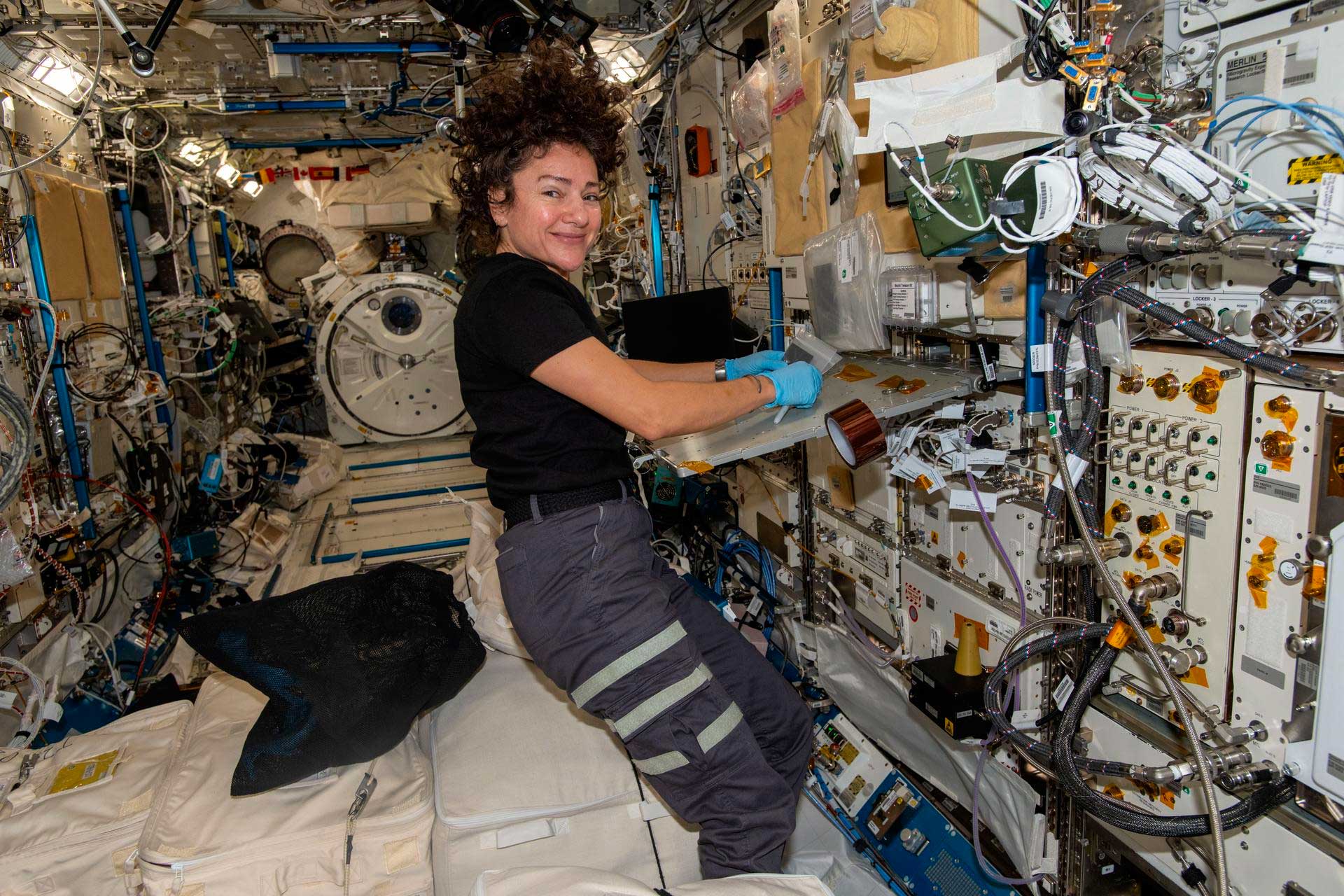
NASA astronaut Jessica Meir processes samples to observe and understand how metals solidify in microgravity, potentially benefiting terrestrial and space-based metallurgy and manufacturing technologies. NASA/Jessica Meir
NASA Flight Engineer Jessica Meir operated the Cold Atom Lab (CAL) quantum research facility in the Destiny laboratory module, along with its water hoses and fiber-optic cables. The hoses remove heat from CAL, cooling atoms to near absolute zero for observation. Sensitive, light-emitting fiber-optic cables help cool, trap, and study atoms with high precision, providing information about atomic wave functions, general relativity, and dark matter.
See also... New method for observing individual atoms confirms century-old quantum mechanical theory |
Sophie Adeneau created tiny, artificially engineered materials that mimic DNA in the Kibo laboratory module’s bioscience glovebox. The nanomaterials, manufactured for DNA Nano Therapeutics-3, resemble natural DNA building blocks, contain an anticancer drug, help reach target cells, and prevent unwanted side effects. This biotech research utilizes the effects of zero gravity to form stable structures using DNA-modeled nanoparticles, potentially leading to the development of a new type of cancer treatment.
The four astronauts concluded their shift with two biomedical examinations, checking the health of their eyes and hearts. Meir peered into an Adenote-controlled ocular imaging device to examine her retina, lens, and cornea. Williams had electrodes attached to his heart rate, and then Hathaway scanned his chest using the Ultrasound 3 biomedical device to monitor his cardiovascular system.
Roscosmos cosmonauts Sergei Kud-Sverchkov and Sergei Mikayev took turns filling out a computerized questionnaire as part of a multi-year assessment of the crew’s psychological state. Their answers will help researchers understand how cosmonauts psychologically adapt to long-duration spaceflight, which will serve as a basis for crew selection and the development of training methods. Flight engineer Andrei Fedyayev repaired equipment supporting sensors used to monitor the liquid separation and purification systems in the Zvezda service module.
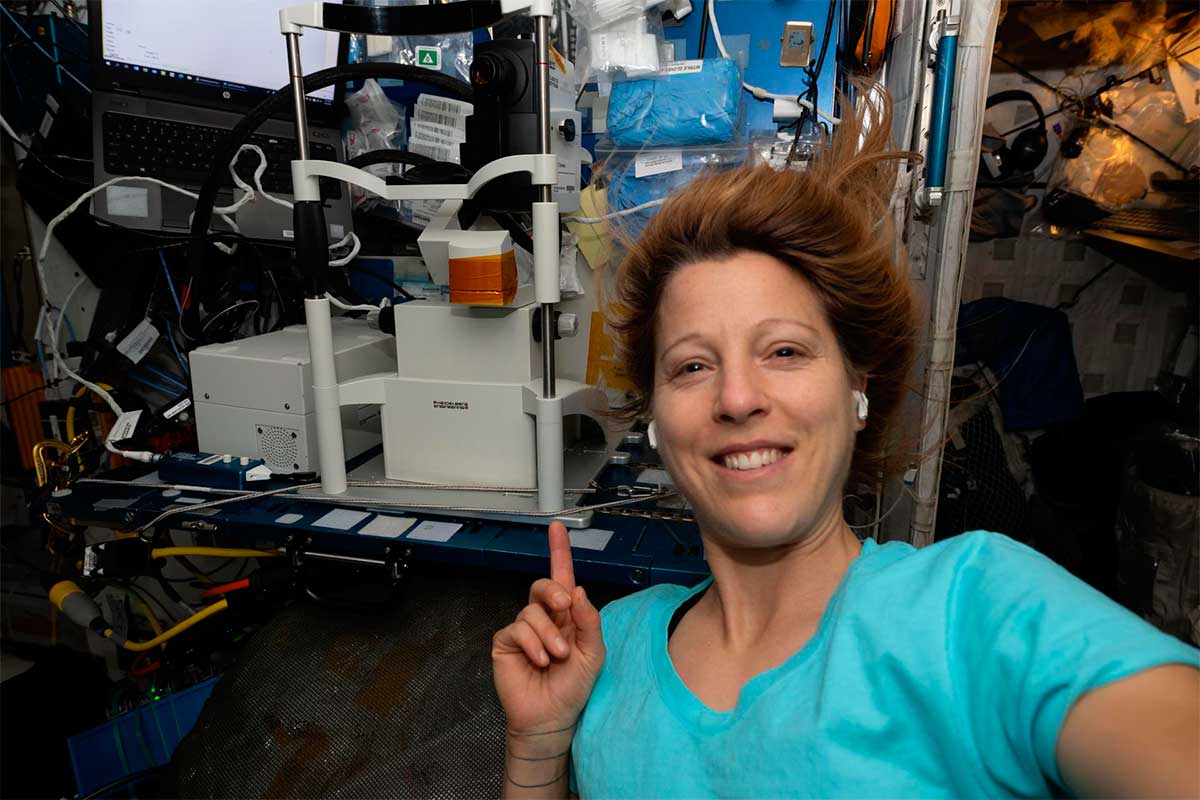
ESA astronaut Sophie Adeneau demonstrates an optical coherence tomography (OCT) machine, a medical imaging device used for eye examinations. On Earth, doctors monitor the examination in real time, examining the astronaut’s retina, lens, and cornea. ESA/Sophie Adeneau
The Expedition 75 crew spent September 2026 studying ways to protect the human body in microgravity conditions.
Station Commander Jessica Meir of NASA and Flight Engineer Sophie Adenok of ESA (the European Space Agency) worked together throughout Thursday in the Quest airlock, stowing the tools and tethers they used during the September 1 spacewalk. Meir then joined NASA Flight Engineer Jack Hathaway, who guided her through an eye exam that captured images of the retina, cornea, and lens, while researchers on Earth observed them in real time. Adenok wore the EasyMotion-2 spacesuit, programmed it to send electrical pulses, and then measured muscle contractions, which can complement space training. Doctors continually monitor the astronauts’ health and compare biomedical data collected on previous missions to ensure the crew’s fitness and well-being during long-duration missions to the Moon, Mars, and beyond.
On Thursday, Hathaway spent most of his shift transferring cargo into and out of Northrop Grumman’s Cygnus XL cargo spacecraft, berthed at the Earth-facing docking port of the Unity module. He also spent some time cleaning the Mochii miniature electron microscope and the internal components of the MUSES high-resolution hyperspectral Earth imaging system. NASA flight engineer Anil Menon worked in the Kibo laboratory module, dismantling advanced Earth observation equipment housed outside in the vacuum of space to demonstrate streaming ultra-high-resolution hyperspectral imagery and study atmospheric dynamics.
Roscosmos flight engineers Anna Kikina and Andrey Fedyayev jointly installed Earth observation equipment, allowing for automatic photographing of terrestrial landmarks while the crew slept. Kikina also measured her blood pressure using cuffs on her arm, wrist, and fingers as part of a long-term cardiovascular study. Fedyayev transferred fluids into the departing Progress 94 spacecraft, inspected laptops, and tested camera sensors.
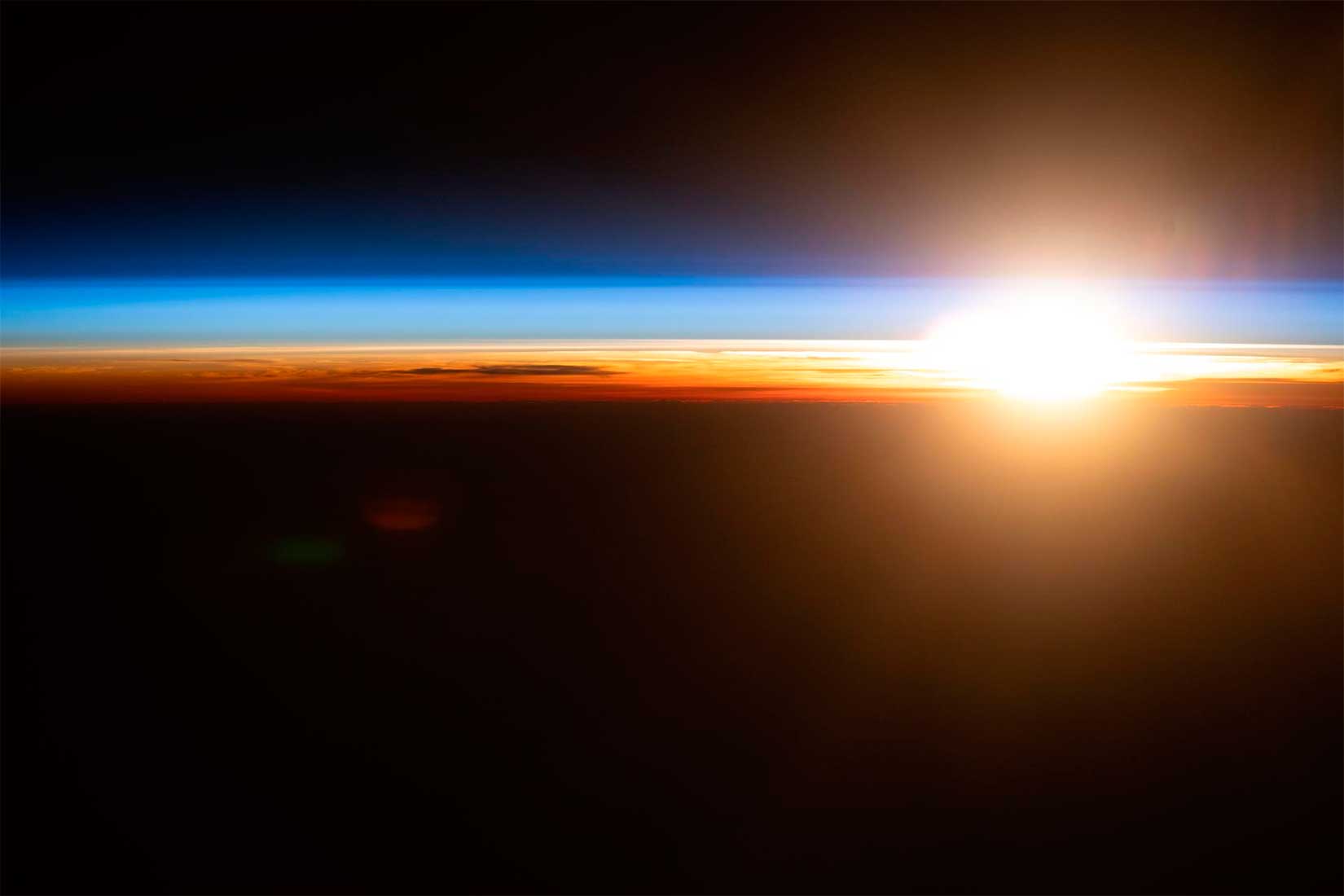
A sunrise over the Pacific Ocean, viewed from Earth’s orbit, illuminates the planet’s atmosphere, revealing cloud tops and the orange and blue hues that outline the planet’s horizon. NASA/Jessica Meir
NASA Commander Jessica Meir assisted ESA Flight Engineer Sophie Adenok (ESA) in the Columbus laboratory module during the PhysioTool experiment, which monitors astronauts’ blood flow, mental state, and sleep quality. Adenok first measured her blood pressure and then completed computerized cognitive tasks to understand how living in microgravity affects her mental abilities and behavior. NASA Flight Engineer Jack Hathaway then measured the stiffness and elasticity of Adenok’s muscles and tendons as part of the Myotones study, which helps monitor health during spaceflight.
Mair began her day wearing a smartwatch tracking her rest-activity cycles as part of the RelaxPro study, which aims to reduce stress and improve sleep quality in space. She then ended her shift looking into a visual field measuring device to assess her peripheral vision and help doctors identify potential vision problems caused by space. Hathaway worked all day Tuesday in the Destiny and Harmony modules, replacing filters that remove particles, gases, and odors from the station’s environment to ensure safety and comfort.
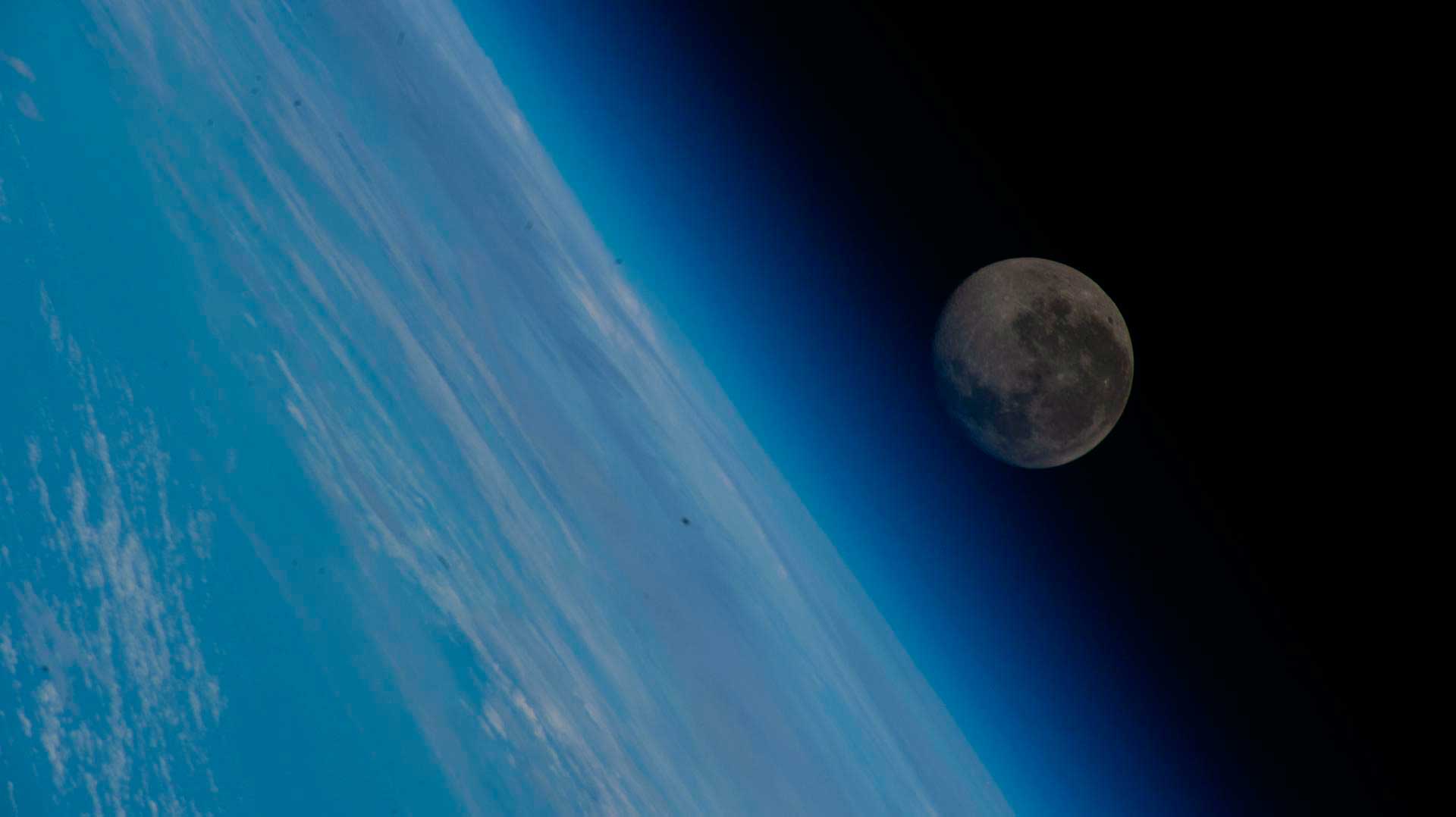
In this image taken from the International Space Station as it orbited 258 miles above the coast of Hong Kong, China, the waning crescent moon is visible above Earth’s blue atmosphere. NASA
Roscosmos flight engineer Andrei Fedyaev began his shift wearing virtual reality goggles, responding to computer-generated visual stimuli and testing how his sense of balance and orientation adapted to microgravity. At the end of the day, Fedyaev took a blood sample, centrifuged it, and then measured the red blood cell count.
Roscosmos flight engineer Anna Kikina tested the biomedical equipment, which uses a tiny digital camera and bright light to image a crew member’s eardrum and ear canal. Roscosmos flight engineer Pyotr Dubrov installed hyperspectral images of Earth to automatically photograph coastal landmarks in Australia and South America during the crew’s night shift.
Comment on Facebook* The owner of the Meta company is recognized as extremist in Russia and is banned.See also... Complete list of HTML/Javascript event handlers with examples List of required documents for a website in the Russian Federation |