Cutting-edge research in botany and biology is conducted aboard the International Space Station to support future missions to the Moon, Mars, and beyond.
NASA Flight Engineer Chris Williams, during Expedition 74 in April 2026, began his shift by collecting equipment and samples for the Veg-06 space botany study, which studies plant-microbe interactions in microgravity. Williams then mixed nutrients for alfalfa and microbial samples housed in the Veggie experiment module of the Columbus laboratory module. The results could contribute to the development of ways to grow plants for food on future space missions.
European Space Agency (ESA) Flight Engineer Sophie Adeneau worked inside the Harmony module, installing research and video equipment to study the effects of microgravity on astronauts’ gut health. She recorded the movements of roundworms, observing changes in their bodies and gut microbiomes under microgravity conditions. The findings could lead to the development of probiotics, or “living drugs,” to protect health in space and treat diseases and disorders on Earth. NASA’s press service provided a snapshot of the work and life processes aboard the ISS.
Afterward, Adenok and Williams joined NASA Flight Engineer Jessica Meir and continued unpacking new scientific equipment, crew supplies, and more inside Northrop Grumman’s Cygnus XL cargo spacecraft. Meir began her shift in the Kibo laboratory module, filming content for JAXA (the Japan Aerospace Exploration Agency) to promote space awareness and commercialization of low Earth orbit.
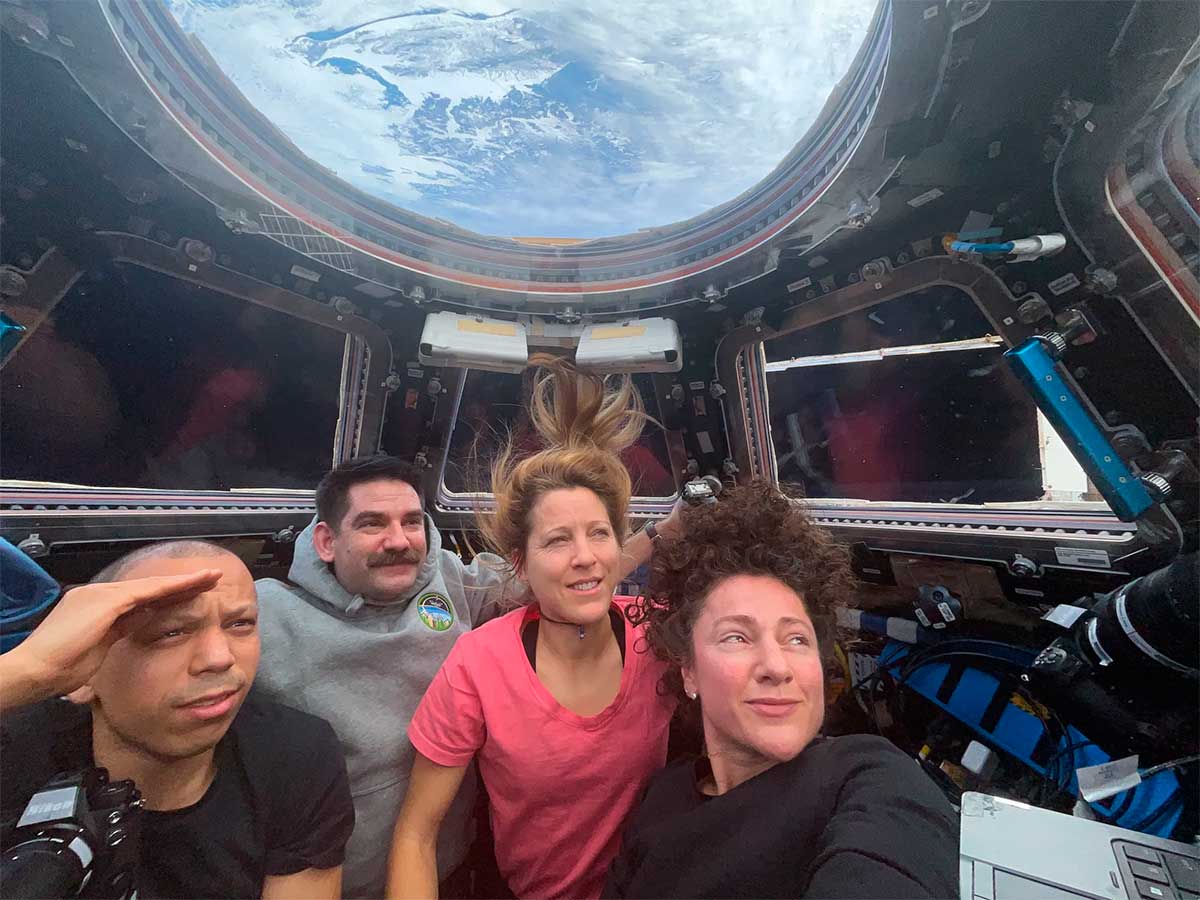
Expedition 74 Flight Engineers (left to right) Chris Williams, Jack Hathaway, Sophie Adeno, and Jessica Meir stand inside the cupola of the International Space Station, waiting to observe the plasma trail of the Orion spacecraft carrying the Artemis II crew as it reenters Earth’s atmosphere on April 10, 2026. NASA/Jessica Meir
On April 30, 2026, the Expedition 74 crew’s research program aboard the International Space Station included new simulators, arterial scanning, and space gardening. The crew also worked on their spacesuits and continued unloading the Progress 95 cargo ship.
NASA Flight Engineer Chris Williams spent a busy day in the Columbus laboratory module, testing new exercise equipment and watering plants to support ongoing research. Williams first performed tug-of-war exercises on the European Exploration Missions Advanced Trainer (E4D), while a computer monitored his speed, power, and heart rate. The E4D was delivered on April 13 aboard the Cygnus XL cargo spacecraft to test its ability to support crew training during long-duration missions at great distances from Earth. He then watered and photographed alfalfa plants growing in the Veggie experiment module to study plant-microbe interactions in microgravity.
Adenok and Hathaway split up and worked on two separate studies in space botany, studying how seeds germinate in microgravity. One experiment was designed to get students interested in space, the other to popularize space agriculture.
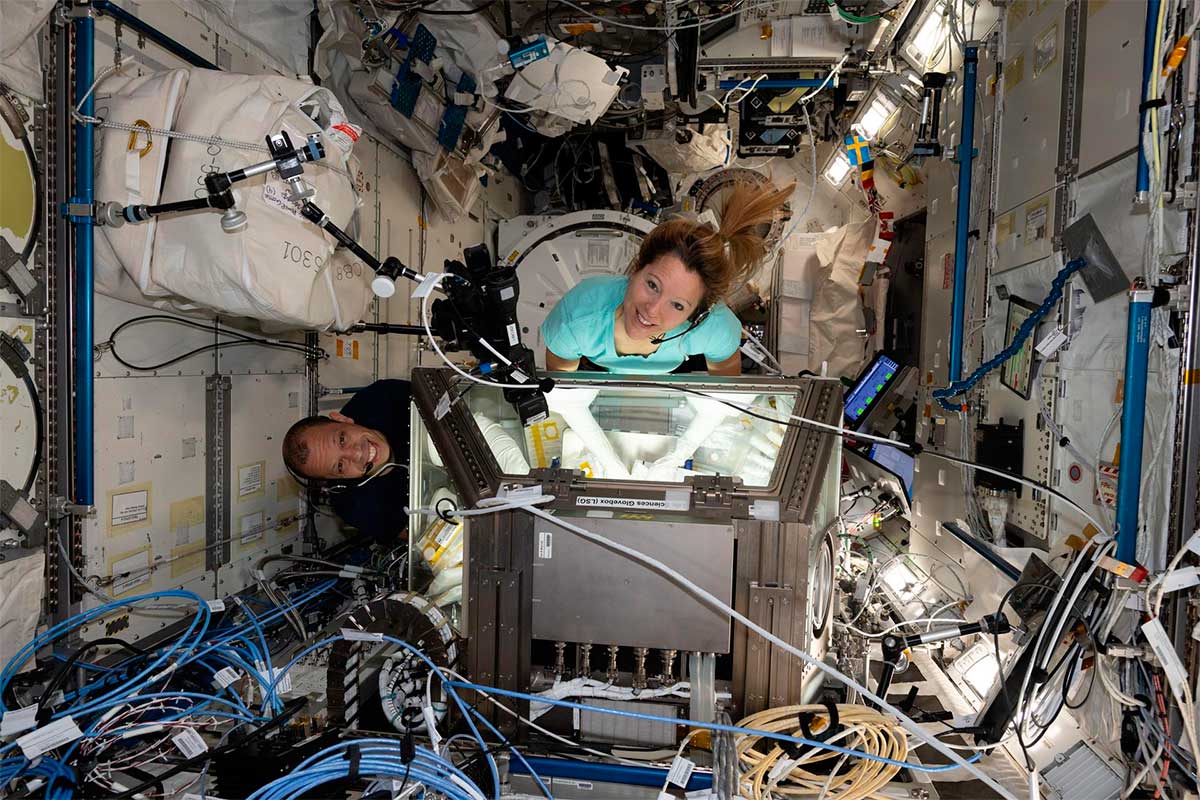
Astronauts Chris Williams of NASA and Sophie Adenok of ESA work together in the Kibo laboratory module’s biological research glovebox, processing samples of genetic material for the DNA Nano Therapeutics-3 experiment. NASA/Jessica Meir
In May 2026, aboard the International Space Station, research into DNA-based therapeutics and space agriculture took center stage. The Expedition 74 crew also spent a busy day servicing various laboratory equipment, including a quantum physics facility, a spacesuit, and life support equipment.
NASA flight engineer Jessica Meir was working in the Harmony module on a biotechnology study, studying the behavior of tiny, artificially created DNA-mimicking materials in microgravity. Meir pointed a measuring instrument called a spectrophotometer at samples of DNA-like materials placed in small transparent containers to analyze their ability to form stable structures. She then transmitted the study data to a computer so doctors could access the information and learn how to improve and develop future treatments, or nanotherapies, that would more precisely target cancer cells.
Flight Engineer Sophie Adeneau of ESA (European Space Agency) watered alfalfa plants growing at the Veggie research facility in the Columbus laboratory module as part of the Veg-06 plant-microbe interaction study. The experiment examines how plants obtain nitrogen and thrive in microgravity to support food production in space during long-duration missions. Adeneau then checked her intraocular pressure using a tonometer, an ophthalmological device that measures the fluid pressure in the eye. Doctors regularly examine astronauts’ eyes to detect and prevent potential vision problems caused by space.
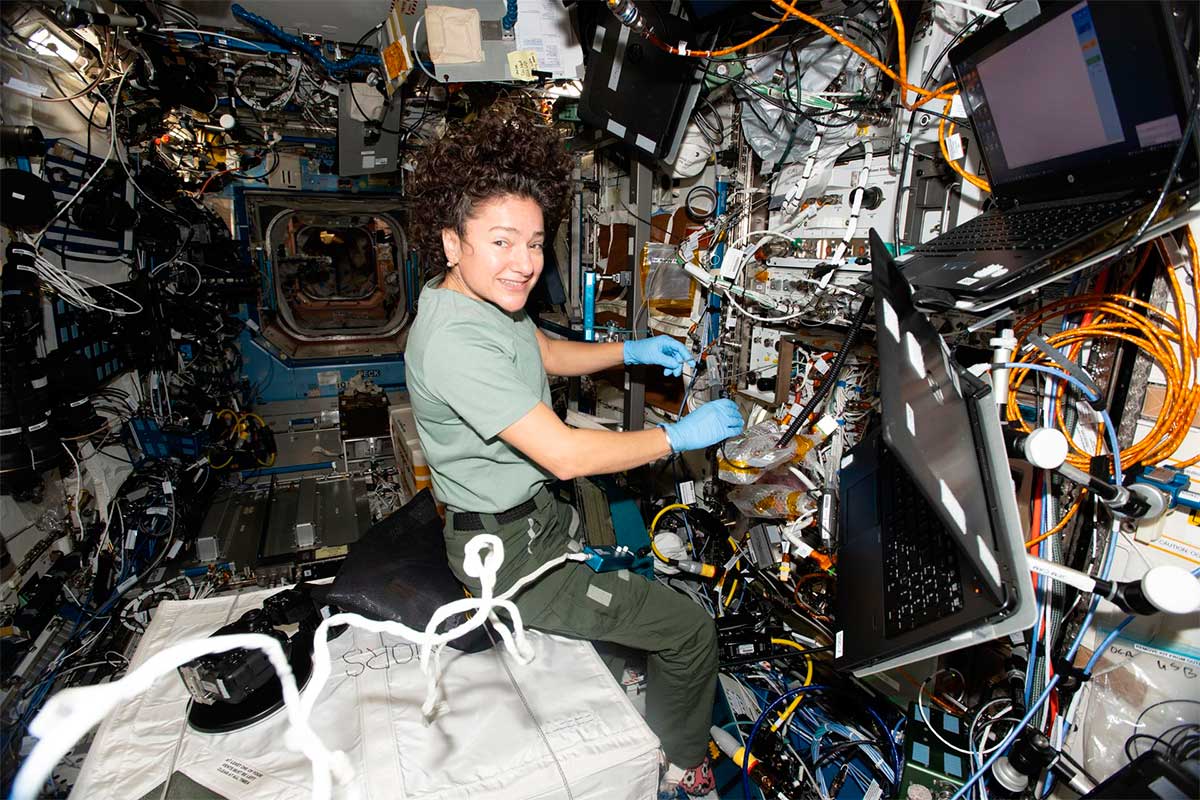
NASA astronaut Jessica Meir inspects sensitive fiber-optic cables that emit light that helps cool, capture, and study atoms with high precision inside the Cold Atom Laboratory aboard the International Space Station. NASA/Jack Hathaway
Station commander Sergei Kud-Sverchkov and flight engineer Sergei Mikayev began their shift by taking turns wearing an acoustic sensor around their necks and recording their rapid exhalations to understand how microgravity affects the respiratory system. The Roscosmos duo then worked together for the rest of the day, unloading cargo packed aboard the Progress 95 supply ship.
During his shift, Roscosmos flight engineer Andrei Fedyaev continued to replace hoses, connectors, and valves that supply water removed from the station’s air by the dehumidifiers of the Zvezda service module.

In early November 2023, as part of the Choctaw Heirloom Seeds project, five varieties of Choctaw heirloom seeds from Oklahoma were sent aboard the International Space Station. These seeds were: “Isito” (Choctaw sweet potato), “Tobi” (Smith pea), “Tanchi tokhbi” (cornmeal), “Tvnishi” (lamb quarter), and “Chukfi.” The seeds spent six months aboard the station and returned to Earth in April 2024.
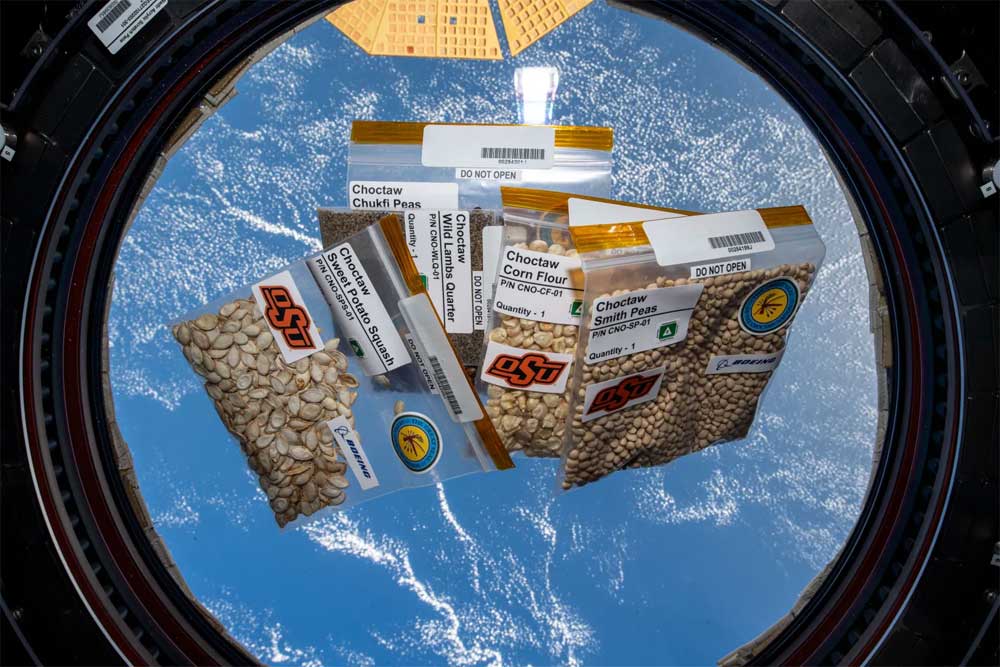
“Space” Seeds. NASA/Laurel O’Hara
In April 2024, Chinese astronauts also began conducting medical tests and growing plants in orbit. Astronauts living aboard China’s Tiangong space station were busy.
The astronauts monitored the environment, maintained equipment, ran on a treadmill, and grew plants.
The crew also conducted medical tests aimed at assessing Achilles tendon stiffness, lower limb kinematics, foot pressure, and eye-hand coordination. These tests will be used by researchers on Earth to study changes in astronauts’ stability, precision, and fine motor coordination during spaceflight, as well as to develop future mission procedures and human-machine interface design, according to Chinese space industry representatives.
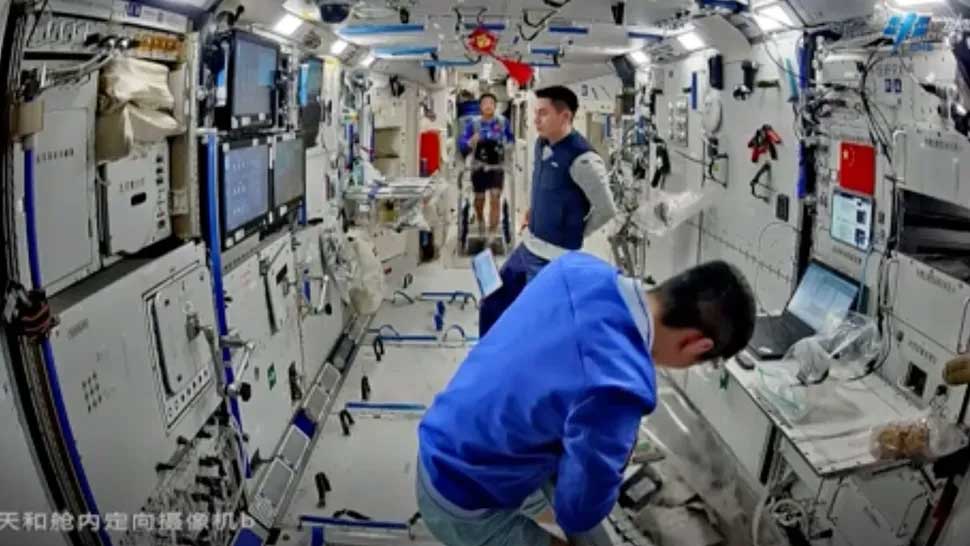
Astronauts from China’s Shenzhou-18 spacecraft perform various tasks aboard the Tiangong space station. CCTV
The astronauts used portable acupuncture devices for electrical stimulation and then completed evaluation forms. According to state broadcaster China Central Television (CCTV), the tests were based on theories of traditional Chinese medicine and aimed to shed light on whether and how acupuncture stimulation can regulate cardiovascular function and prevent muscle atrophy in microgravity.
Chinese scientists from Chongqing University successfully conducted an experiment in which a butterfly hatched from a cocoon aboard a space module in orbit, marking the first time such an experiment has been conducted in the world, the Xinhua news agency reports.
“A butterfly chrysalis, previously sent into space aboard the Kuaizhou-11 launch vehicle, hatched in the Shennong Kaiwu-2 miniature space ecosystem developed by a research team from Chongqing University,” the agency said in a statement.
It is noted that on December 13, 2025, the experimental module carrying the 8.3-kilogram ecosystem was launched into orbit. Technical parameters such as air pressure, temperature, and humidity inside the sealed chamber remained stable and within normal limits.

A butterfly bred in space by Chinese scientists.
Satellite images show the newly hatched butterfly moving around inside the pressurized cabin, landing on leaves, and flapping its wings. Its activity demonstrates “good adaptation to the microgravity environment of space.”
“This isn’t just another ‘space insect,’ but a solid step forward in the feasibility of long-term operation of complex life support systems in orbit,” the agency quotes Xie Gengxin, chief designer of the experimental payload.
Going forward, the team of scientists will focus on testing the module’s structural stability, its adaptability to the space environment, and ensuring the cabin’s long-term hermetic integrity.
Space botany news from Earth
In 2024, the MULTI-TROP project assessed the impact of gravity and other factors on plant growth. Plant roots grow downward under the force of gravity on Earth, but in microgravity, they grow in random directions, posing a challenge for the development of plant growth systems in space.
The results of this study could help address this problem by facilitating the cultivation of plants for food and other uses in future space missions, as well as improving plant growing methods on Earth.
The researchers confirmed that 3D microcomputed tomography can map plant root orientation in space and used this method to demonstrate that carrots grown in both real and simulated microgravity had random root orientations. These results suggest that simulated microgravity represents a reliable and more accessible tool for studying plant adaptation to spaceflight.
In early 2026, scientists grew chickpeas in simulated lunar soil. Symbiotic mixtures of fungi and compost could transform the sterile lunar regolith into soil suitable for growing crops on the Moon.
According to research based on experiments with chickpeas, a combination of mushrooms and compost could make lunar regolith more fertile and help astronauts grow crops on the Moon in the future. The results of the study are described in a paper published on March 5, 2026, in the journal Scientific Reports.
Future lunar outposts should be as self-sufficient as possible to avoid the high costs of constantly transporting supplies from Earth. If agricultural crops can be grown on the Moon, this would be a significant step in this direction.
See also... New method for observing individual atoms confirms century-old quantum mechanical theory |
The problem is that the lunar soil—what we call regolith—is not particularly suitable for growing plants.
Unlike terrestrial soil, which is rich in organic matter, regolith contains no microorganisms or organic material at all. While it does contain some vital nutrients, it is also full of toxic metals such as aluminum, copper, and zinc. Furthermore, it is not particularly permeable to water, which poses a problem for irrigating crops.
Therefore, scientists are striving to process lunar regolith to make it more suitable for plant growth. This has led to numerous experiments. Now, a team of scientists has discovered a new mixture, incorporating organic materials commonly used to restore soil on Earth, that increases the fertility of the regolith.
“The goal of the study is to understand the viability of growing crops on the Moon,” said study leader Sara Santos of the University of Texas in a statement. “How can we convert this regolith into soil? What natural mechanisms could trigger this transformation?”
When conducting experiments with lunar regolith, scientists use simulants—artificial mixtures that closely resemble the real sample. This is because samples of genuine lunar regolith are rare and of scientific value.
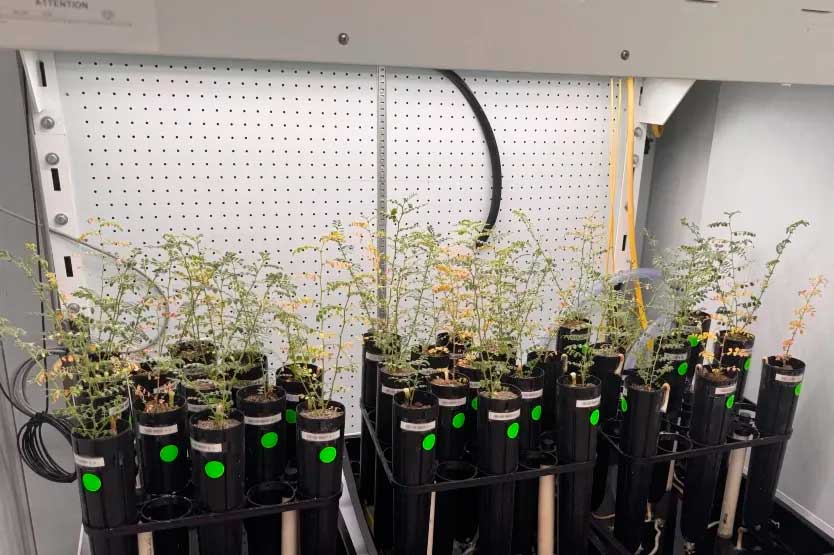
Chickpea plants growing in various mixtures of simulated moonlight, vermicompost, and mushrooms. Yellowing leaves are a sign of stress. Jessica Atkey n
In their experiment, Santos’ team added vermicompost of varying concentrations to several samples of a simulant created from the real regolith returned to Earth during the Apollo missions. Vermicompost is compost produced by red earthworms, which decompose biological waste such as food scraps, hygiene products, and cotton clothing, recycling it instead of throwing it away.
Some of these samples also had arbuscular mycorrhizal fungi, or AMF for short, added, while other samples had only AMF without vermicompost, providing a mixture of different concentrations for contrast and comparison.
AMF (anti-molybate mycorrhizal fungus) is a fungus widely found in soil. It has numerous beneficial properties, such as improving nutrient circulation in the soil, reducing toxic metal levels, and even producing a protein that helps bind soil particles, reducing erosion.
Santos’ team grew chickpeas in all of these samples. They also used a small amount of chickpeas growing in normal, above-ground soil as a control sample to compare with all the chickpea plants grown in the regolith.
Over time, Santos’ team compared the growth of chickpea plants in different samples, as well as the number and weight of their seeds. They found that chickpea plants flowered and produced seeds only in samples treated with both vermicompost and AMF, and containing no more than 75% regolith. Higher concentrations resulted in severe signs of stress in the plants.
However, even with a regolith content of less than 75%, the situation remained less than ideal. For example, compared to control plants grown in normal soil, plants in the simulant produced fewer seeds. However, individual seeds from plants grown in the simulant with a vermicompost content of 25 to 50% were comparable in weight to those from control plants. Plants grown in the simulant treated with AMF also had significantly higher shoot and root dry weights, indicating that the presence of AMF promoted plant growth.
Currently, scientists say it is unclear how edible chickpeas grown in regolith are.
“We want to understand how viable they are as a food source,” Jessica Atkin, a graduate student at Texas A&M University and lead author of the study, said in a statement. “How healthy are they? Do they contain the nutrients astronauts need? If they’re unsafe to eat, how many generations will it take before they’re safe to eat?”
Nevertheless, the obtained results support the idea that in the future, agricultural crops could be grown on lunar regolith to support astronauts living on a lunar base. Indeed, mycorrhizal fungi successfully colonized and survived in the simulator, suggesting that terrestrial organisms could find a home in the lunar regolith.
By refining the soil restoration strategies employed by Santos and Atkins’ team, it might even be possible to improve the fertility of the regolith and, over time, transform it into self-sustaining soil rich in organic molecules and microbial life.
Comment on Facebook* The owner of the Meta company is recognized as extremist in Russia and is banned.See also... Complete list of HTML/Javascript event handlers with examples List of required documents for a website in the Russian Federation |