


Cells are the fundamental units of life, comprising the diversity of all living things on Earth, both individual cells and multicellular organisms. To better understand how cells perform life’s most important functions, scientists have begun developing synthetic cells—non-living fragments of cellular biochemistry enclosed in a membrane that mimics specific biological processes.
Researchers are developing a “foundational document” for the development of synthetic cells. The development of synthetic cells may one day provide answers to questions about developing new ways to combat disease, supporting long-term human spaceflight, and better understanding the origins of life on Earth.
In a paper published in the journal ACS Synthetic Biology in early 2024, the researchers describe the potential opportunities that the development of synthetic cells could open and the challenges that lie ahead in this groundbreaking research. They also present a roadmap to inspire and guide innovation in this exciting field.
“The potential of this field is incredible,” said Lynn Rothschild, lead author of the paper and an astrobiologist at NASA’s Ames Research Center in Silicon Valley, California. “We are honored to lead this group and develop what we believe will be a foundational document, a resource that will propel the field forward.”
The development of synthetic cells could bring many benefits to humanity. Analyzing the intricacies involved in cell creation could help researchers better understand how cells originally evolved or pave the way for the creation of new life forms more resilient to harsh conditions such as radiation or low temperatures.

The development of synthetic cells could lead researchers to new advances in food science and medicine, as well as a better understanding of the origins of life on Earth. NIH/Rhoda Baer
These innovations could also lead to advances in food science and medicine—improving the efficiency of food production, detecting contaminants during production, or developing new cellular functions that could lead to new treatments for chronic diseases and even synthetic organ transplants, NASA’s press service reports.
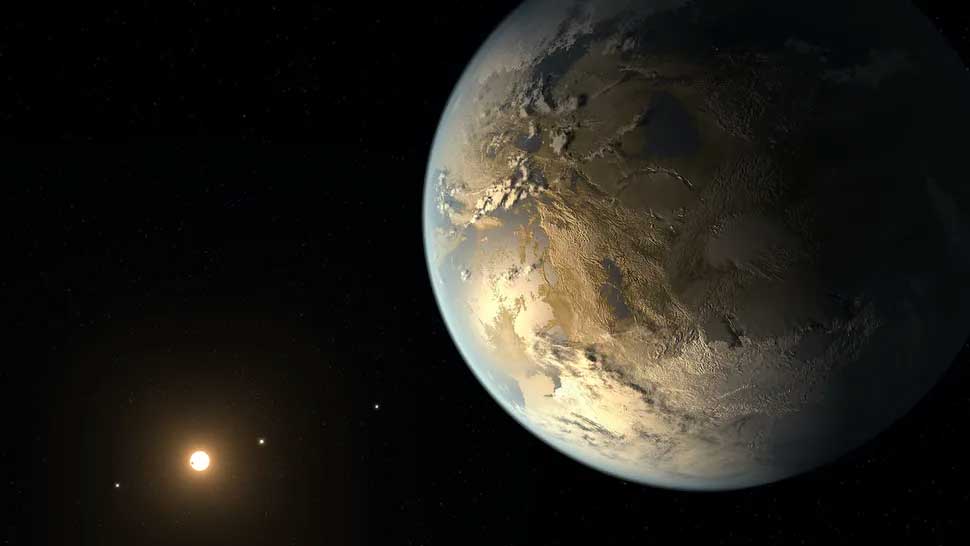
Creating synthetic cells could also answer some of the most important questions about the possibility of life beyond Earth.
“The challenge of creating synthetic cells allows us to understand whether we are alone in the universe,” Rothschild said. “We are beginning to develop skills that allow us not only to create synthetic analogues of life that could exist on Earth, but also to consider pathways to life that might form on other planets.”
As research into developing synthetic cells continues, Rothschild sees opportunities that could expand our understanding of the complexity of natural life.
“Life is an amazing thing. We constantly exploit the potential of cells: we build houses out of wood, use leather to make shoes, and breathe oxygen. Life is astonishingly precise, and if we harnessed it, it’s incredible what we could achieve.”
Scientists have built a functioning human brain cell from salt and water. Scientists have long mimicked human synapses using common solid materials, but a new study attempts to recreate them using extremely simple ingredients: water and salt.
By recreating human synapses using the same environment as our biological brain, devices known as iontronic memristors can mimic the short-term plasticity found in our brains.
While neuromorphic (brain-like) computing is in its infancy, multi-million dollar projects attempting to replicate the brain’s neurological capabilities show that the water memristor could unlock new levels of computing power and efficiency.
Since ENIAC first displayed its 1s and 0s on its screens in the 1940s, computers have made astonishing technological advances. In less than a century, computers that once filled entire rooms have become incomparably faster, more efficient, and can even be worn on the face (for some reason). While this colossal advancement, achieved in nearly a single human lifetime, is a remarkable engineering feat, it pales in comparison to the billions of years of continuous evolution that have led to the development of one of the most impressive computing devices ever created: the human brain.
Of course, mimicking nature is a well-known strategy in fields like materials science, medicine, and even agriculture. So could copying the human brain lead to a breakthrough in artificial intelligence? The short answer is “yes,” and the long answer is “very yes.”
Scientists from Utrecht University (the Netherlands), exploring the emerging field of iontronic neuromorphic computing, have successfully created an artificial device that mimics human brain synapses. The device, just 150–200 micrometers in diameter (a human hair is about 100 micrometers thick), uses salt and water to process complex information, similar to how our brains process it. Details of this first-of-its-kind device were published in the journal Proceedings of the National Academy of Sciences (PNAS) in April 2024.
“While artificial synapses capable of processing complex information already exist based on solid materials, we are the first to show that this can be achieved using water and salt,” said Tim Kamsma, a doctoral student at Utrecht University and lead author of the study, in a press release. “We effectively reproduce neuronal behavior using a system that shares the same environment as the brain.”

TEK IMAGE/SCIENCE PHOTO LIBRARY/Getty Images
The device, known as an iontronic memristor (memory resistor), developed by South Korean scientists, is cone-shaped and filled with a solution of water and salt. When an electrical pulse is applied to the device, ions move through the channel, altering the surrounding ionic environment. If the pulse is particularly strong or prolonged, the channel’s conductivity changes, leading to strengthening or weakening of neural connections.
The scientists also found that the channel length influences the time it takes for changes to disappear. According to Kamsma, this means that iontronic memristors can be configured to remember previous electrical charges, “similar to the synaptic mechanisms observed in our brain.”
See also... New method for observing individual atoms confirms century-old quantum mechanical theory |
The Australian supercomputer DeepSouth aims to be the first machine to simulate human brain synapses. While this research has focused on traditional solid materials, Kamsma’s work suggests that a water memristor may be better suited to reproducing the short-term synaptic plasticity of our brain.
“This is an important step toward creating computers that can not only mimic the human brain’s communication patterns but also use the same environment,” Kamsma said. “This may ultimately pave the way for computing systems that more accurately replicate the remarkable capabilities of the human brain.”
AI is bringing scientists closer to mapping the organized chaos within our cells. As artificial intelligence permeates various areas of our society, it is rapidly infiltrating others as well. One area where it is making a significant contribution is protein science.
We’re talking about the molecules that power our cells. AI has advanced this field by predicting what these molecular machines look like, which tells scientists how they perform their work—from processing our food to converting light into sugar.

The interior of a cell is a complex system of interactions between molecules. Keith Chambers/Science Photo Library
Scientists at Google DeepMind have taken their protein prediction model to the next level with the release of AlphaFold3. This AI-powered program can predict the unique shape of proteins, as well as virtually any other type of molecule to which a protein binds to function.
Producer Burley McCoy speaks with host Emily Kwong about the potential impact and limitations of this new technology. They also discuss the broader field of AI protein research and why researchers hope it will help solve a range of problems, from disease to climate change.
Currently, some laboratory models combine two or more brain organoids to form an “assembloid” that can simulate intercellular interactions between different brain regions.
In this regard, the research team stated that the field needs to consider new ethical and regulatory frameworks in advance if conscious organoids become a reality.
Scientists generally believe that brain organoids—three-dimensional tissue clusters that mimic certain brain structures—are too simple to support consciousness. But as brain organoids become increasingly complex, there is a theoretical possibility that some of them could one day surpass this threshold.
Brain organoids created to date typically represent only one part of the brain. They are used to study brain development, diseases, and drug side effects without requiring animals or the human brain.
See also... Complete list of HTML/Javascript event handlers with examples List of required documents for a website in the Russian Federation |

