A Chinese probe returned soil samples from the far side of the Moon to Earth for the first time on June 25, 2024. The Chang’e-6 probe landed on June 25, 2024, at 2:07 PM local time (8:07 AM Moscow time). The landing occurred “exactly at the designated location”—in Siziwang Banner in the northern Inner Mongolia Autonomous Region, Xinhua reported. Zhang Kejian, head of the China National Space Administration, declared the mission a “complete success.”
The mission lasted 53 days. On May 3, the Automatic Interplanetary Station (AIS), named after the Chinese goddess, was launched into space aboard a Long March 5 heavy-lift rocket. Five days later, the landing module, carrying a small rover, separated from the orbital module and landed safely. Their operational area included one of the largest craters in the entire solar system—the so-called South Pole-Aitken basin.
Using a specialized drill and a robotic arm, the lander extracted two kilograms of dust and rocks from both the surface and shallow depths. A special drilling technology preserved the volatile substances, which are essential for collecting scientific data. The equipment was controlled via a relay satellite, as direct communication is impossible there.
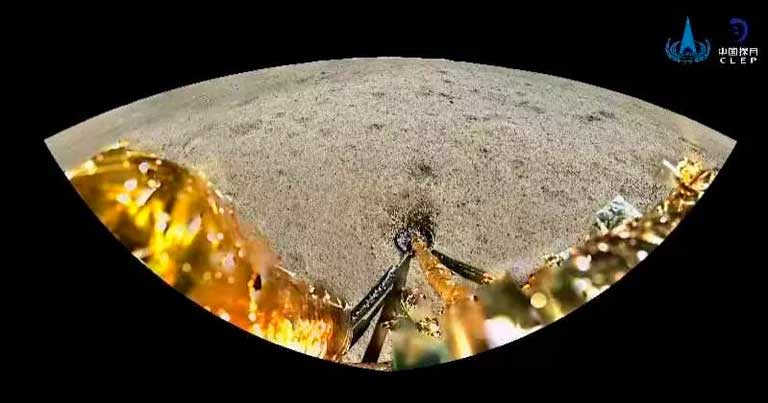
A panoramic image taken by the Chang’e-6 lander’s camera. China National Space Administration
On June 3, the ascent module delivered the valuable cargo to lunar orbit. After docking with the orbiter, the capsule, loaded with soil, was transferred to the segment, which then returned to Earth.
Regolith (lunar soil) from the far side of the moon was returned to Earth for the first time that day. Previously, Soviet and Chinese probes, as well as American astronauts, had only returned samples from the visible side. It’s also significant that Chang’e 6 landed near the south pole. Previous studies, including those conducted using Russian instruments, have shown that this area contains large reserves of water. If soil sample analysis confirms this, lunar bases could be built there. China already has such plans, and Russia is also working on this issue.
Furthermore, water can be used to make fuel. The Moon has long been considered a potential launch pad for interplanetary travel, as its gravity is weak.
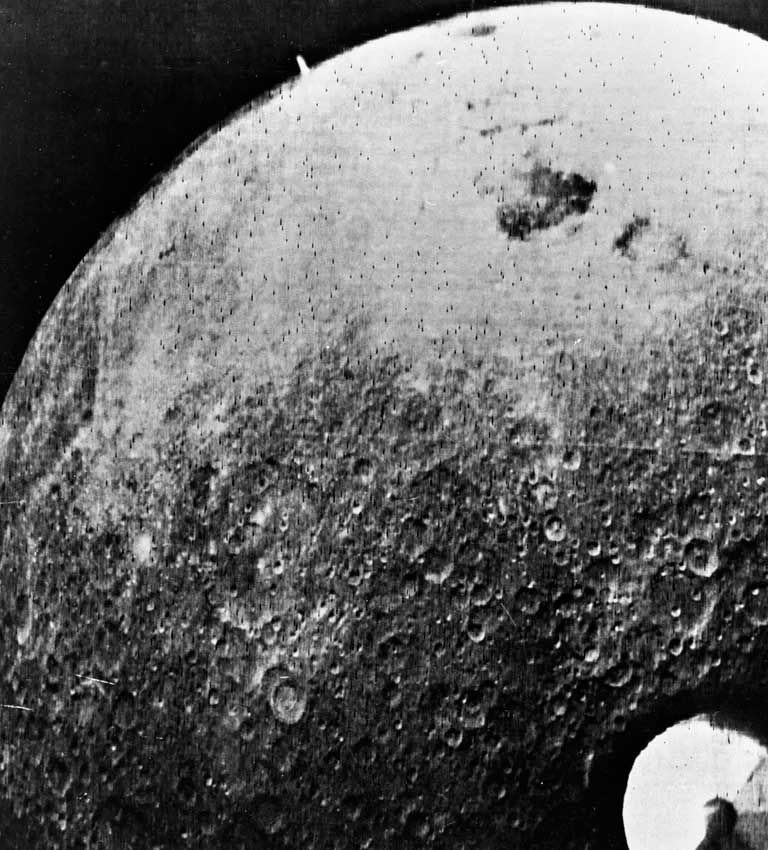
The far side of the Moon. The large spot on the right is the Orientale Mare. RIA Novosti
In September 2024, a group of scientists from China analyzed the composition of the soil delivered to Earth in June from the far side of the Moon by the Chinese probe Chang’e-6, China Central Television reported.
As reported by the TV channel, a joint team of Chinese scientists published a scientific article on the results of their study of soil from the far side of the Moon in the journal National Science Review. It describes the physical, mineralogical, and geochemical characteristics of the samples obtained.

According to the scientists, the soil samples have a relatively low density and a loose and porous structure. The particle size distribution of the lunar soil is bimodal, which may indicate that the sample may have been mixed from various sources. The scientists also found that, compared to the lunar soil samples returned by the Chang’e-5 probe in 2020, the soil from the far side of the Moon has a significantly increased plagioclase content, while the olivine content has decreased significantly. This, according to the researchers, indicates a clear influence of non-basaltic materials on the lunar soil in this region. The lunar soil samples returned by Chang’e-6 are primarily composed of basalt, breccia, cementite, light-colored rocks, and glassy material. Basalt fragments account for 30% to 40% of the total sample count. The minerals are represented mainly by pyroxene, plagioclase and ilmenite, while the olivine content is extremely low.
Geochemical analysis showed that Chang’e-6 samples have high aluminum oxide and calcium oxide contents, while iron oxide content is relatively low.
The TV channel noted that thanks to in-depth studies of lunar soil samples returned by Chang’e-6, the understanding of the Moon’s internal structure, its material composition, as well as the processes of formation of the Earth’s natural satellite and its evolution will constantly expand.
The first paper on samples collected by China’s Chang’e-6 lunar probe showed that these samples differ in some respects from those collected on the near side of the Moon. Thus, they provide new insights and lead to new theories about the Moon and its evolution.
In early May 2024, China launched Chang’e-6, a complex 53-day lunar sample return mission. The lander collected samples and drilled a hole in an area known as Apollo Crater, then launched them into lunar orbit aboard the ascent/descent module. Once in lunar orbit, the samples were transferred to a waiting lunar orbiter. By late June 2024, the descent module had returned 1,935.3 grams of lunar material (4 pounds 4.29 ounces) to Earth.
Initially, the samples were transported to specially equipped storage facilities and laboratories for analysis and subsequent distribution for scientific research. A study published in the journal National Science Review has provided us with the first insight into this valuable material.
Li Chunlai and his colleagues analyzed some of the samples collected by the robotic scoop. They found that the collected samples had a lower density compared to previous lunar surface samples obtained from the nearside of the Moon. Specifically, the samples from the farside of the Moon had a looser and more porous structure than those from the nearside. “The sample is quite loose and would be even fluffier in its ‘natural’ state on the lunar surface,” the researchers wrote.
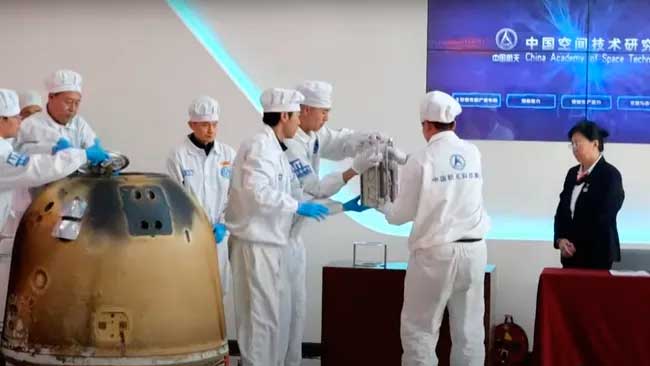
Technicians retrieve samples collected from the far side of the moon from the return capsule of the Chang’e-6 lunar mission. CCTV
Compared to samples collected during the 2020 Chang’e 5 mission on the nearside of the orbit, the soil also contains more light-colored particles, such as feldspar and glass. This, along with other compositional data, indicates a higher proportion of materials delivered to the sampling site from further away. This occurs, for example, when impact events (such as an asteroid collision) eject debris upward and outward from the impact zone. The composition of the basaltic rock at the sampling site is thought to be a mixture of debris from non-basaltic regions.
The samples also show lower concentrations of KREEP, a designation for rocks enriched in potassium (chemical symbol K), rare earth elements (REE), and phosphorus (chemical symbol P), which are more abundant on the near side of the Moon. This asymmetry may partially explain why the far side of the Moon appears so different from the near side.
See also... New method for observing individual atoms confirms century-old quantum mechanical theory |
The researchers argue that the samples could contribute to understanding several key aspects of lunar science. These include the early evolution of the Moon, differences in volcanic activity on the near and far sides, the history of impacts in the inner solar system, evidence of galactic activity preserved in the lunar weathering layer, and the composition and structure of the lunar crust and mantle.
Lunar rock samples suggest that the Moon’s far side, hidden from Earth’s view, may have a cooler interior than its near side.
In June 2024, China’s Chang’e-6 mission returned the first-ever samples from the far side of the Moon. Analysis of these fragments, collected from a massive crater within the South Pole-Aitken Basin (SPA) on the Moon, revealed that the samples were approximately 180°F (100°C) cooler than samples from the near side of the Moon collected by NASA’s Apollo missions. The results of the study were published on September 30, 2024, in the journal Nature Geoscience.
“The near and far sides of the Moon are very different, both on the surface and possibly in their interior. This is one of the Moon’s greatest mysteries,” said Yan Li, co-author of the study, in a statement. “We call it a two-faced Moon. A significant temperature difference between the near and far sides of the mantle has long been suspected, but our study provides the first evidence using real samples.”
Unlike the smoother, darker near side, marked by extensive volcanic plains, the far side has a thicker crust, is more mountainous and heavily cratered, and contains far fewer lava-filled basins. New evidence suggests that these differences extend beneath the surface into the Moon’s interior.
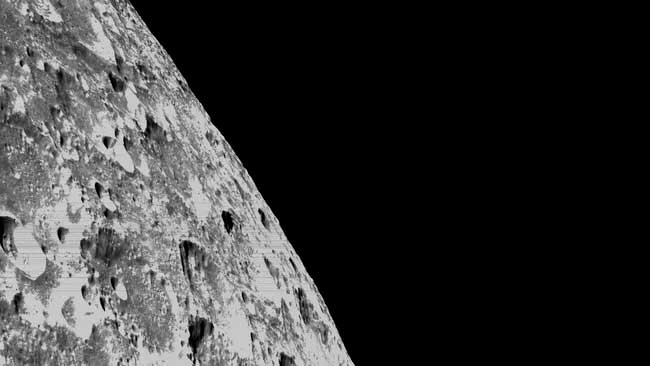
The cratered far side of the Moon, as seen by NASA’s Orion spacecraft.
Based on their analysis, the researchers estimated the age of the Chang’e-6 samples at approximately 2.8 billion years. The samples formed from lava deep within the moon’s mantle at temperatures of approximately 1,100°C (2,012°F)—approximately 100°C (180°F) cooler than samples from the nearside. The team combined computer modeling with satellite data to simulate the rock’s temperature at the time of crystallization and estimate the temperature of its “parent rock,” the material that melted into magma before solidifying into the collected sample.
The far side is thought to have lower abundances of heat-producing elements, such as uranium, thorium, potassium, phosphorus, and rare earth elements—collectively referred to as KREEPs. These elements generate heat through radioactive decay. If they migrated toward the near side early in the moon’s history, this could explain why it remained hotter, more volcanically active, and chemically distinct from the near side.
How this imbalance arose remains unclear. Some theories suggest that a collision with a colossal asteroid redistributed the moon’s interior material, while others suggest that the moon once had a smaller “sibling” that merged unevenly with it, enriching its nearside with heat-producing elements. According to the statement, Earth’s gravitational pull could also have influenced the distribution of elements.
“These results bring us one step closer to understanding the two sides of the Moon,” study co-author Xuelin Zhu said in a statement. “They show us that the differences between the near and far sides exist not only on the surface but also deep within.”
While the study doesn’t reveal the Moon’s current internal temperatures, the researchers argue that any temperature gap could have existed for billions of years, shaping the lunar landscape we see today.
Comment on Facebook* The owner of the Meta company is recognized as extremist in Russia and is banned.See also... Complete list of HTML/Javascript event handlers with examples List of required documents for a website in the Russian Federation |