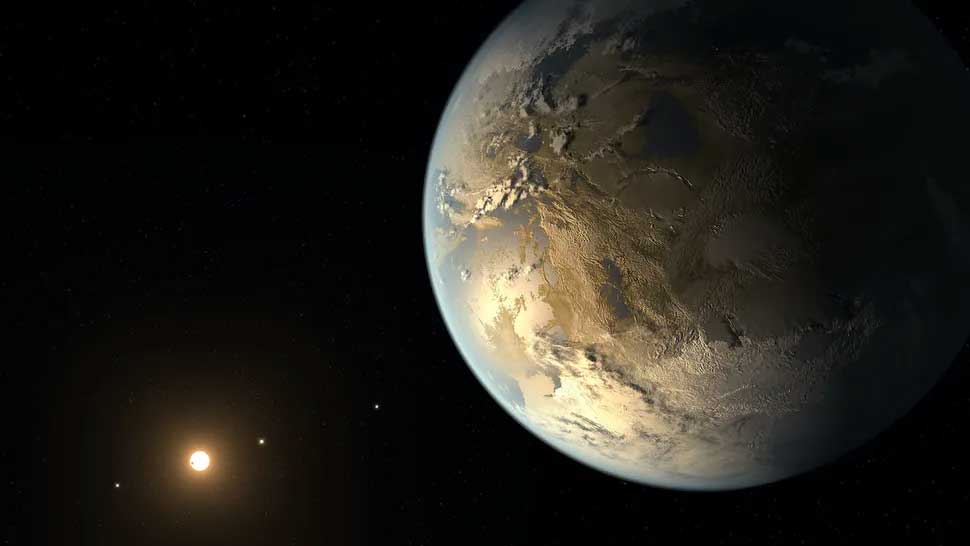
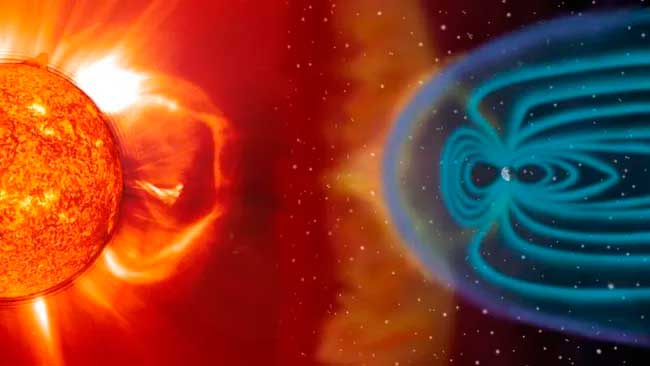
In coordinated observations, teams of researchers studied two different types of trans-Neptunian objects (TNOs). The other observation was of Chariklo, which orbits the Sun between Saturn and Uranus, at a distance approximately 17 times greater than that between Earth and the Sun. The study also suggests that a planet-sized object, possibly once a visitor to the Solar System, may have permanently altered our cosmic environment by distorting the orbits of the four outer planets.
Through coordinated observations, teams of researchers studied two different types of trans-Neptunian objects (TNOs). The first type, dynamically “cold” TNOs, reside in their original, relatively circular orbits around the Sun in the plane of the Solar System. The second type, dynamically “hot” TNOs, formed between the current positions of Uranus and Neptune but were expelled outward when the outer gas giants migrated early in the Solar System’s history.
Today, they are in highly elliptical orbits, moving into the plane of our Solar System and beyond. NASA’s Hubble and Webb spacecraft have discovered distant Solar System objects that “remember” the past.
For the first time, scientists have used the combined capabilities of NASA’s Hubble and James Webb Space Telescopes to study some of the most distant bodies in our Solar System—trans-Neptunian objects (TNOs). Some of these objects are the smallest and faintest ever directly observed. The researchers unexpectedly discovered fewer small TNOs than expected and found that the colors of these objects match those of their larger counterparts.
These objects are typically small, dim, icy bodies orbiting the Sun beyond the orbit of Neptune. Most are more than 100 million times dimmer than objects visible to the naked eye. In two complementary papers published in September 2026 in The Astronomical Journal, teams of researchers analyzed the color, composition, and size distribution of 27 newly discovered tiny, dim trans-Neptunian objects.
This class of small bodies provides the best opportunity to study the early stages of planet formation, when the disk of dust and pebbles orbiting the Sun condensed into city-sized planetesimals—the solid building blocks that coalesce to form planets—but had not yet coalesced into full-fledged worlds. Beyond Neptune, this second stage never occurred, leaving behind a frozen population of planetesimals.
In the deepest study of trans-Neptunian objects (TNOs) to date, a team of scientists led by graduate students from the University of Victoria in Canada (under the auspices of the National Research Council of Canada) and Northern Arizona University in Flagstaff simultaneously surveyed a patch of sky using the Hubble Space Telescope, which observed the visible light of TNOs, and the Webb Space Telescope, which observed their infrared light. The team measured the objects’ colors, which act as a “fingerprint” of their surface composition, as well as their sizes and determined their orbits.
Before these observations, astronomers believed that small trans-Neptunian objects (TNOs) from both the hot and cold populations had undergone numerous collisions, altering their surfaces compared to larger TNOs. However, observations have shown otherwise. Instead, the small bodies appear similar to their larger counterparts. This means that collisions do not significantly alter their surfaces—perhaps because there are fewer collisions than expected, or because TNOs somehow retain their original, pre-collision composition. Research teams are still trying to unravel this mystery.
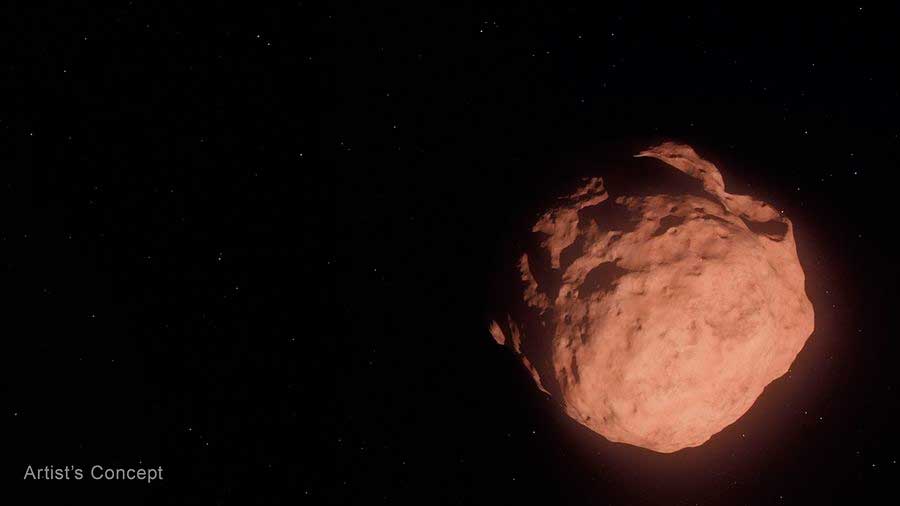
This artist’s sketch depicts a trans-Neptunian object—a small, dim, icy body orbiting the Sun beyond the orbit of Neptune. These objects are so small that even with NASA’s Hubble and Webb Space Telescopes, they appear only as tiny pinpoints of light. NASA, ESA, Leah Hustak (STScI)
“You can imagine a situation where impacts and fragmentation change the surface composition, and then you’d see tiny trans-Neptunian objects with different surface colors than their larger counterparts. So it’s really fascinating to see that the smallest objects somehow ‘remember’ and preserve the history of their formation,” said Anastasia Morgan, a graduate student at Northern Arizona University who led the color and composition study.
“These dynamically ‘hot’ trans-Neptunian objects retain traces of their origin, even though their orbits have since been altered,” said study co-author David Trilling of Northern Arizona University.
Both “hot” and “cold” populations appear to retain the same colors as when they formed, remaining virtually unchanged since the birth of the Solar System.
Webb’s data also allowed the researchers to measure the number of objects of each size. They found that the overall size distribution for both populations was surprisingly similar.
“It’s very interesting that the process of planetesimal formation ultimately results in a similar size distribution for both cold and hot populations, despite them forming in different regions of the early Solar System. This process appears to be independent of disk conditions, and planetesimal sizes are similar regardless of whether the disk is hot or cold, dense or loose,” said Marielle Eduardo, a graduate student at the University of Victoria who led the size distribution study.
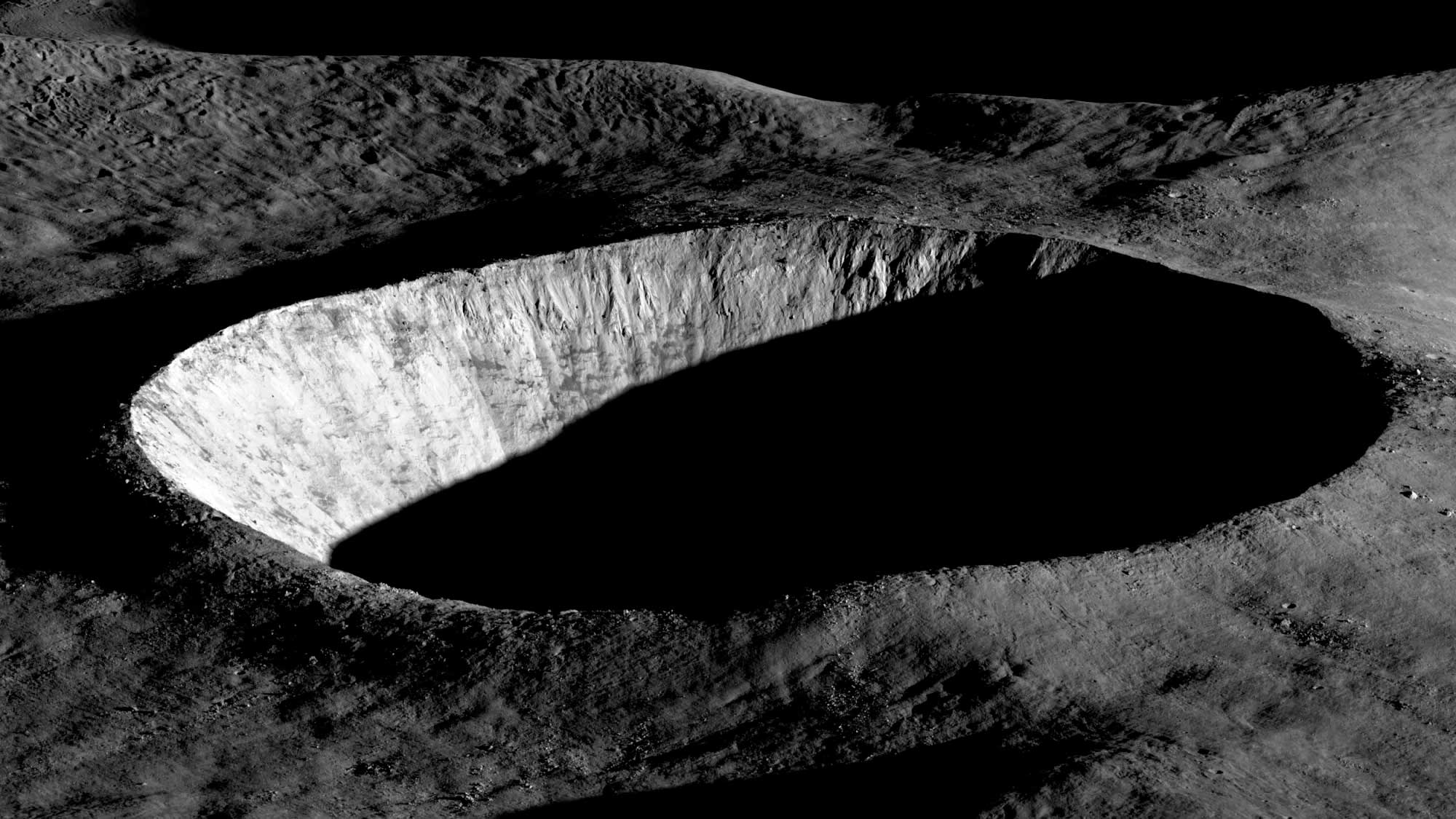
Researchers also discovered fewer of these very small bodies than expected based on some planet formation models. The Webb telescope discovered 27 new, surprisingly faint trans-Neptunian objects, one of which is so faint that its appearance is comparable to observing a small swarm of fireflies on the Moon from Earth. The smallest of these is about 3 miles (5 kilometers) in diameter, about five times smaller than can be detected with the most sensitive ground-based telescopes.
This project would not have been possible without the collaboration of the Hubble and Webb telescopes to detect and characterize these trans-Neptunian objects. Thanks to Hubble’s sensitivity in visible light and Webb’s sensitivity in infrared, these space telescopes provide more information than either could achieve alone.
The Hubble Space Telescope has been operating for more than three decades and continues to make groundbreaking discoveries that shape our fundamental understanding of the universe. Hubble is an international collaboration between NASA and ESA (the European Space Agency). NASA’s Goddard Space Flight Center in Greenbelt, Maryland, manages the telescope and mission operations. Lockheed Martin Space, based in Denver, also provides mission operations support at Goddard. The Space Telescope Science Institute in Baltimore, managed by the Association of Universities for Research in Astronomy, conducts Hubble science operations for NASA.
The James Webb Space Telescope is the world’s leading observatory for space science. Webb unravels the mysteries of our solar system, peers beyond it to distant worlds around other stars, and explores the enigmatic structure and origins of our universe, as well as our place in it. Webb is an international program led by NASA and its partners, ESA (the European Space Agency) and CSA (the Canadian Space Agency).
While Saturn is the most famous ringed body in the Solar System, other planets also possess ring systems, albeit less prominently. These include Uranus, Neptune, and Jupiter. However, Chariklo and the even smaller body Chiron demonstrate that even the tiniest bodies can form rings. Now, thanks to the incredible sensitivity of the JWST telescope, scientists know that the rings of Chariklo are even stranger than initially thought when they were first discovered in 2013.
The object in question is Chariklo, which orbits the Sun between Saturn and Uranus, at a distance approximately 17 times greater than the distance between Earth and the Sun. Although its diameter is only about 250 kilometers, Chariklo, a member of the Centaur family of asteroids, has two thick rings.
A team of researchers from the Institute of Astrophysics of Andalusia (IAA-CSIC) began observing the star Chariklo using the JWST telescope in October 2022. They used a technique called stellar occultation, which measures the decrease in a star’s brightness when an object passes in front of it. The team’s results were published on September 9, 2026, in the journal Science Advances.
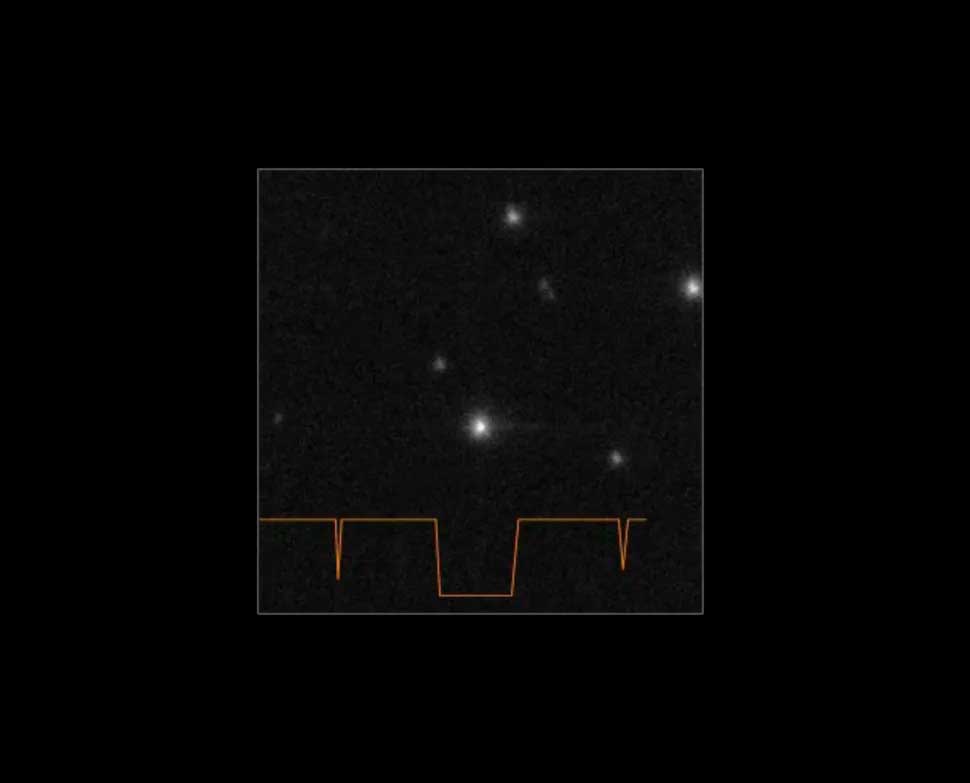
Dips in the light from a distant star caused by its eclipse by Chariklo and its rings. ESO/Felipe Braga Ribas/M. Kornmesser
“By comparing JWST observations with data obtained during other stellar occultations over the past decade, we found opposite changes in the two rings: the inner ring shows significantly higher opacity, while the outer ring shows lower opacity,” said team leader Pablo Santos-Sanz of the IAA-CSIC in a statement.
The asteroid’s changing rings indicate that its physical processes are far more complex than previously thought. This is important, as scientists previously believed that the rings of small bodies were relatively stable.
“Our results force us to rethink how they form, how they evolve, and what mechanisms maintain their stability,” said Santos-Sanz. “The ability to detect these changes opens new avenues for understanding the evolution of these systems and, potentially, other ring systems in the Solar System.”
This research represents not only an important step in our understanding of asteroids and the rings of the Solar System, but also a major milestone for the JWST telescope.
“Achieving this required exceptionally precise knowledge of Chariklo’s orbit, the star’s position (thanks to the European Space Agency’s Gaia mission), and the trajectory of the JWST telescope itself around the L2 Lagrange point, a region of space located approximately 1.5 million kilometers from the Sun,” said team member Yucel Kilic of the IAA-CSIC. “The JWST telescope orbits this region, requiring periodic corrections through position-keeping maneuvers.”
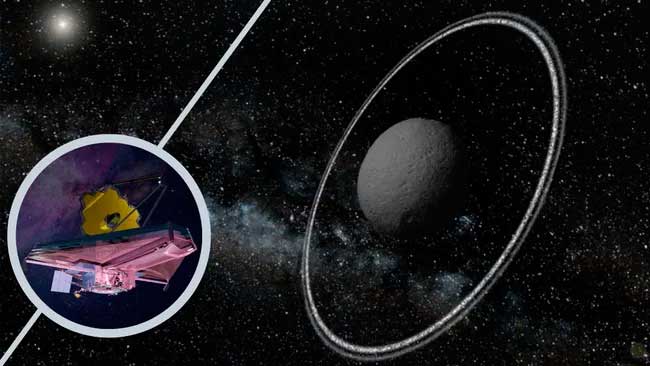
( Main image) The small solar system body Chariklo (Inset) Artist’s impression of the JWST telescope. L. Macke, Paris Observatory/NASA/ESA
During the eclipse the team used in their study, Chariklo was moving at about 5,600 miles per hour (2.5 kilometers per second) relative to the JWST telescope.
By terrestrial standards, this is incredibly fast, but relatively slow for objects moving rapidly through the solar system. This low speed allowed for an unprecedentedly detailed image of Chariklo’s rings. Astronomers currently use eclipses to study Chariklo and its rings, as even the JWST telescope is not powerful enough to directly image this small and distant asteroid.
Another study suggests that a planet-sized object that may have once visited the Solar System may have permanently altered our cosmic environment by distorting the orbits of the four outer planets. The findings may shed light on the causes of some of the peculiarities in these planets’ trajectories.
For decades, astronomers have debated how the planets of the Solar System formed. However, most hypotheses agree on the type of orbits the planets should have: circles arranged concentrically around the Sun and lying in a single plane. (When viewed from the side, only a line is visible.) However, none of the eight planets, including Earth, have perfectly circular orbits. Furthermore, the planets’ trajectories do not lie exactly in a single plane.
See also... New method for observing individual atoms confirms century-old quantum mechanical theory |
Compared to Mercury (whose orbit is the most ovoid and inclined in our planetary group), the trajectories of the four outer giant planets—Jupiter, Saturn, Uranus, and Neptune—exhibit slight deviations from ideal orbits. However, explaining these minor discrepancies has proven challenging, says Renu Malhotra, a planetary scientist at the University of Arizona in Tucson and co-author of the new study. The study was published on the arXiv preprint database in December 2025.
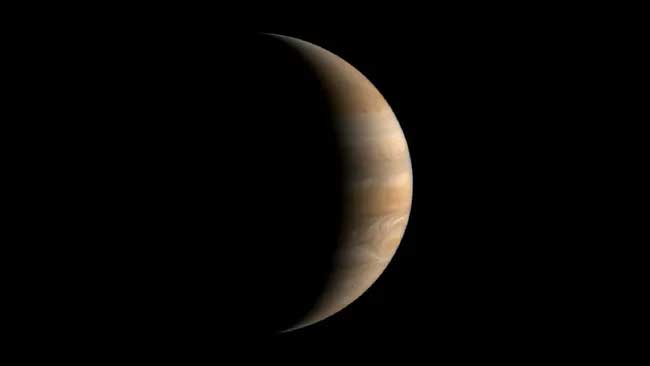
An image of Jupiter, mostly hidden in shadow. The study suggests the object was likely eight times heavier than Jupiter. NASA/JPL
To solve this mystery, Malhotra and his colleagues considered a less-studied scenario: that about 4 billion years ago, some star-sized object altered the trajectories of these planets.
Using computer models of the four outer planets, the team ran 50,000 flyby simulations, each lasting over 20 million years, varying certain parameters of each flyby, including its mass, velocity, and distance from the Sun. The researchers also expanded their search scope compared to previous studies, considering objects much smaller than stars—for example, ones as tiny as Jupiter. They also examined ultra-close flybys, focusing on scenarios where an object approached the Sun at a distance of less than 20 astronomical units (AU). (One AU is approximately 93 million miles, or 150 million kilometers, roughly the average distance from Earth to the Sun.)
Although most simulations created conditions very different from those of the Solar System today, the researchers found that in about 1% of simulations, the passage of an “alien” altered the orbits of the giant planets, bringing them roughly to their current state. In these nearly identical cases, the “aliens” plunged directly into the Solar System, passing well beyond the orbit of Uranus, and some even grazed the trajectory of Mercury. And they were relatively tiny, with masses ranging from two to 50 times that of Jupiter.
“This range includes masses from planets to brown dwarfs,” Malhotra said.
Brown dwarfs, often called “failed stars,” are unusual celestial bodies that are heavier than planets but not as massive as stars.
Since many of the simulations, which closely approximated real-life conditions, featured a planet-like object flying through the inner Solar System, the researchers created an additional 10,000 simulations, also including the terrestrial planets. In these cases, the flybys, which had previously altered the orbits of the giant planets to their current state, also recreated the current appearance of the Solar System.
The most realistic results were obtained by modeling an object eight times the mass of Jupiter, which approached the Sun at a distance of just 1.69 astronomical units. This is only slightly further than Mars’ current orbit, which is 1.5 astronomical units from the Sun.
Modeling results show that even a single flyby of a substellar object was sufficient to alter the trajectories of giant planets. Since observations indicate a relatively large number of substellar bodies in space, visits to such objects may be more common than flybys of stars.
Comment on Facebook* The owner of the Meta company is recognized as extremist in Russia and is banned.