China and NASA are confidently competing for new data about Earth’s natural satellite. Each space agency is successful in its own way.
In 2024, Chinese scientists obtained the first X-ray image of the Moon.
Chinese scientists used their own space probe to obtain an X-ray image of the Moon for the first time during the Mid-Autumn Festival, Xinjingbao reported on Tuesday.
“China’s Einstein X-ray spacecraft transmitted an X-ray image of the Moon from space during the Mid-Autumn Festival. This marks the first time Chinese scientists have used a domestically developed space telescope to obtain an X-ray image of the Moon,” the publication notes.
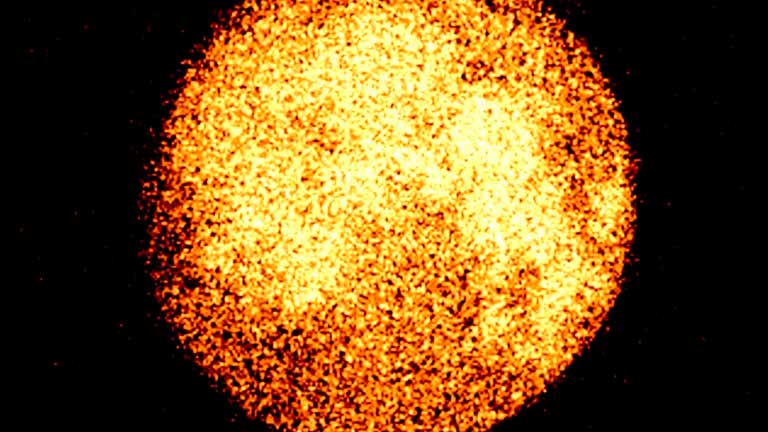
An X-ray image of the Moon taken by a space probe. National Astronomical Observatories of China
X-rays emitted by the Sun are reportedly reflected by the Moon. Since the energies of X-rays emitted by different elements on the surface of the Earth’s satellite vary, the images can reveal the distribution of elements on the Moon. Earth’s atmosphere does not transmit X-rays, so specialized space probes are used to study them.
The 2024 Mid-Autumn Festival coincided with a supermoon. The Moon was at perigee (its closest point in its orbit to Earth), just 357,400 kilometers from Earth. At this time, its area was 14% larger than during a typical full moon. Furthermore, the Sun was at its peak activity, with frequent solar flares occurring, increasing its X-ray output.
The Einstein probe was launched on January 9. It is China’s first wide-field X-ray astronomy satellite, and is used to detect phenomena predicted by theoretical physicist Albert Einstein, such as black holes and gravitational waves.
NASA explained: Earth’s atmosphere doesn’t magnify our view of the Moon. Quite the contrary, atmospheric refraction compresses it slightly. And the Moon isn’t closer to us on the horizon. It’s about 1.5 percent further away. Moreover, it’s not just the Moon. Constellations on the horizon also appear enormous.
One popular theory is that this is a variation of the Ponzo illusion. In our perception, everything seems to shrink as it moves toward the horizon—clouds, planes, cars, and ships. But the Moon doesn’t. So our minds invent a story to explain this discrepancy. Somehow, the Moon gets bigger when it’s near the horizon. This is one popular hypothesis, but there are others. And we’re still waiting for an experiment that will convince everyone we understand this.
NASA
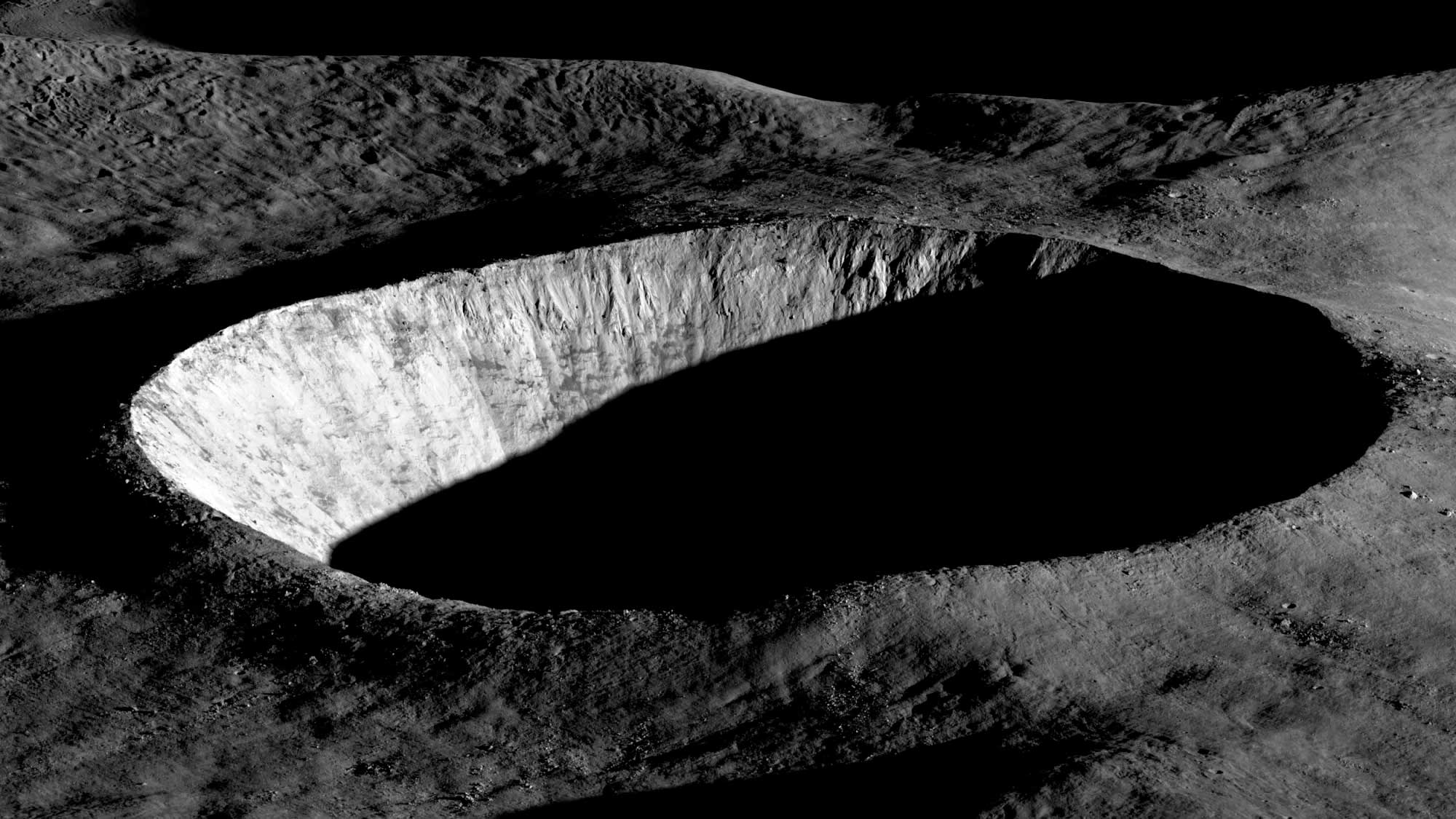
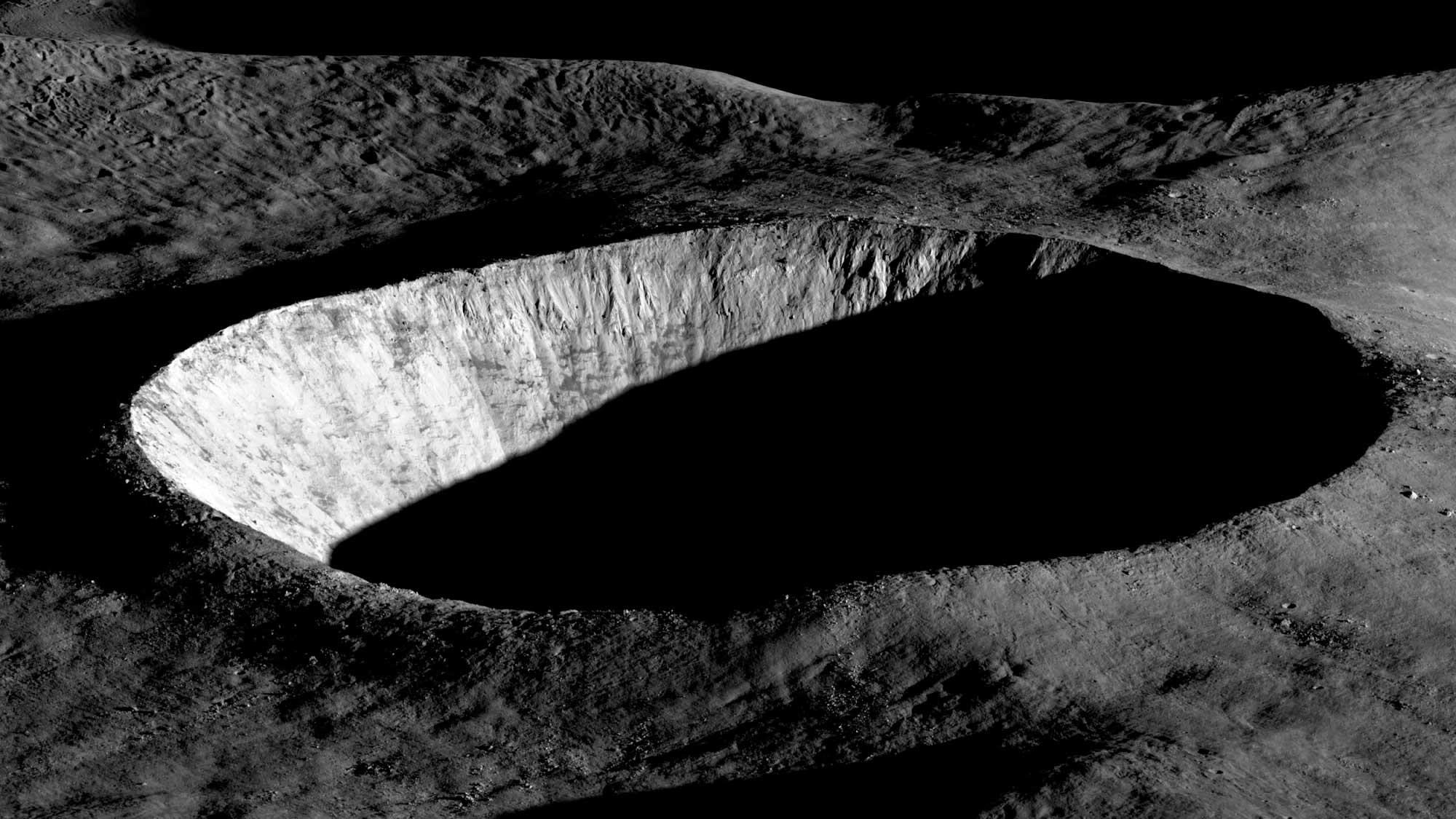
This image is NASA’s Science Picture of the Month for March 2026. Morning sunlight illuminates the western wall of this unnamed crater, casting deep shadows on the surface and within it. The image was taken on August 30, 2023, by the Lunar Reconnaissance Orbiter Camera (LROC).
LROC is a three-camera system and one of seven instruments aboard NASA’s Lunar Reconnaissance Orbiter (LRO), which launched in June 2009 and continues to orbit the Moon. LRO’s primary mission was to create a three-dimensional map of the lunar surface to identify future landing sites and resources such as polar ice, to study radiation conditions, and to test new technologies—all in preparation for future robotic and human exploration.
NASA’s Goddard Space Flight Center/Intuitive Machines
In 2011, data obtained by LRO enabled the creation of the highest-resolution, near-topographic map of the Moon, and in 2014, an interactive mosaic of the lunar north pole was published. LRO also captured high-resolution images of numerous lunar landing sites from NASA’s Apollo and other missions. LRO also conducted the first demonstration of laser communications with a lunar satellite.
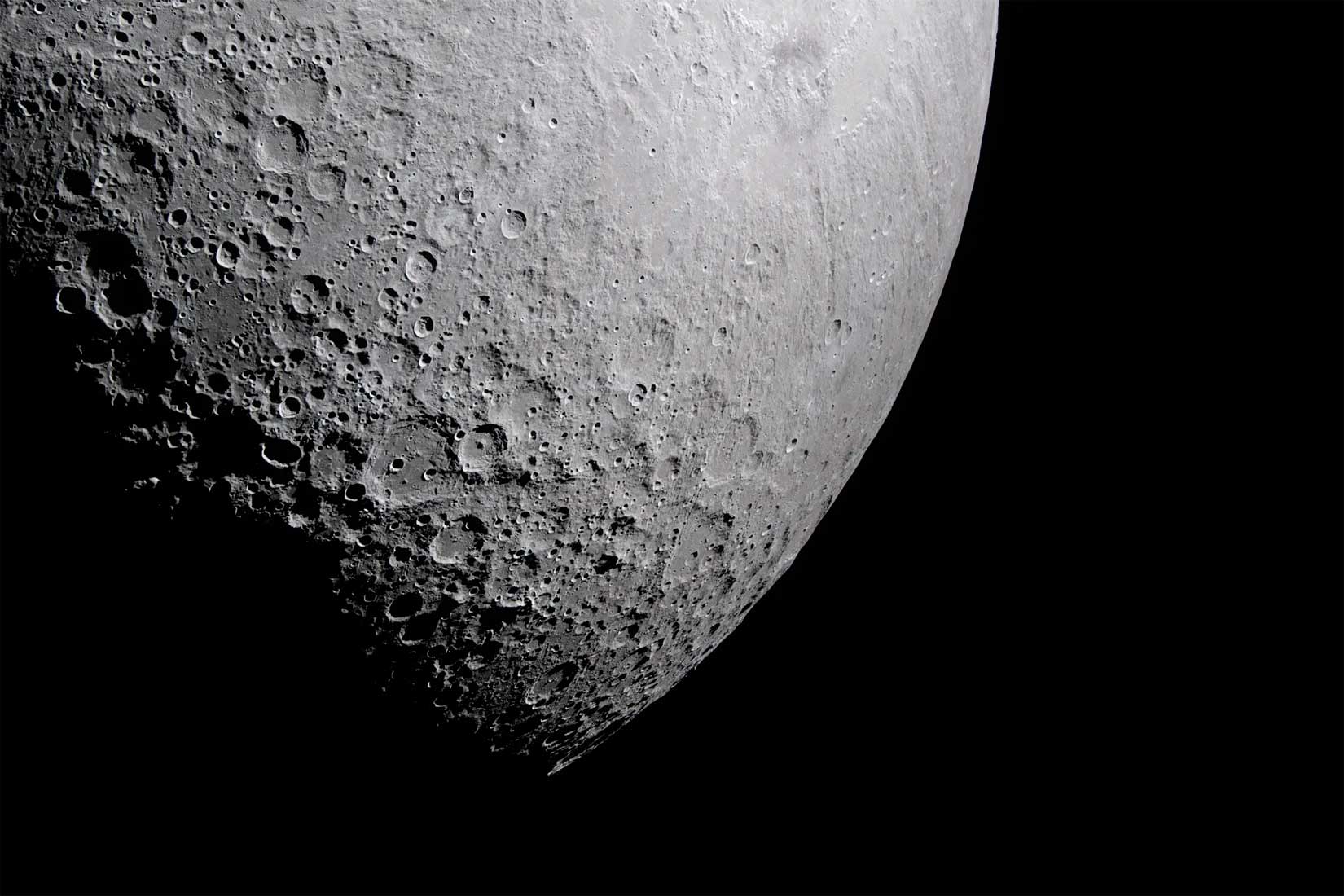
This image, taken on April 6, 2026, shows part of the Moon’s far side along the terminator—the boundary between lunar day and night—where low-angle sunlight casts long shadows on the surface.
Visible along the upper right of the lunar disk is a section of the Orientale Basin, the structure of which is subtly revealed by grazing illumination. This illumination enhances the contrast of the cratered relief, highlighting variations in surface features and providing insight into the Moon’s geological history.
IN
In the following image, the Moon, tidally locked and rotating synchronously, always presents its familiar near side to Earth’s inhabitants. However, from lunar orbit, the far side of the Moon can also become familiar. In fact, this sharp image, a mosaic captured by the Lunar Reconnaissance Orbiter’s Wide-Angle Camera, is centered on the far side of the Moon. Part of a global mosaic of more than 15,000 images acquired between November 2009 and February 2011, the highest-resolution version reveals detail at a scale of 100 meters per pixel.
Surprisingly, the rough and furrowed surface of the far side appears quite different from the near side, covered in smooth, dark lunar maria. A likely explanation is that the crust of the far side is thicker, making it difficult for molten material from the interior to flow to the surface and form dark, smooth maria.
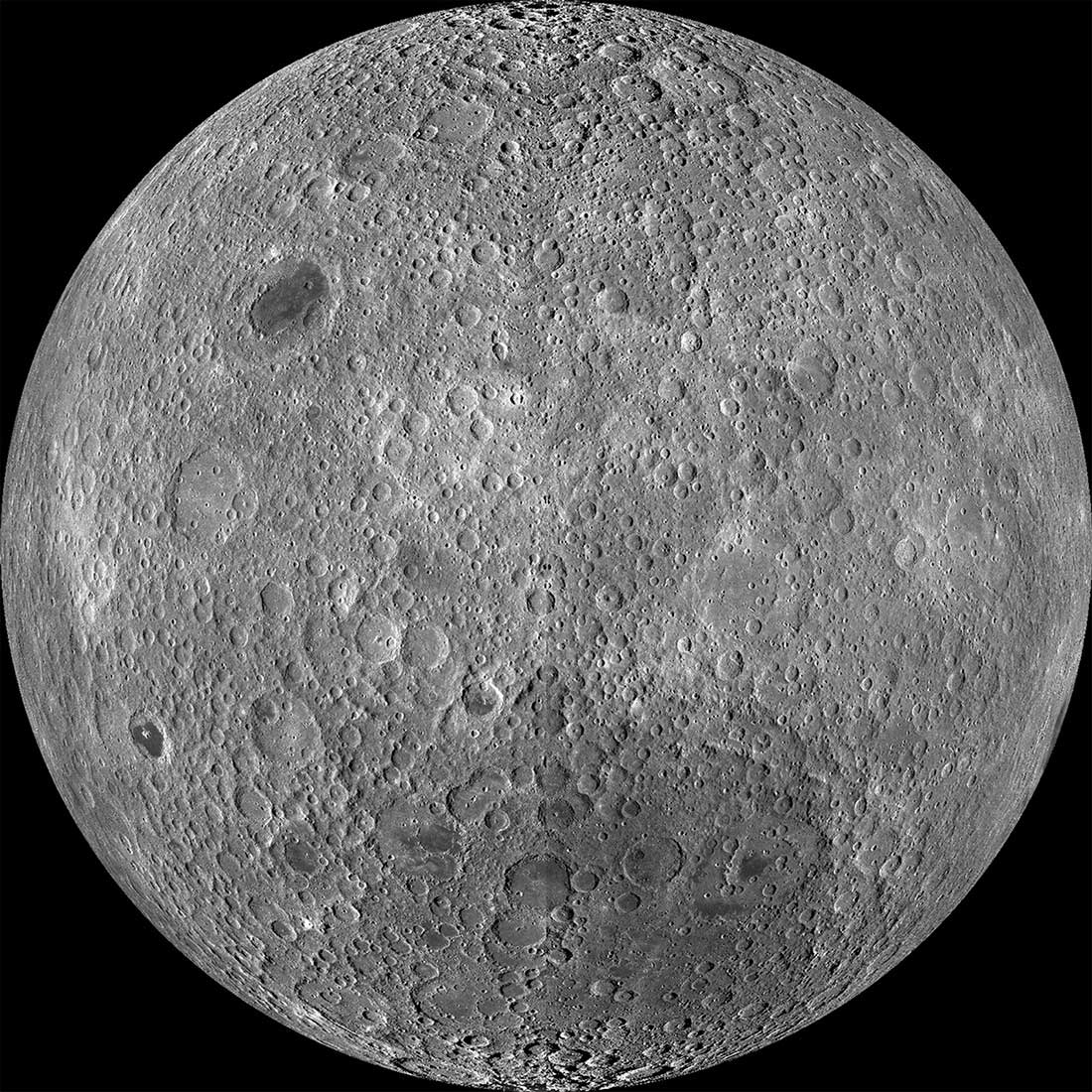
The far side of the moon. NASA/GSFC/Arizona State University/Lunar Reconnaissance Orbiter
Lunar Crater – Before and After. A unique crater has appeared on the Moon! A comet or asteroid roughly the size of a humpback whale (approximately 10-20 meters, 30-60 feet) slammed into the Moon between April and May 2024. The Lunar Reconnaissance Orbiter (LRO), a spacecraft that monitors the Moon monthly, captured these before-and-after images of the lunar surface today. The resulting crater, named after Apollo-era lunar scientist McGutchin, has a diameter equal to two football fields.
Craters of this size form only once every 132 years. Subsequent thermal images revealed a large cold spot surrounding a warm crater. Impacts on the surface cause the loose lunar sediment, or regolith, to swell, making it less dense and more difficult to retain heat. This event affected a region significantly larger than the visible crater, allowing humanity to better understand the causes of impacts and the evolution of the lunar surface. It also reminds us all how important it is to be grateful for Earth’s atmosphere.
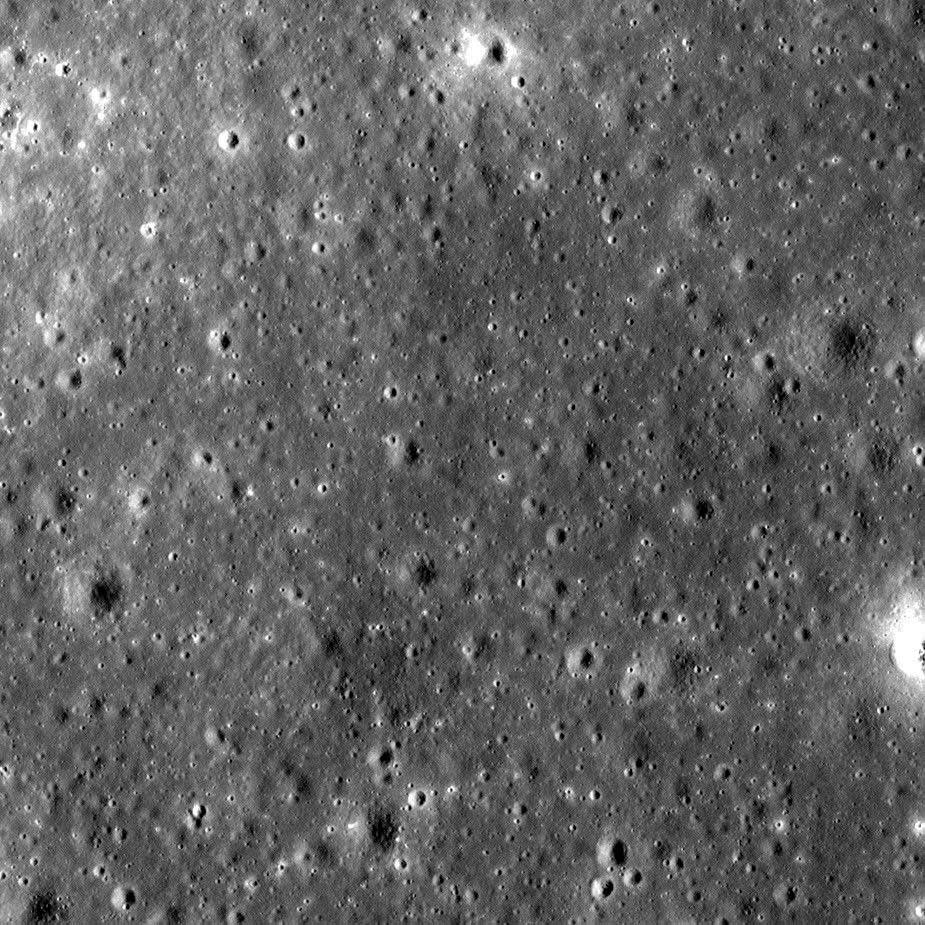
New lunar crater McGutchin BEFORE. NASA/GSFC/Intuitive Machines
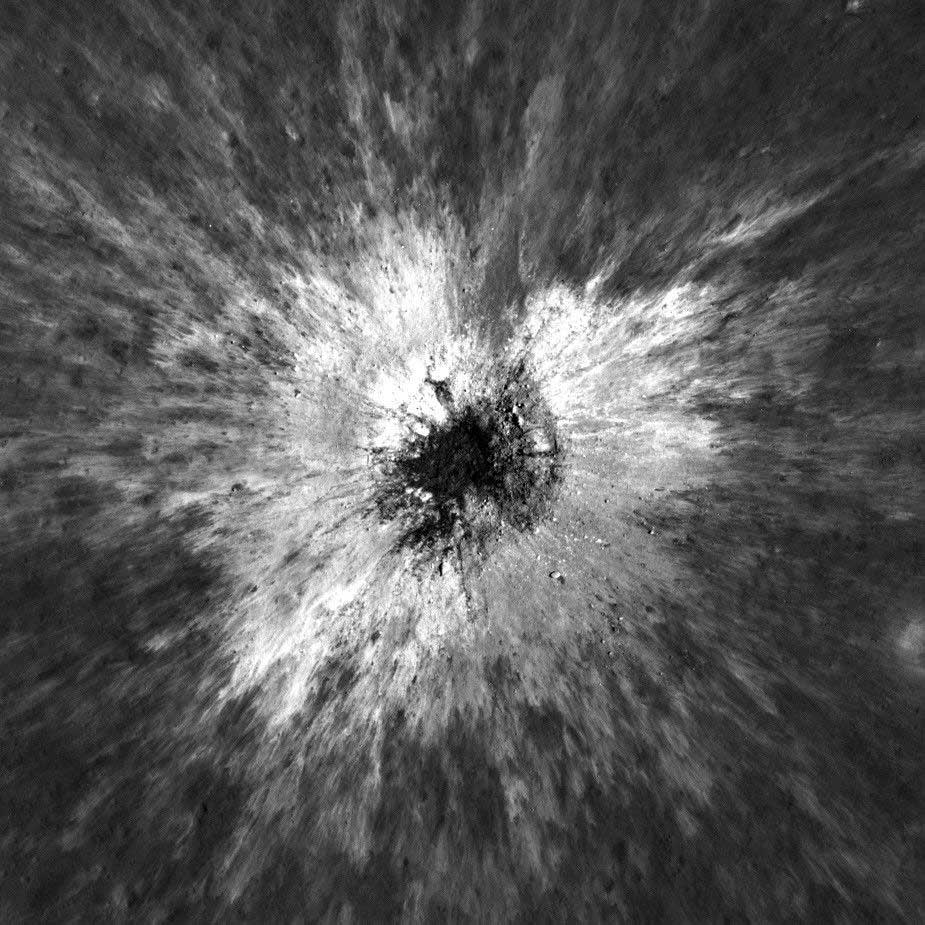
New lunar crater McGutchin AFTER. NASA/GSFC/Intuitive Machines
In August 2026, Chinese researchers released a new map of the Moon, updating the previous edition based on new scientific data and recalibrating the Moon’s ancient geological epochs.
On August 6, the Institute of Geology of the Chinese Academy of Geological Sciences (IGCAGS) released a detailed map of the Moon at a scale of 1:5 million. The map is an updated version of the 2024 edition and establishes new boundaries for the ancient Aitkenian, Nectarian, and Imbrian lunar periods. (Researchers use the term “Aitkenian,” while the term “pre-Nectarian” is often used to describe the lunar geological period spanning approximately 4.5 to 3.9 billion years ago.)
See also... New method for observing individual atoms confirms century-old quantum mechanical theory |
The map also uses reprocessed spectral data to update information about areas of the KREEP terrane, which is characterized by enrichment of potassium (K), rare earth elements (REE), and phosphorus (P) in the crust and is found to have a more continuous and abundant structure than previously thought.
“The geological history of the Moon has indeed been rewritten—or rather, clarified and systematized,” state news agency Xinhua quotes Yang Zhiming, director of IGCAGS, as saying.
Both the United States, thanks to the Apollo missions, and the Soviet Union returned lunar rock samples to Earth more than 50 years ago, significantly impacting lunar exploration and understanding. China’s own robotic sample return missions, Chang’e-5 and Chang’e-6, launched in 2020 and 2024, respectively, have provided new materials and new data.
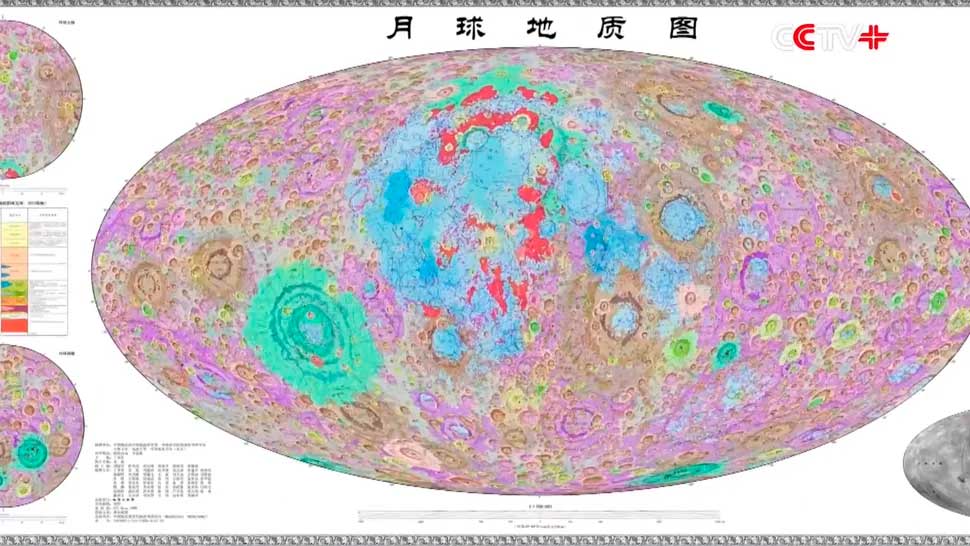
On August 6, 2026, Chinese researchers released a new, ultra-detailed map of the Moon. CCTV/IGCAGS
Chang’e-6 was the first mission to return samples to the far side of the Moon. Chinese researchers claim the returned material will provide a new starting point for scientific discussions about the nature of this lunar hemisphere, hidden from Earthly observation.
According to Xinhua, the map “introduces its own cartographic standard” as part of a broader Chinese government initiative to influence global standards. In regards to outer space, aspects of the map such as the color scheme, geological logic, and the aesthetic principle of “lighter for the young, darker for the old” will be applied more broadly as China seeks to expand its exploration beyond the Moon and into the far reaches of the solar system.
“This goes beyond demonstrating technological soft power. This standard will be extended to future mapping of planetary geological structures, creating an independent intellectual property protection system for China’s deep space exploration,” Yang said.
Both China and the United States are interested in setting standards as humanity renews its interest in lunar exploration. While everyone on Earth agrees on Coordinated Universal Time (UTC), the two countries currently disagree on time on the Moon, where clocks run faster due to weaker gravity. This suggests that leadership in space will be contested not only through missions and first achievements, but also through whose technical standards will be followed, and China’s new map plays a key role in this.
Comment on Facebook* The owner of the Meta company is recognized as extremist in Russia and is banned.See also... Complete list of HTML/Javascript event handlers with examples List of required documents for a website in the Russian Federation |