Antarctica is dotted with volcanoes, waiting to erupt. And a volcano in Tanzania and volcanoes in Iceland are close to erupting. The Tonga eruption, which released 150 megatons of water vapor into the stratosphere, affected the atmosphere for years. Satellite data suggests that a volcano in Tanzania, which spews extremely fluid lava, may be close to erupting. Iceland is threatened by uncontrolled volcanic eruptions due to climate change.
The eruption of the Tonga volcano, which released 150 megatons of water vapor into the stratosphere, affected the atmosphere for many years. The active volcano Hunga Tonga-Hunga Ha’apai is located on the uninhabited island of the same name in the Pacific archipelago of Tonga. There are 21 Holocene volcanoes on Tonga.
The new study builds on previous research into the impact of the underwater volcano on climate, the Journal of Geophysical Research reports.
On January 15, 2022, the underwater volcano Hunga Tonga-Hanga Ha’apai erupted, causing a massive tsunami that destroyed homes and killed four people across Tonga. Another long-term effect of the event, the largest underwater explosion ever recorded by modern scientific instruments, was the massive amount of aerosol and vapor plumes it sent into the sky.
Shoberl et al. examined how Honga’s eruption affected climate in the Southern Hemisphere over the next 2 years. They found that in the year after the eruption, the cooling effect from volcanic aerosols reflecting sunlight into space was stronger than the warming caused by water vapor trapping heat in the atmosphere. But most of the volcano’s effects had dissipated by the end of 2023.
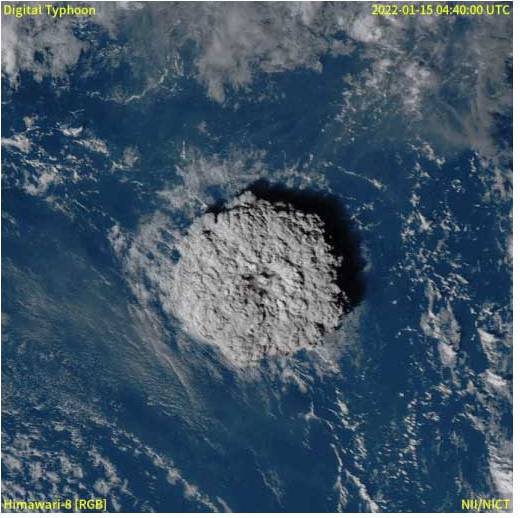
The January 2022 eruption of Hunga Tonga Hunga Ha’apai was the largest underwater explosion ever recorded by modern scientific instruments. Japan Meteorological Agency, CC BY 4.0
The researchers used satellite data to study how stratospheric aerosols, gases, and temperatures changed after the eruption. The Hunga eruption injected about 150 metric megatons of water vapor into the stratosphere — an amount so large that it raised global stratospheric water vapor levels by about 10%. This massive injection of water cooled tropical stratosphere temperatures by 4°C in March and April 2022. In turn, this temporary cooling created a secondary circulation pattern that led to lower ozone levels throughout 2022.
The Hunga eruption also released between 0.5 and 1.5 megatons of sulfur dioxide into the stratosphere. Sulfur dioxide produces sulfate aerosols, which reflect sunlight and can cause a decrease in surface radiative forcing, or the difference between incoming and outgoing radiation. This could lead to global cooling if the aerosol load was large enough, as was the case with the 1991 eruption of Mount Pinatubo, which released about 20 megatons of sulfur dioxide. The aerosol load from Hunga was not very large, and its effects were largely limited to the Southern Hemisphere in 2022 and 2023.
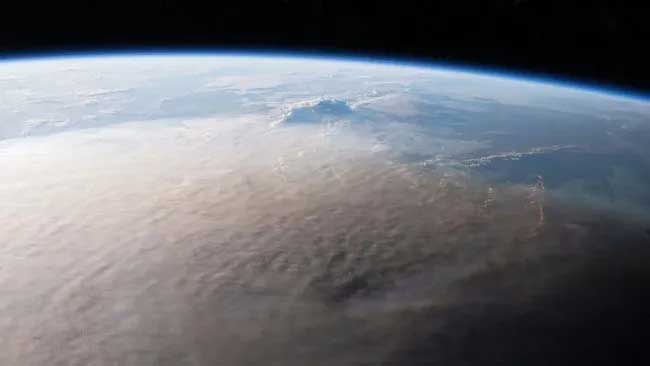
Smoke plume from Tonga volcano eruption seen from space. NASA Earth Observatory
While the eruption did affect the Earth’s radiation balance for a short time, the change was very small: the global drop in radiative flux was less than 0.25 watts per square meter over a two-year period before it returned to pre-eruption levels. (Globally, the Earth’s surface, oceans, and atmosphere absorb an average of about 240 watts of solar energy per square meter over the course of a year.) This short-lived change means that Honga’s eruption may have caused a slight cooling in the Southern Hemisphere, but the researchers say it would be difficult to derive the same information from meteorological observations alone.
Satellite data suggests a volcano in Tanzania that is spewing extremely fluid lava may be getting closer to erupting. The ground around a strange volcano in Tanzania is bulging, suggesting that magma may be building up in a shallow reservoir beneath the surface. The movement could be a precursor to an eruption, researchers say.
Ol Doinyo Lengai is an active volcano that spews the most fluid lava on Earth. Satellite data show that a magma reservoir about 1.4 miles (2.3 kilometers) beneath the crater began to swell in March 2022, suddenly stretching the Earth’s crust above it. This rapid rise continued at a steady rate until December 2022, before giving way to a period of slower rise that lasted until August 2023, according to a new study.
Periods of uplift could be signs of an impending eruption, lead study author Ntambila Dauda, a doctoral student in Virginia Tech’s Geodesy and Tectonophysics Laboratory, said in a statement.
There are records of eruptions at Ol Doinyo Lengai dating back to the 1880s, and the volcano has been active intermittently since then. “This study could help Tanzanian authorities better understand what is happening to the volcano,” Daud said.
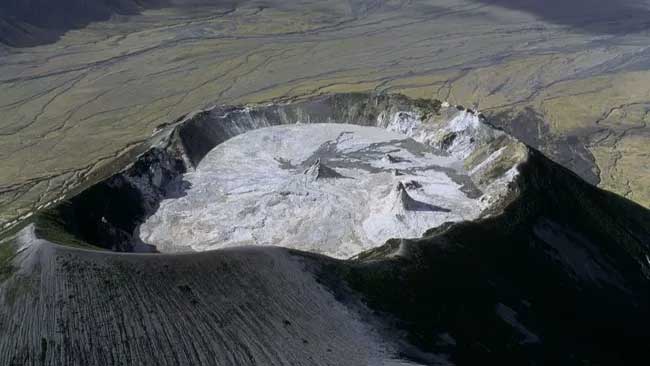
It is the only volcano in the world that erupts carbonatite lava, which is extremely thin and rich in alkaline elements such as calcium and sodium. Ol Doinyo Lengai, which translates as “mountain of God” in the Maasai language, erupts mainly lava flows that turn bone white when dry. This is because the calcium and carbon dioxide in the lava combine to form calcite and other carbonate minerals, which quickly disintegrate in the presence of water or moisture.
Researchers use satellite data to measure deformation of the land around volcanoes. In 2016, geologists at Virginia Tech installed satellite-linked sensors on the slopes of Ol Doinyo Lengai to track the periodic rise and fall of the crust, as well as a seismometer to detect earthquakes.
Previous studies have used satellite data to characterize Ol Doinyo Lengai’s activity, but this study, published in June, found that the volcano has been sinking for the past 10 years. It is unclear what impact the recent bulging has had on the overall subsidence trend.
For the new study, Daoud and his colleagues built computer models that extracted volcanic signals from satellite data from Ol Doinyo Lengai. The models found clear differences between the 2022 and 2023 uplift patterns, with the former showing much higher rates of ground deformation than the latter.
“This signal may indicate magma accumulation in a shallow magma source or pressure buildup in a magma conduit beneath the active Ol Doinyo Lengai volcano,” the researchers wrote in a study published July 9 in the journal Geophysical Research Letters.
Magma rising close to the surface suggests the volcano could erupt soon, the researchers wrote. Eruptions pose a threat to people living around the volcano, and they threaten tourism and air travel in the area, the statement said. Reports indicate lava flows have erupted from the summit of Ol Doinyo Lengai as recently as 2021.
“The approach Daoud used in this paper provides important steps forward in our understanding of the dynamic Ol Doinyo Lengai magmatic drainage system,” study co-author Sarah Stamps, an assistant professor of geophysics at Virginia Tech, said in a statement.
Iceland is threatened by uncontrolled volcanic eruptions due to climate change, Reuters reports.
“There is so much uncertainty about when it will happen – if it will happen. It could be years or decades or ‘it could happen sooner’,” the author of the article writes, citing the words of volcanologist from the Icelandic Meteorological Office Michelle Parks.
According to the publication, glaciers are capable of containing volcanic activity. However, global warming is gradually reducing this ability.
“The enormous weight of glaciers and ice sheets can suppress volcanoes. When the ice retreats, the downward pressure on the planet’s thin outer crust and much thicker mantle is relieved, allowing the Earth’s surface to rise,” the authors explain.
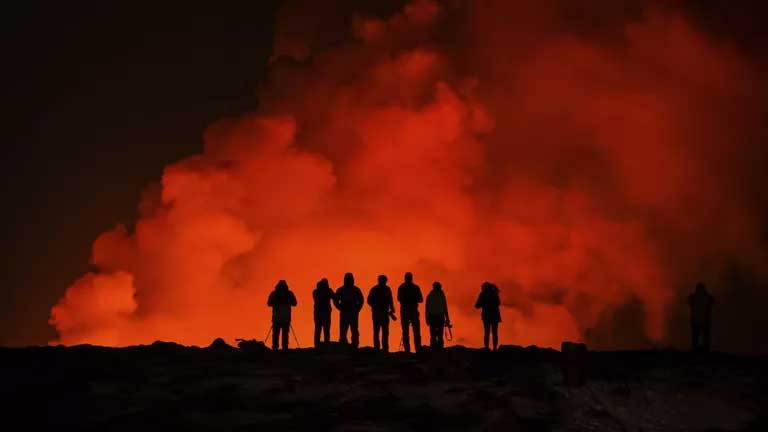
A volcanic eruption on Iceland’s Reykjanes Peninsula. File photo. Marco Di Marco
As noted, at the moment all the necessary conditions exist for the start of a new wave of eruptions.
“Glaciers now cover just ten percent of Iceland, but that ice still covers more than half of the country’s 34 active volcanic systems, and it is melting rapidly as global temperatures rise,” the authors warn.
Iceland’s history of eruptions supports this theory. After the ice melted 10,000 to 15,000 years ago, the frequency of volcanic eruptions on the island increased by 30 to 50 times. The effect of magma accumulated in the earth’s crust could accelerate global warming, and volcanoes could accelerate the melting of glaciers and provoke a rise in sea levels. At the same time, scientists fear that the rapid retreat of glaciers and the accumulation of magma could provoke eruptions of ice-covered volcanoes around the world, the article says.
This week, the world’s leading climate scientists wrote an open letter to northern European leaders to warn of imminent disaster from the collapse of key Atlantic Ocean currents.