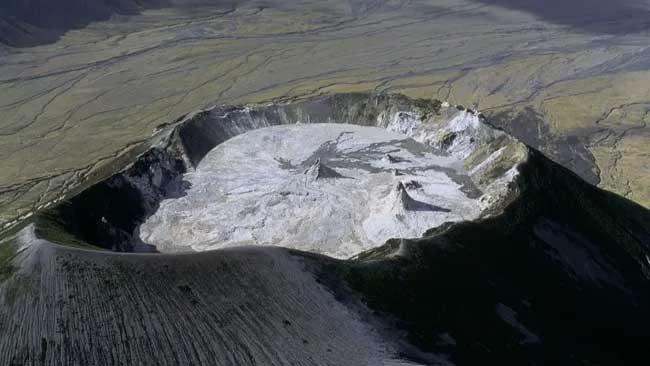
The eruption of Indonesia’s Lewotobi Laki Laki stratovolcano has killed at least 10 people on the island of Flores after volcanic debris and hot ash fell and burned homes. In eastern Indonesia, the Lewotobi Laki Laki volcano erupted again on Saturday, sending a giant plume of ash reaching nine kilometres into the sky. The eruption was the latest in a series of events that began days ago, killing nine people and forcing thousands of residents to evacuate.
Lewotobi Laki Laki, a 1,703-metre-high twin-peaked volcano on the tourist island of Flores, has been erupting for the past week. On November 5, 2024, the first powerful eruption occurred, causing human casualties and a significant deterioration in living conditions for local residents. The ash column was reportedly so thick and high that it could be seen from several dozen kilometres away. Indonesia’s volcanology agency confirmed that the eruption began at 04:47 local time and continued for several days, including additional ash emissions on Friday and Thursday. During these emissions, ash rose to heights of eight and nine kilometres.
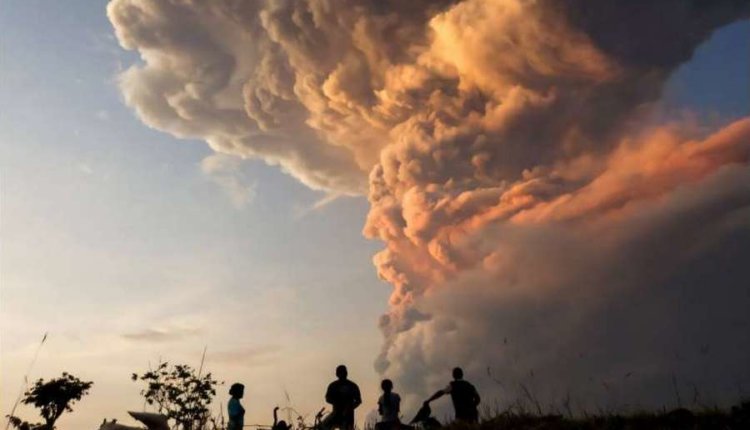
There were no reports of damage from the new eruptions on Saturday, but authorities warned of possible dangers such as flooding from cold lava, especially in heavy rainfall. Ash and small rocks thrown up by the volcano forced the evacuation of a monitoring post near the mountain on Friday.
Serious damage has also been reported from previous eruptions, with more than 10,000 people affected. Local authorities have urged residents to leave the dangerous eight-kilometer zone around the volcano and move their homes to safer areas. The head of Indonesia’s disaster management agency said authorities intend to temporarily house evacuees in shelters and fund the construction of new homes for the victims. The relocation process is expected to take some time, but authorities hope to complete the construction quickly.
According to the Associated Press, all the dead were found within 2.5 miles (4 km) of the volcano’s crater. The eruption occurred around midnight local time and sent a column of ash and smoke 6,500 feet (2,000 meters) into the air. More than 10,000 people were affected, according to the country’s National Disaster Management Agency (NDMA). Search and rescue operations are still ongoing.
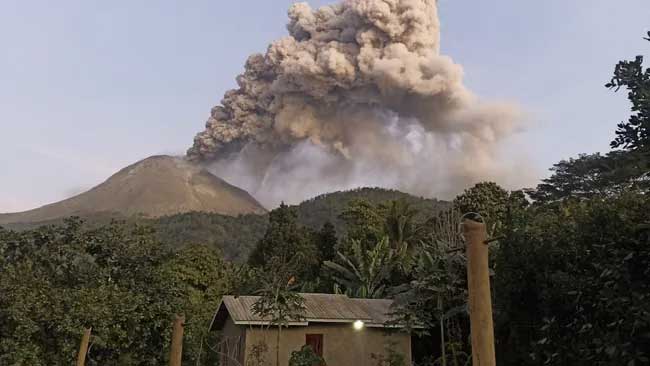
Mount Lewotobi Laki-laki during the July 2024 eruption. ARNOLD VELIANTO
Lewotobi Laki Laki is one of two stratovolcanoes located next to each other on the island of Flores in eastern Indonesia, home to about 1.8 million people. It is located next to the twin volcanic peaks of Lewotobi Perempuan. “Laki Laki” means “man” in Indonesian, while “perempuan” is a word for “woman” with somewhat derogatory connotations. The craters of the two volcanoes are less than 1.2 miles (2 km) apart, according to the Smithsonian Institution’s Global Volcanism Program.
Lewotobi Laki Laki became restless in December 2023 after a period of relative calm since 2015. In January and February 2024, the volcano regularly erupted ash columns and occasionally erupted lava and pyroclastic material — a mixture of volcanic gases and hot ash that flows like an avalanche down the volcano’s steep slopes. The volcano calmed down during March and April, but continued to regularly emit plumes of steam, gas, and occasionally ash. Increased activity occurred in June, forcing the local airport to cancel flights and officials to raise the volcanic alert level to 3 on a scale of 4. That alert level remained elevated until eruptions resumed on November 3, when the NDMA raised the alert level to 4, the highest on the scale.
Indonesia is the most volcanically active country on Earth, according to the U.S. Geological Survey (USGS), and has the largest population of any country at risk for volcanic eruptions. Indonesia sits on the Sunda tectonic plate, which is in a slow collision with the neighboring Australian plate. Near the island of Java, the Australian plate is sliding under the Sunda plate, a process called subduction, according to the USGS. This both causes frequent, strong earthquakes and partially melts the Earth’s crust, feeding volcanoes that shape Indonesia’s jagged terrain.