The invention, developed by Jordanian-American chemist and 2025 Nobel Prize laureate in Chemistry Omar Yaghi, uses a scientific technique called reticular chemistry to create molecularly modified materials that can extract moisture from the air and collect water even in arid desert conditions.
Atoco, the technology company Yagi founded, said its units, which are about the size of a 20-foot shipping container and run entirely on ultra-low thermal energy, can be deployed in local communities to generate up to 1,000 liters of clean water per day, even when power and water supplies are disrupted by drought or storms.
The chemistry professor believes this invention will change the world and benefit drought-prone Caribbean islands. He added that it could be a solution for countries needing to supply water to communities isolated by hurricanes.
Yagi added that the invention could be a climate-friendly and sustainable alternative to other water sources, such as desalination, which can pose a threat to ecosystems when concentrated salty brine is released back into the ocean.
As The Guardian reports, a UN report last month said the planet has entered an “era of global water bankruptcy,” with nearly three-quarters of the world’s population living in countries classified as water-stressed or critically endangered.
Some 2.2 billion people still lack safe drinking water, 3.5 billion lack safe sanitation, and about 4 billion experience acute water shortages at least one month a year.
Norwegian researchers have developed a new polymer material capable of extracting moisture from the air and converting it into drinking water. According to SINTEF’s findings, the technology could improve the efficiency of atmospheric water generators (AWGs) and expand their application in low-humidity regions.
The relevance of this research is driven by the growing global water shortage. According to estimates from the World Health Organization and UNICEF, nearly two billion people worldwide lack access to safe drinking water. Under these circumstances, the search for alternative water sources is seen as a key area of sustainable development.
Atmospheric water generation technology is based on extracting moisture from the air using sorbents—materials that absorb water. However, existing solutions exhibit high energy consumption at humidity levels below 50%, limiting their use in the most arid regions.
The developed material is a combination of an elastomer and a water-absorbing polymer, similar in principle to components used in hygiene products. According to project manager Roberto Mennito, the material’s structure contains microscopic “attraction centers” for water, allowing it to effectively capture moisture molecules from the air.
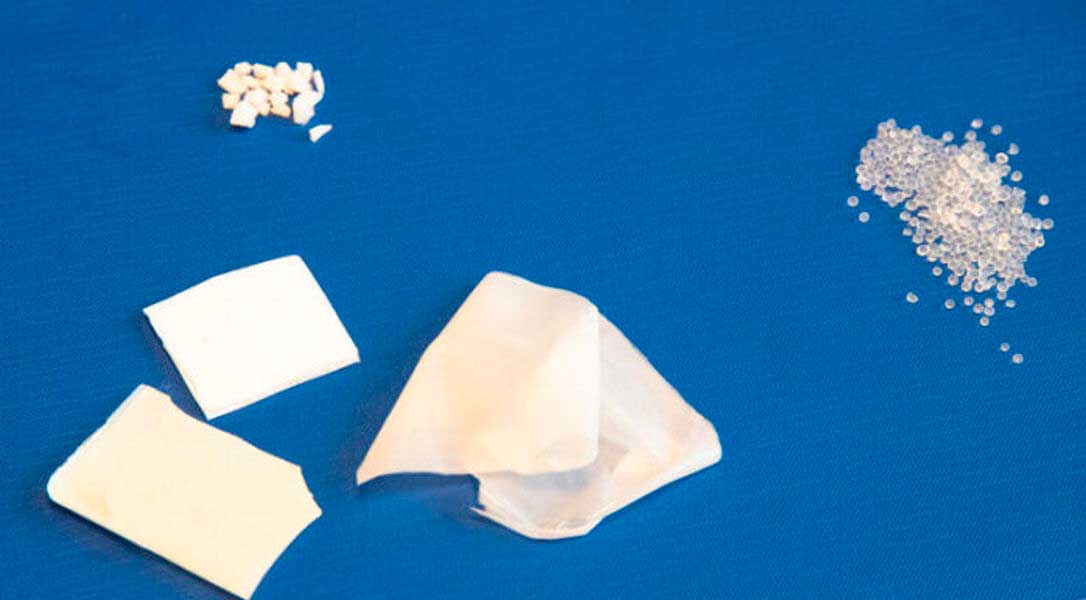
SINTEF
Once saturated, the material heats up, releasing the accumulated water, which then condenses and collects in a reservoir. This approach reduces energy costs compared to traditional cooling and condensation systems.
During testing, the material demonstrated stability and the ability to withstand multiple cycles without degradation. Its low cost is also noted due to the use of readily available raw materials and a simplified production process. Biomass-based material production is also possible.
An additional advantage of the technology is its flexibility: the material can be used as coatings, laminated surfaces, or 3D-printed components. This opens up opportunities for optimizing generator designs and further reducing energy consumption.
The researchers are currently scaling up the technology and planning to create a prototype. One of the goals is to reduce production costs by approximately 25% and adapt the solution for industrial use.
According to developers, the market for atmospheric water generators is already valued at $2.5 billion and could exceed $4 billion by 2030. Furthermore, the introduction of more efficient materials could significantly expand their scope of application—from household solutions to humanitarian and infrastructure projects in regions with limited water resources.
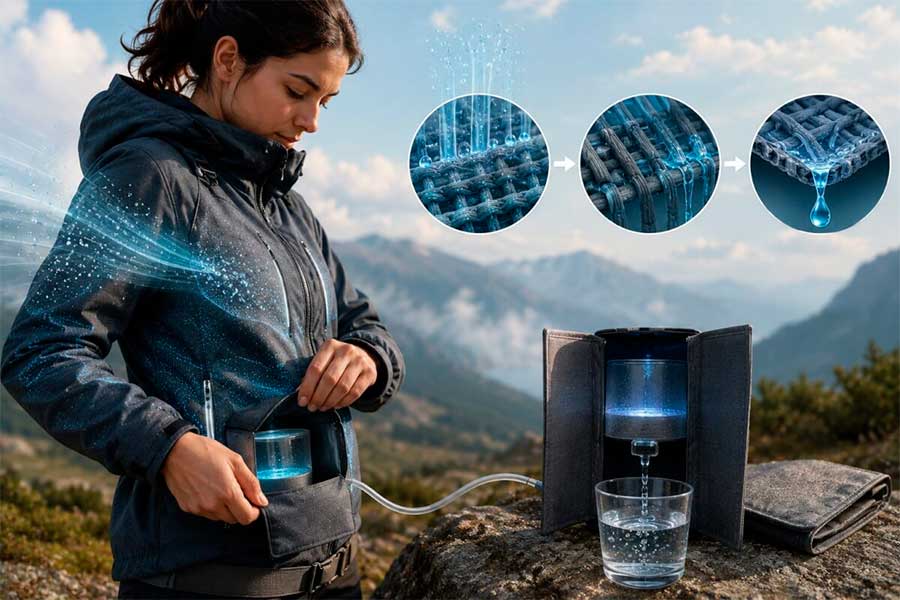
Engineers at the University of Texas at Austin have developed a wearable system for producing drinking water from atmospheric moisture. The technology consists of a specialized fabric capable of extracting moisture from the air and converting it into potable water.
The results of the study were published in the journal Science Advances.
Unlike most existing atmospheric water collection systems, which are stationary installations, the new development is integrated directly into clothing. The moisture-absorbing textile collects water from the air and directs it into removable storage modules, where condensation and liquid collection occur.
During testing, the prototype jacket provided between 400 and 900 milliliters of water per day, depending on the humidity level. According to the developers, this is one of the best results among wearable systems of this type.
The technology is based on a special hydrogel fabric made from biologically derived materials. The material absorbs water vapor from the atmosphere and then releases it when heated by sunlight, allowing condensation collection without the need for complex equipment.
nia.eco
At the same time, the research team presented another development: a compact, portable atmospheric water harvesting system. In field tests, the device produced up to 1.3 liters of water per day in both the arid regions of New Mexico and the wetter climate of Texas.

According to scientists, the technology could be used in regions with a shortage of fresh water, as well as during expeditions, hiking trips, rescue operations, and emergency response.
The development is of particular interest for areas experiencing chronic water stress. Researchers note that the most promising regions for implementing such systems may be North Africa, the Middle East, South Asia, and certain parts of sub-Saharan Africa.
Experts believe that developing atmospheric water harvesting technologies could be one way to adapt to climate change and growing freshwater shortages. According to UN estimates, billions of people already face a shortage of safe drinking water, and climate change is making this problem increasingly pressing.
Researchers have developed a system for producing fresh water from atmospheric air that uses wind not only as an energy source but also to directly heat the material that has accumulated moisture.
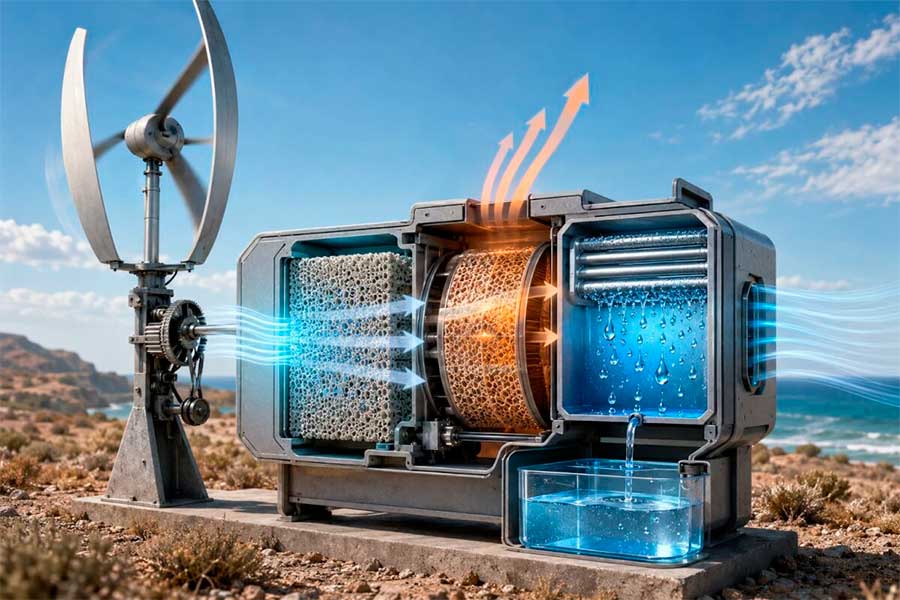
The technology is based on hygroscopic polymer sponges—porous materials capable of absorbing water vapor from the surrounding air. Once saturated, the sponge is heated to release the collected moisture, producing liquid water. A description of the technology was published in the journal Advanced Functional Materials. In tests, the system produced up to 9.9 liters of water per day for every kilogram of absorbent material under varying ambient temperature and humidity.
Most similar installations use solar heat or electric heaters for this purpose. The authors of the new study proposed using eddy current heating, which converts rotational kinetic energy into heat.
First, air passes through a porous polymer sponge. The material attracts and retains water molecules even when there is no visible fog or condensation in the air. Once the sponge is saturated, a wind drive starts the rotation of a metal element. The resulting eddy currents heat the structure, and with it, the absorbent material. The heat causes water to separate from the polymer as vapor. The vapor then cools and condenses in a separate container. The dried sponge can again absorb moisture, after which the cycle repeats.
The fundamental difference of this development is that the mechanical energy of the wind does not need to be first converted into electricity, transmitted through wires, and only then used for heating. According to the authors, the efficiency of directly converting the kinetic energy of the wind into heat exceeded 90%. Reducing the number of intermediate stages potentially reduces energy losses and simplifies the design of the stand-alone system.
Water can also be extracted from the air through cooling—similar to an air conditioner or dehumidifier. However, this method requires a significant amount of electricity, especially at low humidity.
Sorption technologies work differently. The material first accumulates moisture from a large volume of air and then releases it when heated. This allows water collection in conditions where conventional air cooling would be too energy-intensive.
nia.eco
The key characteristics of this system are the material’s ability to absorb water, the saturation rate, the temperature at which moisture is released, and the amount of energy required to restore the sorbent. The developers used a sponge with interconnected large pores. This structure facilitates the passage of air through the material and accelerates the transfer of water vapor into the sorbent.
The authors envision the system as a solution for autonomous water supply in remote areas without a stable power grid but with sufficient wind resources. This primarily applies to coastal and island communities. In such areas, the air typically contains sufficient moisture, and wind can simultaneously provide air movement and energy for sorbent regeneration. The technology can also be used at remote sites, small farms, weather stations, and temporary housing areas. However, the published results do not yet indicate that the device is ready for widespread domestic use.
The 9.9-liter capacity is calculated per kilogram of material and was obtained in a pilot system. To supply water to a single home, it is necessary to take into account actual humidity, wind speed, cycle times, equipment size, and condensation losses.
See also... New method for observing individual atoms confirms century-old quantum mechanical theory |
The amount of water that can be harvested directly depends on atmospheric humidity. At the same temperature, humid coastal air contains significantly more water vapor than air in arid inland areas. Therefore, the technology may not be effective in all water-stressed areas. In desert regions, winds may be strong, but the moisture content in the air is insufficient for high productivity.
Furthermore, for drinking water, its quality must be monitored. Water itself condenses from steam, but dust, microorganisms, and substances released by the system’s materials can enter the system. The need for filtration and mineralization will depend on the design and operating conditions.
There are also questions about the durability of the polymer sponge, its resistance to contamination, its production cost, and the number of cycles of water absorption and release without deterioration in performance.
Atmospheric moisture harvesting is unlikely to replace reservoirs, water pipelines, or desalination plants in large cities. The water concentration in the air is too low, and municipal consumption is too high. The most realistic application is the decentralized production of relatively small volumes of water in areas where water delivery is expensive and construction of capital infrastructure is difficult.
The advantage of the proposed solution is its ability to operate without grid power or fuel. However, the environmental impact of the entire system can only be assessed after a full lifecycle analysis—including polymer and equipment production, service life, maintenance, and subsequent disposal.
New research shows that solar energy isn’t the only energy source for atmospheric water harvesting. Using wind heating expands the range of conditions under which such systems could theoretically operate, including nighttime and periods of cloudy weather.
NASA’s Carbothermic Reduction Demonstration (CaRD) project has taken a major step toward leveraging local resources to support human exploration of the Moon. The CaRD team conducted comprehensive prototype tests using concentrated solar energy to extract oxygen from simulated lunar soil, simultaneously confirming the formation of carbon monoxide through a solar-driven chemical reaction.
If implemented on the Moon, this technology would enable fuel production using only lunar materials and sunlight, significantly reducing the cost and complexity of maintaining a long-term human presence on the lunar surface. The same systems used to convert carbon monoxide into oxygen could be adapted to convert carbon dioxide into oxygen and methane on Mars.
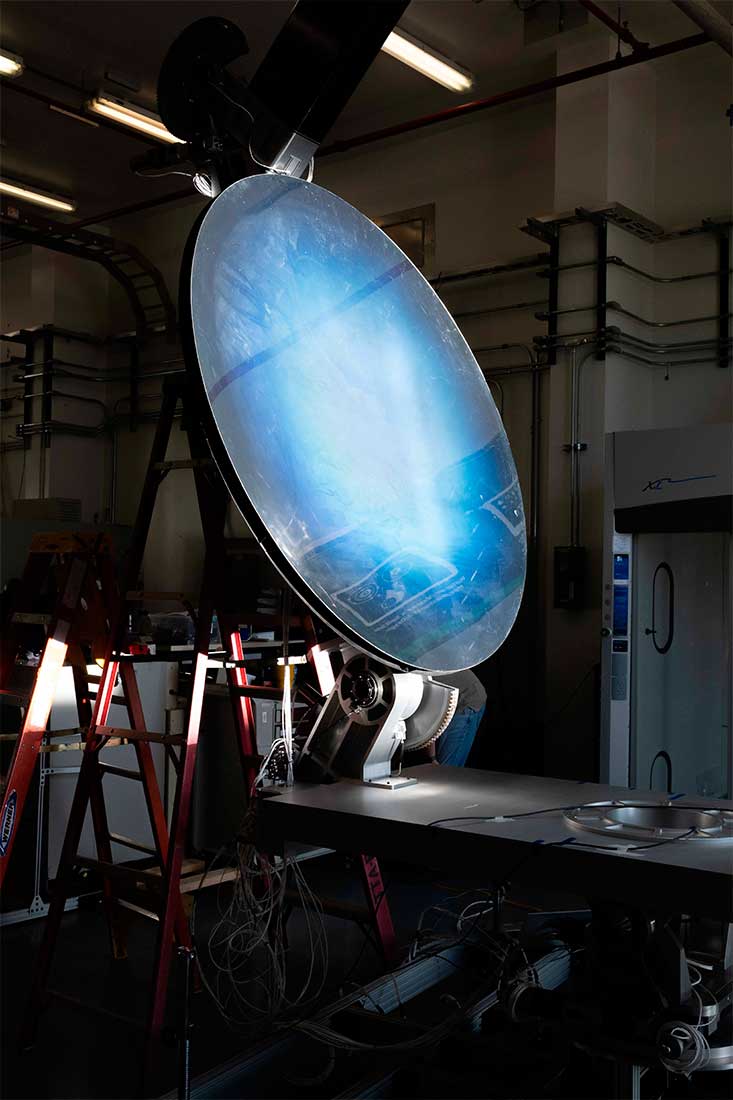
The Carbothermal Reduction Demonstration (CaRD) project is testing a solar concentrator designed to produce oxygen from simulated lunar regolith for use at the lunar south pole. During this comprehensive test, the team integrated the concentrator, mirrors, and control software and confirmed carbon monoxide production. NASA/Michael Rush
The integrated prototype combined a carbothermic oxygen production reactor developed by Sierra Space, a solar concentrator designed by NASA’s Glenn Research Center in Cleveland, precision mirrors manufactured by Composite Mirror Applications, and avionics, software, and gas analysis systems from NASA’s Kennedy Space Center in Florida. Project management, systems engineering, testing, and development of key hardware and ground support systems were performed by NASA’s Johnson Space Center in Houston.
The CaRD project was funded by NASA’s Game Changing Development program within the Space Technology Mission Directorate.
Comment on Facebook* The owner of the Meta company is recognized as extremist in Russia and is banned.See also... Complete list of HTML/Javascript event handlers with examples List of required documents for a website in the Russian Federation |