Between 1961 and 1984, the Soviet Union sent 16 exploration missions to Venus. NASA’s Parker Solar Probe made several flybys of Venus, utilizing the planet’s gravity assist. The DAVINCI mission, consisting of a flyby spacecraft and a lander, is scheduled to launch in the early 2030s. Using solid oxide electrolysis, EVE enables the exploration of Venus using balloons of unlimited duration. The Jupiter Icy Moons Explorer (Juice) spacecraft was on a trajectory to perform a gravity assist pass by Venus on August 31, 2025. The Japanese space agency reported losing contact with its intrepid Akatsuki spacecraft, designed to explore Venus, in May 2024.
NASA’s Parker Solar Probe is studying the solar corona up close—by flying through it. To delve into the Sun’s outer atmosphere, the spacecraft flew past Venus several times, using the planet’s gravity to draw closer and closer to the Sun.
On July 11, 2020, during the Parker Spacecraft’s third flyby of Venus, scientists used the Wide-Field Interferometer (WISPR) instrument to measure the velocity of the clouds obscuring the surface of Venus. Remarkably, WISPR not only observed the clouds but was also able to see through them to the surface beneath, according to NASA’s press service.
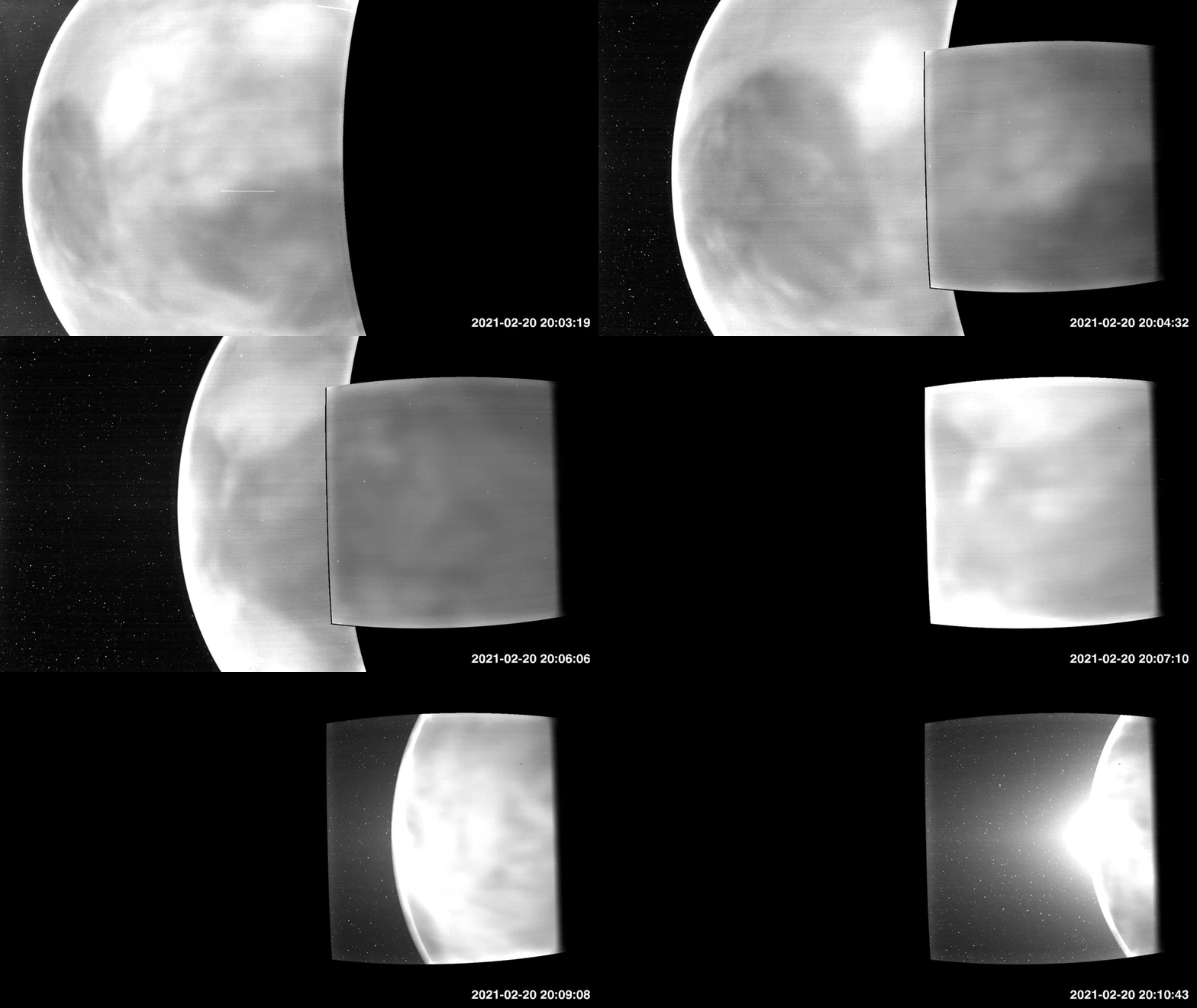
During its fourth flyby of Venus, the Parker Solar Probe spacecraft captured these images, which were combined into a video showing bright and dark areas on the planet’s night side. NASA/APL/NRL
Images taken during that flyby and the next one (in 2021) showed a faint glow from Venus’s hot surface in near-infrared and long-wavelength red (visible) light, revealing characteristic landforms such as highlands, plains, and plateaus.
On November 6, 2024, during the Parker Spacecraft’s seventh flyby, scientists again pointed the WISPR telescope at Venus, observing a different part of the planet than during previous flybys. With these images, they hope to learn more about the geology, mineralogy, and surface evolution of Venus.
NASA’s DAVINCI mission is scheduled to launch in the early 2030s. The mission’s goal is to investigate whether Earth-like oceans and continents once existed on Venus, a scorching world shrouded in a toxic atmosphere.
The DAVINCI spacecraft, consisting of a Venus flyby and a lander, will focus its attention on a mountainous region called Alpha Regio, possibly an ancient continent. Although several international spacecraft flew through Venus’s atmosphere between 1970 and 1985, DAVINCI will be the first to image this intriguing terrain from beneath Venus’s dense, opaque clouds.
But how can the team prepare for a mission to a planet that hasn’t been observed by atmospheric probes for nearly 50 years and that has a tendency to crush or melt its visiting spacecraft?
Scientists leading the DAVINCI mission began by using modern data analysis techniques to carefully examine data collected decades ago during previous missions to Venus. Their goal is to arrive at our neighboring planet with as much detailed information as possible. This will allow scientists to make the most of the probe’s time during its descent to collect new data that will help answer long-standing questions about Venus’s evolutionary path and why it diverged so sharply from Earth.
Between 1990 and 1994, NASA’s Magellan spacecraft used radar imaging and altimetry to map the topography of the Alpha region from Venusian orbit. Recently, the NASA DAVINICI team wanted to extract more detailed information from these maps, so they applied new methods to analyze Magellan’s radar altimeter data. They then supplemented this data with radar images acquired three times from the former Arecibo Observatory in Puerto Rico and used computer vision models to analyze the data and fill in information gaps at new scales (less than 0.6 miles, or 1 kilometer).
As a result, scientists have improved the resolution of maps of the Alpha region tenfold, predicting new geological patterns on the surface and raising questions about how these patterns might have formed in the mountains of the Alpha region.
Old data provide many advantages for new missions, including information about what frequencies, parts of the spectrum, or particle sizes were covered by earlier instruments, allowing new instruments to fill in the gaps.
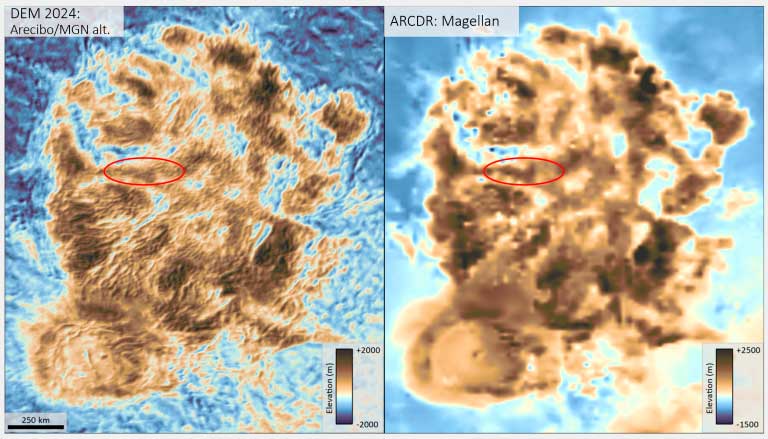
On the left is a new, more detailed image of Venus’s Alpha region, developed by scientists as part of NASA’s DAVINCI mission to Venus, scheduled to launch in the early 2030s. On the right is a less detailed map created using radar altimeter data collected by NASA’s Magellan spacecraft in the early 1990s. The colors in the maps represent topography: dark blue indicates low points, and brown indicates high points. To create the map on the left, the DAVINCI science team reanalyzed the Magellan data and supplemented it with radar images acquired three times at the Arecibo Observatory in Puerto Rico by scientists from Cornell University and the Smithsonian Institution. DAVINCI scientists then used computer vision models to analyze the data and fill in the gaps in the information. The red ellipses in each image represent the region over which the DAVINCI probe will descend, collecting data en route to the surface. Jim Garvin/NASA Goddard Space Flight Center
At NASA’s Coordinated Space Exploration Data Archive, located at NASA’s Goddard Space Flight Center in Greenbelt, Maryland, researchers are restoring and digitizing data from old spacecraft. This old data, when compared with modern observations, can reveal how the planet is changing over time and even lead to new discoveries long after the missions have ended. For example, thanks to new observations from the Magellan spacecraft, scientists recently discovered evidence of modern volcanic activity on Venus.
Magellan was one of the first spacecraft to have its data digitized and archived in NASA’s publicly accessible online repository of planetary mission data. However, the agency has vast amounts of data—much of which has not yet been digitized—dating back to 1958, when the United States launched its first satellite, Explorer 1.

Data recovery is a complex and resource-intensive task, and NASA is prioritizing digitizing the data scientists need. With three upcoming Venus missions—NASA’s DAVINCI and VERITAS, and the European Space Agency’s (ESA) Envision—space data archive staff are helping scientists access data from Pioneer Venus, NASA’s final mission to drop probes into Venus’s atmosphere in 1978.
The Alpha region is one of the most mysterious places on Venus. Its terrain, known as “tessera,” is similar in appearance to the rugged mountains of Earth, but more rugged and chaotic.
Tesserae, named for their resemblance to the geometric pattern of a parquet floor, have only been discovered on Venus, and DAVINCI will be the first mission to study such terrain in detail and map its topography.
The DAVINCI probe will begin photographing the Alpha region—obtaining its highest-resolution images to date—as soon as it descends below the planet’s clouds, at an altitude of approximately 25 miles, or 40 kilometers. But even there, gases in the atmosphere, like the surface, scatter light, so these images will appear blurry.
Scientists working with the DAVINCI telescope are developing a solution. They recently reanalyzed old Venus imaging data using new artificial intelligence technology that improves image quality and uses them to create 3D topographic maps. This technology will ultimately help the team optimize DAVINCI’s images and maps of the Alpha region mountains. The improved images will provide scientists with the most detailed images ever recorded—with a resolution of up to 3 feet, or nearly 1 meter, per pixel—possibly allowing them to detect fine features such as rocks, rivers, and gullies for the first time.
“All this old mission data is part of a mosaic that tells the story of Venus,” said Jim Garvin, the DAVINCI project principal investigator and chief scientist at NASA’s Goddard Space Flight Center. “A story that is a masterpiece in the making, but incomplete.”
By studying the surface texture and rock types in the Alpha Regio region, scientists hope to determine whether Venus’s tesserae formed through the same processes that form mountains and some volcanoes on Earth.
Laura Hall proposed exploring Venus using electrolysis (EVE)
Using solid oxide electrolysis, EVE enables indefinite-duration balloon exploration of Venus by replenishing the initial buoyant CO and O2 gases from ambient CO2 produced by solid oxide electrolysis (SOE). The CO and O2 can also be used for power during an approximately 50-hour overnight voyage or to provide rocket propulsion. This innovation also enables the creation of large, mobile platforms capable of providing compressed fuel and oxygen to a fleet of aerial explorers.
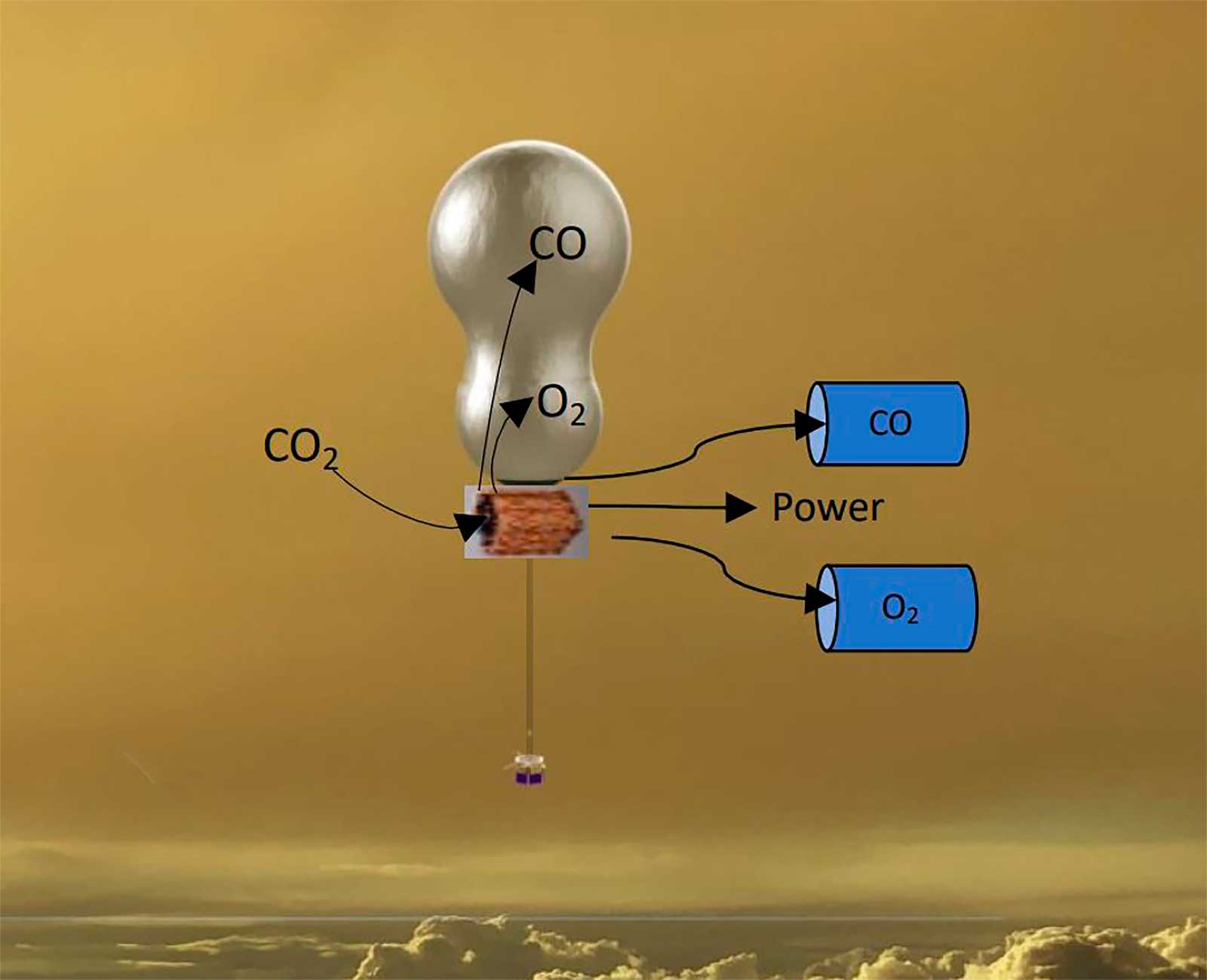
An artist’s concept highlighting the innovative approach proposed by the 2025 NIAC award-winning Exploring Venus with Electrolysis (EVE) project. NASA/Michael Hecht
The atmosphere of Venus is the most habitable place in the Solar System beyond Earth, yet, compared to Mars, it is relatively little studied. Using resources acquired directly on-site, EVE will enable a thorough study of the surface and atmosphere, including sample recovery. What we learn about Venus will help us better understand climate change on our own planet.
The first phase of the NIAC project will involve modeling all aspects of the SOE system, experimentally validating 75% CO2 conversion and regenerative power generation, defining an SOx-tolerant materials approach, refining the system design for a representative mission, and evaluating advanced capabilities including mobility, surface sample collection, and reentry.
The representative mission focuses on demonstrating the longevity of a CO2-replenished system using SOE energy to conduct important scientific research. Among the capabilities highlighted is the use of gases generated during daytime transit to provide power for the nightside.
The European Space Agency’s Jupiter Icy Moons Explorer (Juice) spacecraft was on a trajectory to perform a gravity assist pass by Venus on August 31, 2025, after successfully recovering from a communications problem that temporarily interrupted contact with Earth.
The team activated the signal booster, which increases the signal strength sent by Juice to Earth. Communication was restored, and Juice was found to be in excellent condition. No systems were out of order, and all telemetry data was normal. The root cause was identified as a software timing error. The software function that turns the signal booster on and off uses an internal timer. This timer continuously counts down and restarts from zero every 16 months. If the function uses the timer when it restarts, the booster remains off, and Juice’s signal becomes too weak to be detected from Earth.
Juice’s Venus flyby (close-up). ESA
After overcoming the anomaly, the Juice team focused on preparing for the Venus flyby. Designed for the cold, dark environment of Jupiter, Juice must adapt to the intense solar heat near Venus. To protect its sensitive components, the spacecraft used its high-gain main antenna as a heat shield. Due to thermal limitations, its remote sensing instruments cannot be active during the flyby, so no images of Venus were obtained. The Venus flyby gave Juice a significant boost.
See also... New method for observing individual atoms confirms century-old quantum mechanical theory |
ESA’s Juice spacecraft, designed to explore Jupiter’s icy moons, is humanity’s next mission to the outer Solar System. It will conduct detailed observations of the gas giant Jupiter and its three large ocean-bearing moons—Ganymede, Callisto, and Europa. This ambitious mission will characterize these moons using a powerful suite of remote sensing, geophysical, and in situ instruments to learn more about these fascinating places as potential habitats for past or present life. Juice will conduct in-depth studies of Jupiter’s complex magnetic, radiation, and plasma environments, as well as its interactions with its moons, exploring the Jovian system as an archetype of gas giants in the Universe.
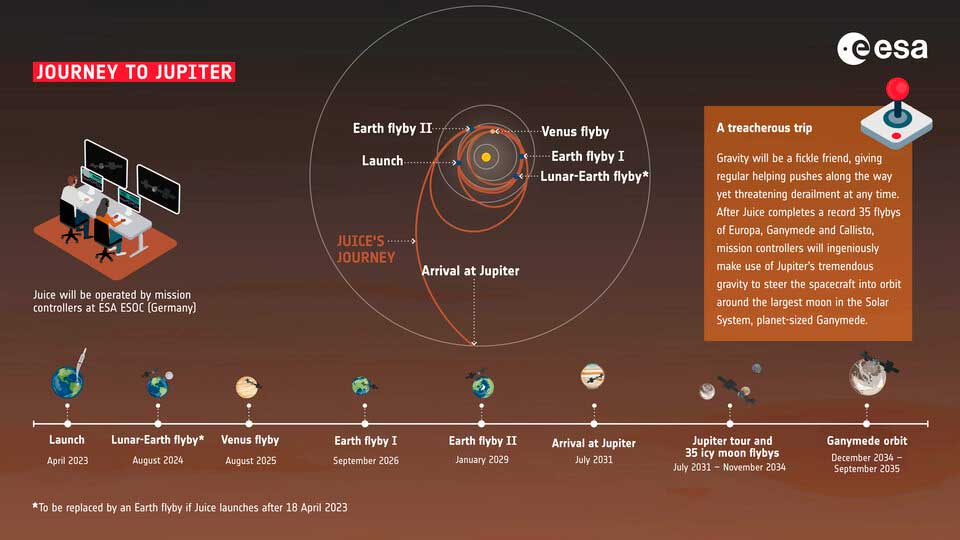
Juice’s Journey to Jupiter
The Juice spacecraft was launched on an Ariane 5 rocket from Europe’s Kourou Spaceport in April 2023. Its eight-year mission will include flybys of Earth and Venus before completing a maneuver to reach Jupiter. During its orbital flight around Jupiter, the spacecraft will perform 35 flybys of its three largest moons before entering orbit around Ganymede, becoming the first spacecraft ever to orbit a moon of a gas giant.
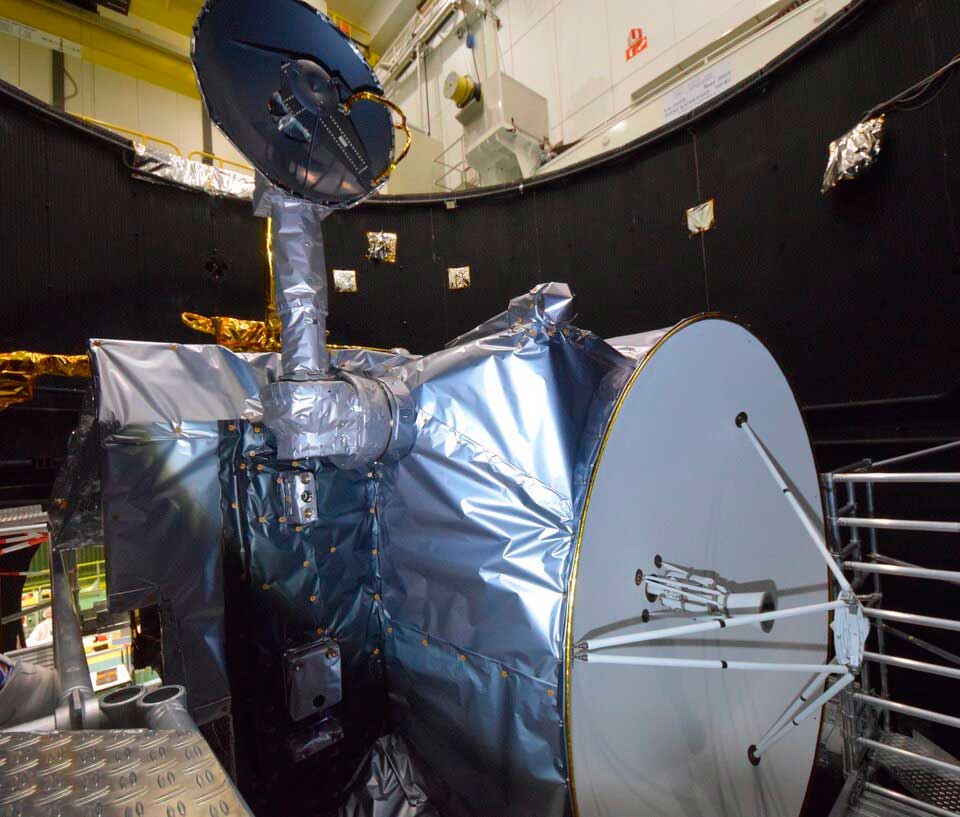
The Juice spacecraft is designed to operate in the frigid environment of the Jupiter system. Currently much closer to the Sun, the spacecraft must point its large, high-gain antenna toward the Sun to act as a heat shield. The rotating, medium-gain antenna, shown above, is used for communication with Earth during this period. ESA
Japan’s space agency reported losing contact with its intrepid Venus probe Akatsuki in May 2024.
Akatsuki, a Japanese mission dedicated to studying the climate of Venus, was the only operational spacecraft in orbit around the second planet from the Sun that year. The $300 million spacecraft launched in 2010 and got off to a rocky start, failing to enter orbit around Venus due to a main engine failure. However, the mission team was given a second chance in 2015, after five years in orbit around the Sun, and successfully entered orbit. The spacecraft, also known as the Venus Climate Orbiter, has since conducted scientific research, making several unexpected observations.
On May 29, 2024, the JAXA mission account for Akatsuki posted a message stating that the Institute of Space and Astronautical Science (ISAS) “lost contact with Akatsuki after an operation in late April due to a long period of low attitude stability operation.
Akatsuki, which means “dawn” in Japanese, has already completed its primary mission. The spacecraft’s extended mission began in 2018, launched on May 21, 2010, from the Tanegashima Space Center, and concluded in September 2025 (contact with the spacecraft was lost in May 2024, after which specialists unsuccessfully attempted to restore it).
Venus has long been rightfully called the “Russian planet.” Between 1961 and 1984, the USSR sent 16 research missions to Venus. The Soviet scientific station Venera-7 was the first to soft-land on the surface of Venus, the second planet in the Solar System. Prior to that, Venera-3 delivered a pennant bearing the USSR coat of arms.
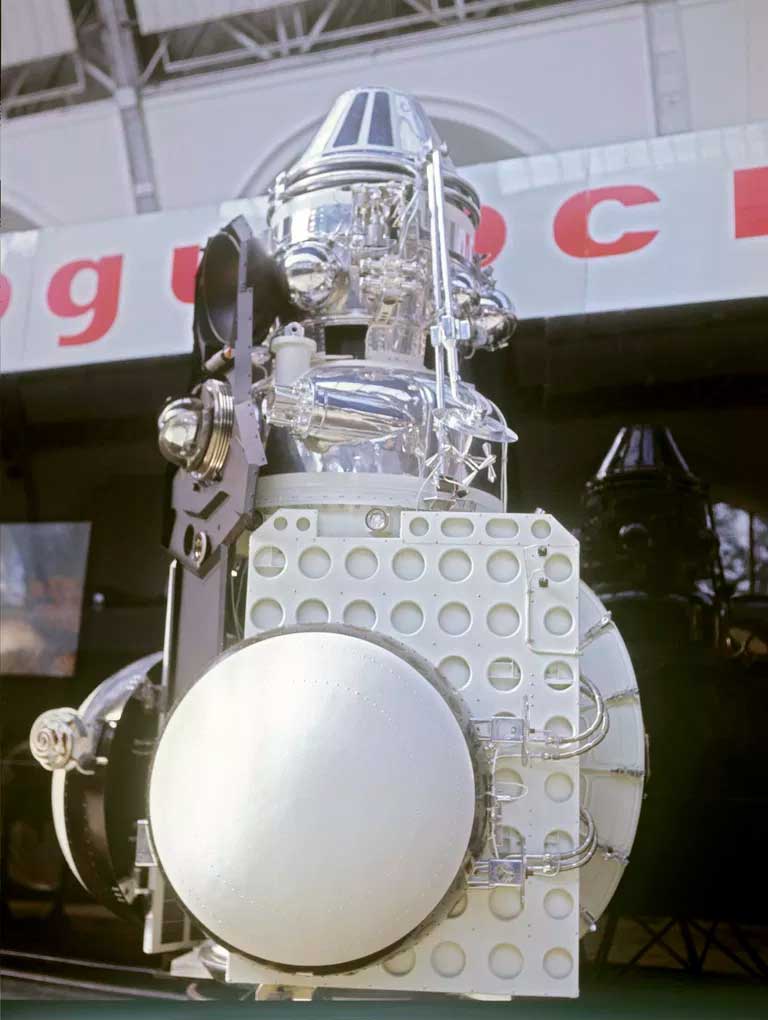
The Venera-3 space probe in the Cosmos pavilion. RIA Novosti/Alexander Mokletsov
Russia plans to launch the Venera-D, or Long-Lived Venus, mission in 2031. This is a truly unique project and the only mission currently proposed in the world designed to deliver a fully functional lander to Venus.
Comment on Facebook* The owner of the Meta company is recognized as extremist in Russia and is banned.See also... Complete list of HTML/Javascript event handlers with examples List of required documents for a website in the Russian Federation |