If humanity has any hope of becoming a civilization traveling between the stars, it must either develop some kind of warp drive or find a way to effectively hibernate. LOXSAT technologies, already being implemented, have been selected to address the key challenges of using cryogenic, or ultra-cold, fuels in microgravity.
The Liquid Oxygen Satellite (LOXSAT) demonstration flight will test cryogenic fluid management technologies needed to create in-space fuel depots, essentially refueling stations in space, that could support long-term exploration.
NASA is partnering with Eta Space of Rockledge, Florida, on an on-orbit technology demonstration to develop a key capability for future deep space missions.
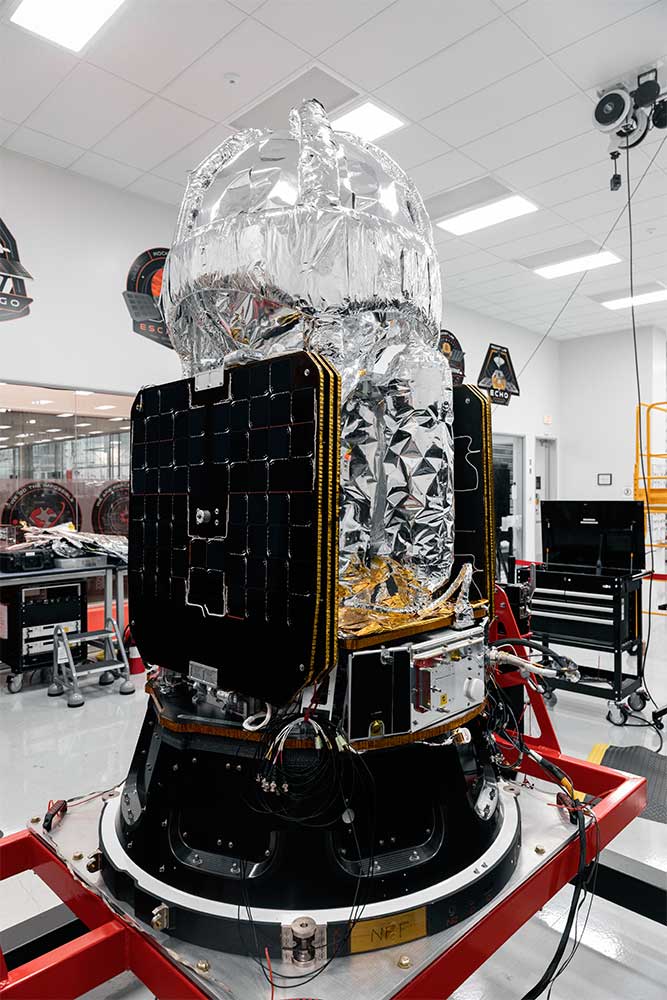
The LOXSAT payload is on display at Rocket Lab’s spacecraft manufacturing facility in Long Beach, California. NASA’s Rocket Lab
During the nine-month mission, LOXSAT will demonstrate 11 cryogenic fluid management technologies. Eta Space developed LOXSAT as part of NASA’s Tipping Point program, and Rocket Lab is providing the spacecraft and launch services to deliver it to low-Earth orbit. LOXSAT’s payload is integrated with Rocket Lab’s Photon satellite platform and will launch on the company’s Electron rocket from Launch Complex 1 on the Mahia Peninsula, New Zealand, NASA announced on May 14, 2026.
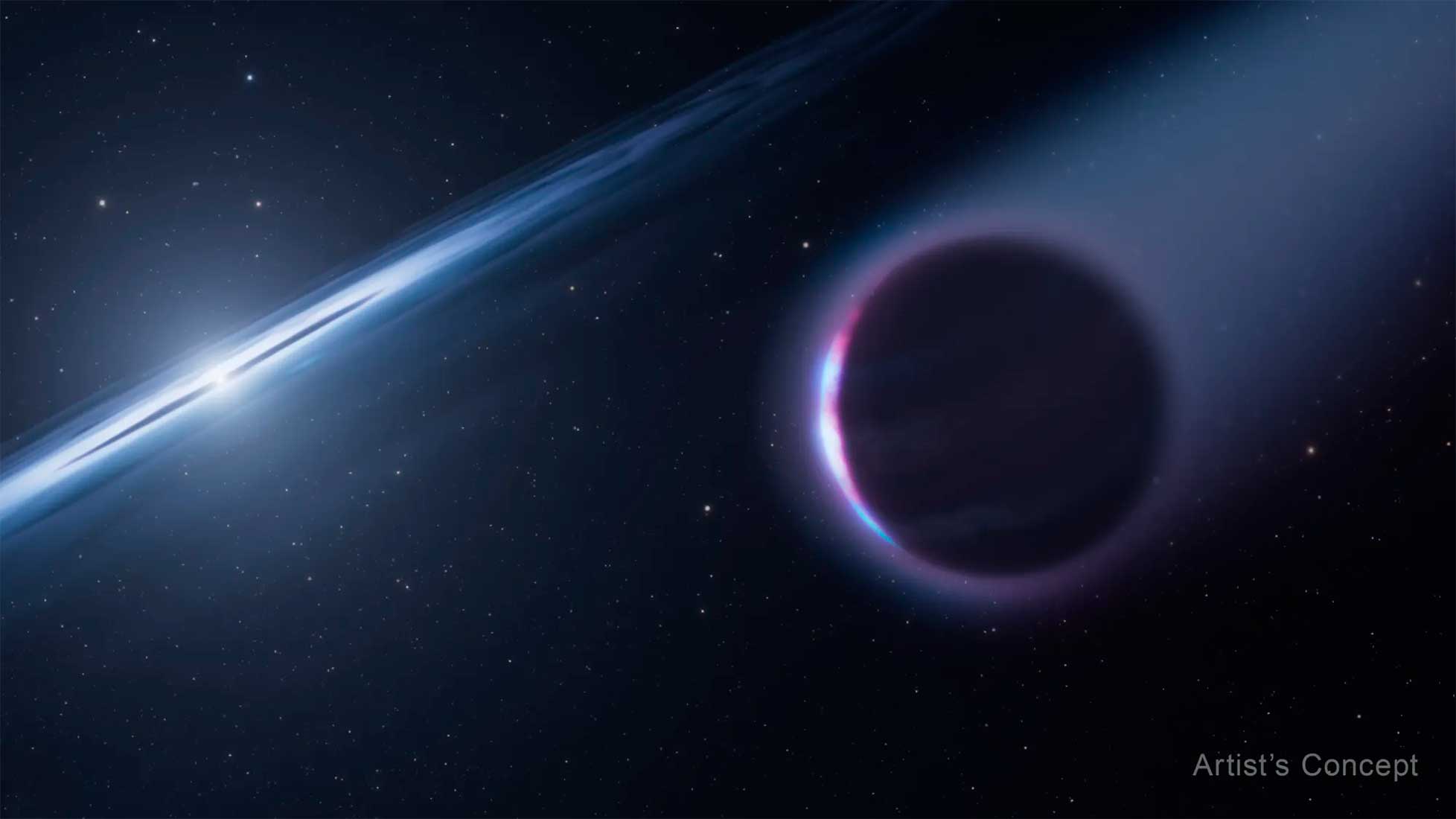
The technologies demonstrated by LOXSAT were selected to address key challenges in using cryogenic, or ultra-cold, propellants in microgravity, including vaporization reduction, propellant transfer, tank pressure maintenance, and fuel level measurement. Data obtained from these tests will inform the development of future space propellant depots that could fuel spacecraft on their journeys to the Moon, Mars, and other deep-space destinations.
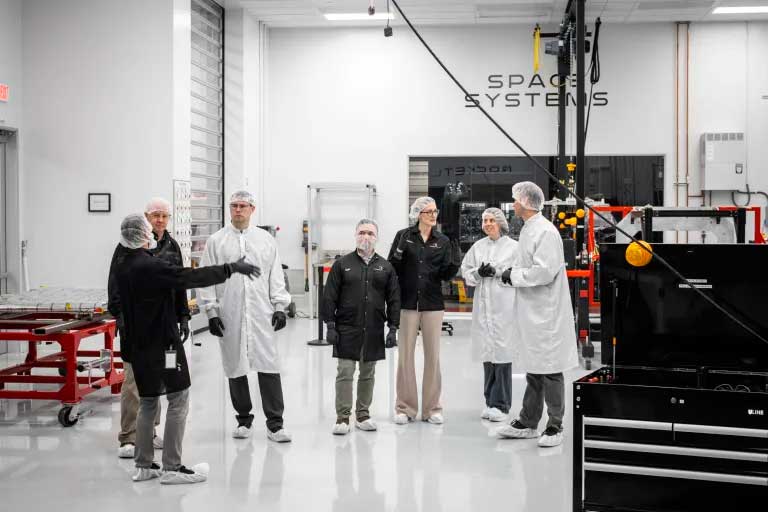
Members of NASA’s Cryogenic Fluid Management Project visit Rocket Lab’s spacecraft manufacturing facility in Long Beach, California, on Thursday, February 12, 2026. The project team had the opportunity to inspect the LOXSAT payload and vibration test facility. NASA Rocket Lab
NASA’s LOXSAT team includes Cryogenic Fluid Management project staff from the Marshall Space Flight Center in Huntsville, Alabama, the Glenn Research Center in Cleveland, and the Kennedy Space Center in Florida. Work on this project is part of NASA’s Space Technology Mission Directorate and involves more than 20 separate technology development activities.
If humanity has any hope of becoming a star-traveling civilization, it will either need to develop some kind of warp drive (an idea that is at the very edge of known physics) or find a way to hibernate efficiently.
NASA knows this and has been studying the idea for years, even studying the hibernation habits of Arctic ground squirrels. During this long-term study, they found that, while not necessarily biologically impossible, any human hibernation would likely be medically induced.
A study by German scientists led by Gerald Kerth of the University of Greifswald turned to other animals and examined the hibernation patterns of bats. They discovered that a type of red blood cell called erythrocytes may play a key role in hibernation. The results were published in the journal Proceedings of the National Academy of Sciences (PNAS).
See also... New method for observing individual atoms confirms century-old quantum mechanical theory |
Hibernation is a useful biological tool. If winter hunting in warmer areas is unavailable, it’s best to simply lie low, conserve energy, and wait until spring, when resources are more plentiful. Many mammals (including some primates) hibernate, and this strategy is found throughout the animal kingdom, even in summer, in a process known as aestivation.

Cryosleep. Gremlin/Getty Images
Given that the nearest star is 4.24 light-years away, even if humanity were somehow able to travel through space at speeds approaching the speed of light (a big “if”), it would still shave years off our existence to visit our stellar neighbors. In other words, sleeping for long periods of time while the universe moves may become a necessity for future space travel.
“There are advantages to having humans in low temperatures during interstellar travel,” Kert told New Scientist. “We’re not saying it will happen in the next three years. But it’s certainly a first step.”
In this study, Kerth and his team analyzed hundreds of thousands of red blood cells from hibernating bats (Nyctalus noctula) and non-hibernating bats (Rousettus aegyptiacus), as well as samples from humans. Knowing that hibernating animals still require blood for oxygen, the scientists set out to understand how these critical red blood cells survive a drop in core temperature. The team knew that blood cells change shape to accommodate different pressures and vessel sizes, which led to the question: could blood cells also respond to hibernation conditions?
Ultimately, the team found that when core temperatures dropped from 39°C to 23°C, all three species experienced a blood cell transformation, causing red blood cells to become less elastic and more viscous. However, interestingly, as the scientists continued to lower the temperature to 10°C, the cells of both hibernating and non-hibernating bats continued this cellular transformation, while the human blood cells simply stopped.
While deep space travel remains a distant prospect, the team notes that altering the mechanical properties of human blood cells could help optimize blood flow for pharmaceutical applications in the much near future. For example, surgeons are already using a technique known as deep hypothermic circulatory arrest (DHCA) to stop brain function and blood flow during certain types of complex surgeries.
Whether it’s Arctic ground squirrels or hibernating bats, the animal kingdom still has a lot to teach us when it comes to the fine art of falling into deep, prolonged sleep.
Comment on Facebook* The owner of the Meta company is recognized as extremist in Russia and is banned.See also... Complete list of HTML/Javascript event handlers with examples List of required documents for a website in the Russian Federation |